
Best Woozoo Desk Fan 2026: Quiet Airflow Picks

A best Woozoo desk fan should solve a simple problem without creating three new ones. Strong airflow matters, but a harsh stream aimed straight at your face gets tiring fast, and a rattling motor can turn a quiet workspace into an irritating corner. Woozoo’s rounded air circulators stand out because they’re built to move air beyond the immediate desktop rather than merely blowing at whatever sits six inches away. The better models combine a compact footprint with adjustable direction, multiple speeds, and a low setting that won’t compete with calls, music, or sleep.
Size deserves more thought than it usually gets. A larger fan may push air farther, yet it can crowd a narrow desk, block a monitor, or steal space from notebooks and charging gear. A smaller Woozoo air circulator fits more naturally beside a laptop or on a bedside table, though its focused airflow may feel less effective across an open room. That tradeoff isn’t a deal breaker, but it’s worth facing before paying extra for features that don’t match the space.
Oscillation and tilt control make the biggest practical difference during everyday use. Horizontal movement spreads the breeze across a shared area, while vertical adjustment helps direct air above clutter, toward a chair, or across a warm sleeping space. Some Woozoo models use simple manual tilt positions, while others add remote operation, timers, or broader automatic movement. Those extras feel genuinely useful when the fan sits across the room, but they’re less valuable on a desk where the controls remain within arm’s reach.
Noise is another sticking point, and labels such as “quiet” don’t tell the whole story. Low speed is usually the setting that matters during focused work or overnight use, while higher speeds naturally produce more wind and motor sound. A steady hum is often easier to live with than clicking controls, shifting plastic, or a stand that vibrates against a hard surface. Placing the fan on a stable mat can help, but a solid base and well-balanced housing should do most of the work.
The strongest Woozoo desk fan isn’t automatically the model with the longest feature list. A three-speed manual unit can be the smarter buy for close-range cooling, especially where simplicity and quick adjustments matter more than remotes or timers. A five-speed oscillating model makes more sense when airflow needs to reach a bed, reading chair, or wider office area. Either way, realistic expectations help: A fan moves air and improves comfort, but it doesn’t lower the room temperature like an air conditioner.
Cleaning also deserves a quick reality check. Dust gathers on the front grille and blades, slowly dulling airflow and sometimes adding noise. Rounded housings can look tidy, yet closely spaced grille openings may take patience to clean, so check whether the cover can be removed according to the product instructions. A soft brush, microfiber cloth, and regular light cleaning usually beat waiting until a thick layer of dust becomes stubborn.
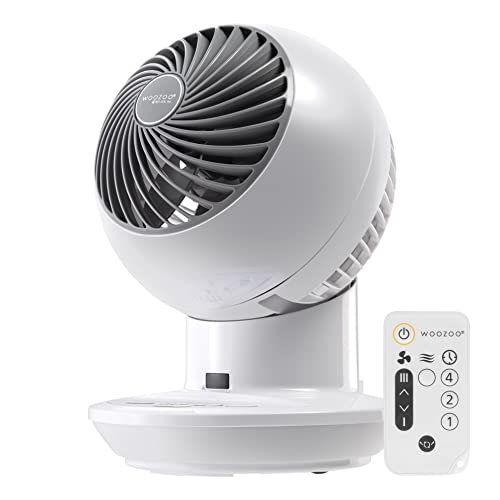
- LFR Score9.4
LFR Score is a ranking system developed by lightfansreviews.com. LFR Score has no relationship or impact from any manufacturers or sales agent websites. Learn more
- BrandIRIS USA

- LFR Score9.4
LFR Score is a ranking system developed by lightfansreviews.com. LFR Score has no relationship or impact from any manufacturers or sales agent websites. Learn more
- BrandIRIS USA

- LFR Score9.4
LFR Score is a ranking system developed by lightfansreviews.com. LFR Score has no relationship or impact from any manufacturers or sales agent websites. Learn more
- BrandIRIS USA

- LFR Score9.4
LFR Score is a ranking system developed by lightfansreviews.com. LFR Score has no relationship or impact from any manufacturers or sales agent websites. Learn more
- BrandIRIS USA

- LFR Score9.4
LFR Score is a ranking system developed by lightfansreviews.com. LFR Score has no relationship or impact from any manufacturers or sales agent websites. Learn more
- BrandIRIS USA

- LFR Score9.4
LFR Score is a ranking system developed by lightfansreviews.com. LFR Score has no relationship or impact from any manufacturers or sales agent websites. Learn more
- BrandIris Ohyama

- LFR Score9.4
LFR Score is a ranking system developed by lightfansreviews.com. LFR Score has no relationship or impact from any manufacturers or sales agent websites. Learn more
- BrandIRIS USA

- LFR Score9.2
LFR Score is a ranking system developed by lightfansreviews.com. LFR Score has no relationship or impact from any manufacturers or sales agent websites. Learn more
- BrandIRIS USA

- LFR Score8.8
LFR Score is a ranking system developed by lightfansreviews.com. LFR Score has no relationship or impact from any manufacturers or sales agent websites. Learn more
- BrandIRIS USA

- LFR Score8.8
LFR Score is a ranking system developed by lightfansreviews.com. LFR Score has no relationship or impact from any manufacturers or sales agent websites. Learn more
- BrandIRIS USA

- LFR Score8.8
LFR Score is a ranking system developed by lightfansreviews.com. LFR Score has no relationship or impact from any manufacturers or sales agent websites. Learn more
- BrandIRIS USA
Last update on 2026-07-18 / Affiliate links / Images, Product Titles, and Product Highlights from Amazon Product Advertising API
Best Woozoo Desk Fan For Flexible Room Cooling
A stuffy bedroom or crowded work surface can make even a mild afternoon feel longer than it should. Large floor fans often take up too much space, while tiny personal fans may push air only a few feet before the breeze fades away. The best Woozoo desk fan needs to strike a practical balance between compact size, useful airflow control, and noise that won’t interrupt calls or sleep. The IRIS USA WOOZOO Air Circulator Fan aims for that middle ground with oscillation, adjustable tilt, remote operation, timer settings, and a housing small enough for desks and nightstands.
IRIS USA WOOZOO Air Circulator Fan
This WOOZOO model is built for rooms where space is tight but stagnant air remains a daily nuisance. Its footprint measures 7.09 inches long, 7.09 inches wide, and 9.84 inches high, so it can sit beside a monitor, lamp, or stack of books without swallowing the entire surface. At 3.5 pounds, it’s light enough to carry between a bedroom and office without the awkward shuffle that comes with a full-size fan. A built-in handle makes that move easier, especially when hands are already full.
The shape feels better suited to air circulation than direct face cooling alone. Instead of behaving like a basic desk fan locked in one position, the rounded head can be aimed through six manual vertical angles. That flexibility helps when the fan must send air over a laptop screen, toward a bed, or upward to prevent papers from fluttering across a desk. Small adjustment, big difference.
The listed 52-foot maximum air distance sounds ambitious for such a compact body, though that figure should be treated as a stated maximum rather than a promise of equally strong airflow across every room. Furniture, open doors, ceiling height, and fan placement can all affect how far the breeze feels useful. Still, the design is clearly intended to move air beyond the immediate tabletop. That makes it more appealing than a close-range fan that loses its effect the moment a chair rolls back.
Oscillation And Directional Airflow
The 65-degree auto-oscillation gives this fan a broader reach without requiring constant repositioning. A fixed fan can cool one chair well, but the comfort disappears as soon as someone moves to the other side of the room. Oscillation spreads the airflow across a wider path, which feels more natural in a shared office, small bedroom, or dorm. It won’t replace whole-house circulation, but it can keep one corner from feeling stale.
Vertical adjustment adds another layer of control that many compact fans skip. The six tilt positions let the airflow travel low across a desk, straight toward a chair, or higher into the room. That matters because cool air aimed at the wrong level may feel ineffective even when the fan is running hard. Direction often matters as much as speed, particularly in narrow rooms where beds, shelving, or monitors interrupt the airflow path.
There’s a tradeoff, of course. Vertical tilt is manual, so the fan head must be adjusted by hand rather than through the remote. That isn’t a serious drawback on a desk, but it can be mildly annoying when the fan sits across a bedroom or on a high shelf. Once the angle is set, though, horizontal oscillation can be controlled without getting up. The combination keeps the mechanism useful without making every adjustment unnecessarily complicated.
Remote Control And Timer Convenience
The included remote handles power, speed, mode, oscillation, and timer settings from a distance. That convenience lands differently at night, when reaching across a cluttered nightstand or getting out of bed feels like a chore. It’s also handy during video calls, since the airflow can be softened without leaning out of frame. The remote control is more than a decorative extra if the fan sits beyond arm’s reach.
The timer offers one-hour, two-hour, and four-hour shutoff options. A timed breeze can make it easier to settle into sleep without leaving the fan running until morning. It also helps during short work sessions, reading breaks, or afternoon naps where continuous operation isn’t necessary. Set it, forget it, and the fan handles the rest.
The timer’s limitation is its fixed selection of intervals. There’s no mention in the supplied details of a custom countdown or longer overnight schedule, so the available choices may feel restrictive for anyone who wants six or eight hours. Still, simple settings usually mean fewer button presses and less confusion in a dark room. For most routines, one, two, or four hours cover the common use cases without turning the remote into a miniature control panel.
Speed Settings And Everyday Noise
The supplied product information contains a detail worth noticing before purchase. The full product name refers to three speeds, while the separate description states that the fan offers five speed settings. That mismatch may reflect a listing title, model variation, or updated version, but it shouldn’t be glossed over. Confirming the exact version before ordering would prevent disappointment over the control layout.
Based on the detailed description, the speed range begins with a soft breeze and rises to a stronger gust. A low setting makes sense for sleep, focused work, or background air movement, where a loud fan can become more distracting than the heat. Higher settings are better suited to pushing air across a room or clearing out a warm pocket near a window. The wide speed range is useful because comfort changes throughout the day.
The quiet motor is positioned as a core benefit, though no exact sound measurement is provided in the supplied information. Without a decibel figure, it’s safer to view “quiet” as a design intention rather than a laboratory-grade claim. Low-speed operation will naturally be less intrusive than the strongest setting, and oscillation may add a faint mechanical sound. Even so, a compact air circulator with several settings offers more room to dial back noise than a one-speed fan running flat out.
Desk, Bedroom, And Dorm Use
A desk setup benefits from the fan’s compact base and adjustable angle. The housing can fit beside common office items without forcing everything else to the edge, and the vertical tilt helps send air around screens or stacks of paperwork. Its small footprint also makes it easier to keep cords, chargers, and notebooks organized. That’s a practical win in a workspace where every inch gets claimed quickly.
Bedroom use brings the remote and timer to the front. A fan sitting on a dresser can be controlled from bed, while oscillation reduces the harsh feeling of air hitting one spot for hours. The lowest setting should suit situations where gentle circulation matters more than raw force. A bright indicator light or remote storage arrangement isn’t described, so those details remain unknown rather than assumed.
Dorm rooms and temporary living spaces suit the portable design particularly well. The 3.5-pound weight and built-in handle make it easy to shift the fan from a study desk to a bedside table, then tuck it away when floor or counter space is needed. Still, the 7.09-inch base requires a stable surface and may be too broad for a very narrow shelf. Portable doesn’t mean pocket-sized, but it does mean the fan can travel from room to room without fuss.
Strengths, Weaknesses, And Practical Fit
The strongest feature is the combination of oscillation, six tilt angles, and remote control in a compact unit. Those controls solve the everyday frustration of a breeze that never quite reaches the right place. The timer adds useful automation without demanding an app or complicated setup. Simple hardware can be refreshing, especially for a fan that may be used half-awake.
The main weakness is uncertainty around the listed number of speeds. A buyer expecting five settings could receive a three-speed version if the listing combines details from different models. The manual vertical tilt may also feel basic beside fans with automatic multidirectional movement. Neither issue ruins the design, but both affect value depending on what arrives in the box.
This fan makes the most sense in a small room where controlled circulation matters more than cooling a large open area. Its 52-foot stated maximum air distance suggests broader reach than a basic personal fan, yet room layout will determine how noticeable that advantage feels. The compact body, remote, timer, and oscillation create a practical package for desks, bedrooms, and dorms. Buyers who need verified speed settings or measured noise levels should confirm those specifications rather than relying on broad listing language.
Maintenance And Placement Notes
Placement will shape the experience more than most people expect. A fan pushed against a wall or blocked by books can’t circulate air as freely as one with open space around the intake and grille. Setting it near the edge of a desk may improve reach, though the base should remain fully supported. Clear airflow paths help the fan do more without constantly raising the speed.
Dust will eventually collect on the grille, especially in bedrooms and dorms where fabric fibers float through the air. The supplied details don’t state whether the front cover is removable, so cleaning access shouldn’t be assumed. A soft brush or dry cloth can handle surface dust without forcing debris deeper into the housing. Regular light cleaning is usually easier than waiting for buildup to become visible.
The remote deserves a consistent storage spot because small accessories have a habit of vanishing behind furniture. Keeping it beside the fan, in a drawer, or near the bed prevents the convenience feature from becoming a scavenger hunt. The carry handle also works best when the power cord is gathered before moving the unit. Tiny habits, sure, but they keep a portable fan from turning into desk clutter.
IRIS USA WOOZOO Remote Air Circulator Fan
Heat tends to settle into the spots where concentration matters most, especially beside a monitor, near a bed, or in a small room with weak airflow. A basic fan may push air straight ahead, but that narrow stream often leaves the rest of the space feeling stale. The best Woozoo desk fan should do more than create a breeze at arm’s length, and this IRIS USA WOOZOO model aims to spread air with oscillation, adjustable tilt, five speeds, and remote control. Its compact frame also keeps it from becoming another bulky object fighting for room on a crowded surface.
WOOZOO Remote Air Circulator Fan
This model measures 8.27 inches long, 8.27 inches wide, and 11.42 inches high, giving it a noticeably larger presence than a tiny personal fan without drifting into floor-fan territory. It can sit on a desk, countertop, dresser, or nightstand while leaving enough room for everyday clutter. The rounded body feels purpose-built for circulation rather than decorative flair. That practical shape matters in tight spaces where every object needs to earn its footprint.
The fan’s portability adds flexibility to daily routines. It can move from a home office during the afternoon to a bedroom at night without much fuss, and the compact dimensions make storage less awkward once cooler weather arrives. Room-to-room use is one of its quieter strengths because one fan can cover several parts of the day. No dramatic setup, no wrestling with a heavy stand, just a manageable appliance that shifts with the routine.
The white finish keeps the look clean and neutral, which helps it blend into most rooms instead of shouting for attention. Still, the housing isn’t tiny, so a narrow shelf or packed desk may feel cramped once the fan is in place. A stable surface is essential because circulation suffers if books, curtains, or electronics block the intake or front grille. Clear placement will often matter more than pushing the speed higher.
Airflow Reach And Oscillation
The product description lists a maximum air distance of 82 feet, which suggests this model is designed to move air beyond immediate personal cooling. That number should be read as a stated maximum under favorable conditions rather than a guarantee that every room will feel the same breeze. Furniture, doorway placement, room shape, and fan angle all affect real-world reach. Even so, the intended use is clearly broader than a fan that cools only the person sitting directly in front of it.
The fan oscillates 65 degrees from side to side, helping the airflow sweep across a wider part of the room. That movement is useful in a bedroom where two sides of a bed need coverage or in an office where the chair position changes throughout the day. Fixed airflow can feel harsh after a while, but a moving breeze breaks up that constant blast. The result is a softer sense of circulation rather than air hammering one shoulder for hours.
Vertical positioning comes from six preset head angles, with the product name describing up to 90 degrees of adjustable tilt. This range helps direct air low across a desk, straight toward a seated position, or higher into the room. The head adjustment is manual, so it won’t tilt itself from the remote. That’s a fair tradeoff for many setups, though it may feel inconvenient if the fan sits on a tall cabinet or across the room.
Oscillation and tilt work best together rather than as isolated features. A low angle may cool the immediate surface, while a higher setting can circulate warmer air that has collected above furniture. The six-position tilt also lets the fan avoid blowing directly at papers, loose notes, or lightweight desk items. Small details like that separate comfortable circulation from a constant battle with fluttering paperwork.
Five Speeds And Quiet Operation
Five speed settings give this fan more breathing room than a simple low-medium-high control. The gentlest setting suits sleep, reading, or focused work, while stronger levels can push air deeper into a warm room. Five-speed control also makes it easier to adjust comfort without jumping from barely noticeable airflow to an overly forceful gust. That smoother range is useful during changing temperatures throughout the day.
The supplied description states a noise output of 30 dB, placing quiet operation at the center of the design. A stated sound level is especially relevant for bedrooms, study areas, and shared workspaces where background noise can become grating. The lowest speed will naturally feel calmer than the highest, and oscillation may introduce some mechanical movement noise. Still, the fan is clearly intended for situations where steady airflow shouldn’t drown out conversation, music, or sleep.
Quiet doesn’t mean silent, and that distinction deserves a little honesty. Air moving through a grille always creates some sound, especially at higher speeds, and the room itself can amplify vibrations if the fan sits on a hollow desk or hard cabinet. A padded, level surface may help reduce resonance. Thirty-decibel operation sounds appealing, but placement and selected speed will shape the experience just as much as the motor design.
The stronger settings are better viewed as occasional tools than all-day defaults. They can clear a pocket of trapped heat quickly, then give way to a softer setting once the room feels less stuffy. That approach keeps the fan from becoming unnecessarily loud or drafty. Responsive speed changes are one of the practical reasons five settings matter more than a flashy specification sheet might suggest.
Remote Control And Timer Use
The included remote handles power, mode, speed, oscillation, and timer adjustments without requiring a trip across the room. That convenience becomes much more meaningful at night, during a call, or while working through a task that shouldn’t be interrupted. Full remote control makes the fan easier to live with, not merely easier to advertise. A feature earns its keep when it removes small annoyances several times a day.
The timer includes one-hour, two-hour, and four-hour settings, allowing the fan to shut off automatically. That setup suits bedtime because the breeze can continue while the room settles, then stop later without running until morning. It also fits short work sessions or afternoon naps where constant operation isn’t needed. The fixed timer choices are simple, though anyone wanting a longer custom schedule may feel boxed in.
Remote convenience comes with the usual tiny accessory problem: the controller can disappear into bedding, desk drawers, or sofa cushions. Giving it a regular storage spot avoids turning each adjustment into a scavenger hunt. The fan still has onboard controls, based on the supplied description of its functions, so losing the remote shouldn’t make the unit unusable. Remote access is best treated as convenience rather than the only way to operate the fan.
The timer also helps manage unnecessary runtime, though claims about exact savings would depend on local electricity rates and usage habits. Automatic shutoff simply reduces the chance of leaving the fan on after it’s no longer needed. That’s practical rather than dramatic. Scheduled shutdown fits the fan’s overall personality: small comforts handled with minimal effort.
Bedroom, Office, And Dorm Fit
Bedroom use highlights the fan’s strongest combination of features. Quiet operation, remote control, oscillation, and timer settings all matter more once the lights are off and getting out of bed feels like a nuisance. The adjustable head can aim the airflow above the mattress instead of directly at the face. Gentle nighttime circulation can feel less drying and less distracting than a fixed blast at high speed.
An office setup benefits from the compact footprint and broad adjustment range. The fan can sit beside a monitor, angle around equipment, and sweep air across a workspace instead of cooling only one elbow. Five speeds help maintain a mild breeze during calls, then increase airflow during hotter stretches. Desk-friendly circulation is the real appeal here, especially in rooms where opening a window isn’t practical.
Dorm rooms bring a different set of pressures: limited space, changing sleep schedules, and furniture that rarely lands in the perfect position. The fan’s ability to sit on a dresser or desk and redirect airflow through six angles makes those awkward layouts easier to manage. Its size remains compact, though the 8.27-inch base should be measured against narrow shelves before purchase. Portable room cooling works best when the available surface is stable and unobstructed.
Countertop use can also make sense in kitchens or utility areas where heat builds during chores. The fan should stay clear of water, steam, grease, and loose materials that could interfere with the grille. A compact air circulator can help move warm air away, but it isn’t a substitute for ventilation. Flexible placement is useful, provided common-sense safety doesn’t get tossed out the window.
Strengths, Limits, And Everyday Maintenance
The clearest strength is the combination of five speeds, 65-degree oscillation, and six tilt angles. Those controls offer enough range to handle direct cooling, wider circulation, and quiet background use without turning the fan into a complicated gadget. The remote and timer add convenience where it counts. Taken together, these features make the unit more adaptable than a basic one-direction desk fan.
The main limitation is that vertical tilt remains manual. Remote-controlled oscillation is helpful, but changing the head angle still requires walking over and adjusting it by hand. The 82-foot airflow claim may also sound more dramatic than what a furnished room delivers in practice. Realistic expectations matter because circulation depends heavily on placement and obstacles.
Dust buildup will gradually affect appearance and airflow, especially in bedrooms and offices with fabric, carpet, or pets. The provided description doesn’t explain whether the front grille is removable, so cleaning access shouldn’t be assumed. A soft brush, microfiber cloth, or gentle vacuum attachment can handle surface dust while the fan is unplugged. Regular light cleaning is easier than waiting for the grille to collect a thick gray layer.
The IRIS USA WOOZOO model fits situations where air needs to travel farther than a tiny personal fan can manage, but a floor fan would be excessive. Its stated 30 dB operation, remote control, timer, and adjustable airflow make it particularly suited to spaces that shift between work, rest, and sleep. The fan won’t lower the room temperature like an air conditioner, and it won’t perform identically in every layout. What it offers is controlled, movable airflow in a compact package with enough settings to avoid the usual one-speed compromise.
IRIS USA WOOZOO Oscillating Desk Fan
A cramped desk can turn uncomfortable fast once a computer, lamp, and afternoon heat begin working together. A full-size floor fan takes up too much room, while a tiny personal fan often sends a narrow blast that disappears a few feet away. This model enters the best Woozoo desk fan conversation by pairing a compact body with 65-degree oscillation, three speeds, six tilt positions, and a stated 36-foot maximum air distance. It keeps the controls simple, favors quiet operation, and avoids loading the design with features that may never get used.
WOOZOO Oscillating Desk Fan
The black housing has a straightforward look that suits offices, dorm rooms, bedrooms, and shared work areas without drawing much attention. At 3.5 pounds, the fan is light enough to carry from a desk to a nightstand without an awkward two-handed move. A built-in handle makes that shift even easier, especially when the fan needs to follow a changing routine throughout the day. Small details like that matter more than flashy styling once an appliance becomes part of everyday life.
The listed coverage reaches up to 244 square feet, giving the fan a role beyond cooling one person sitting inches away. That figure represents the stated coverage rather than a guarantee that every corner of every 244-square-foot room will feel equally breezy. Furniture, wall placement, open doors, and airflow obstructions can all change the result. Still, the specification suggests a fan designed to circulate air through a modest bedroom or office rather than merely cool a keyboard.
Its stated maximum air distance is 36 feet, which sounds useful for a fan in this size class. Real-world reach will depend on the selected speed and how directly the fan faces the open room. A clear path allows the airflow to travel farther, while monitors, shelving, and piles of paperwork can weaken the effect. The practical takeaway is simple: placement earns its keep, and burying the fan in a crowded corner won’t help.
Oscillation And Tilt Control
The fan sweeps through 65 degrees of horizontal oscillation, spreading air across a broader zone than a fixed desk fan. That movement can soften the discomfort of a constant stream hitting one side of the face or neck for hours. It also makes sense in a shared space where two chairs sit within the fan’s arc. Instead of picking one lucky spot, the breeze travels back and forth at a steady pace.
Vertical control comes from six preset angles and a stated 112-degree adjustable tilt range. That broad range helps direct air toward a seated position, upward across a room, or over objects that would otherwise block the breeze. A monitor, for example, can interrupt airflow from a low fan, but a higher angle lets the stream pass above the screen. The adjustment is manual, though, so changing direction requires a quick reach rather than a button press.
This combination of oscillation and tilt is one of the fan’s clearest strengths. Horizontal movement covers more width, while the vertical positions control height and distance. Used together, they make the fan far less fussy than a fixed unit that needs constant repositioning. The directional flexibility also helps prevent lightweight papers from flying around, since the airflow can be aimed above or beside them.
Three Speeds And Quiet Performance
Three manual speed levels keep operation uncomplicated. The lowest setting suits gentle background circulation, the middle level adds a firmer breeze, and the highest setting is intended for stronger airflow across the room. Simple speed control works well on a desk because there’s no complicated menu to navigate during a call or study session. One button press changes the feel, and that’s often enough.
The supplied description lists 28.2 dB at the lowest setting, while the product name rounds quiet operation to 29 dB. That stated sound level sits just below the 30 dB whisper reference included in the product details. Low-speed use should therefore be the natural choice beside a bed, microphone, or laptop during focused work. Higher settings will create more wind noise, naturally, because moving more air is never completely silent.
The deep-pitch blades and spiral grille are designed to control airflow while reducing unnecessary noise. Those features matter because a compact fan can become irritating if the blade sound has a sharp or uneven tone. A steady background hum is usually easier to ignore than buzzing, rattling, or clicking. The aerodynamic blade design aims to keep the breeze focused without making the fan sound strained.
Surface choice can still influence the noise experience. A hollow desk, loose shelf, or uneven counter may amplify vibration even if the motor itself runs quietly. Setting the fan on a stable surface can reduce that resonance and keep oscillation smooth. Quiet hardware helps, but the room and furniture always get a vote.
Desk And Bedroom Practicality
Desk use is where this model makes the strongest case for itself. The compact body fits beside common office equipment, and the adjustable head can send air around a monitor instead of straight into it. Its 244-square-foot stated coverage also gives it a better chance of refreshing the surrounding work area than a tiny USB fan. That broader circulation can make a stuffy room feel less stagnant, even though the fan won’t lower the actual temperature like an air conditioner.
Bedroom placement benefits from the low sound level and oscillating breeze. A fixed stream can feel too direct after several hours, while side-to-side movement spreads the cooling effect more gently. The six angle settings also make it easier to aim air above the bed rather than straight at the face. Still, this model doesn’t include a remote or timer in the supplied details, so nighttime adjustments require using the controls on the fan.
Dorm rooms bring out the value of lightweight portability. Limited space often means one surface serves as a study area during the day and a storage zone at night. The built-in handle makes it easy to move the fan as that layout changes. It won’t disappear into a drawer, but it’s manageable enough to relocate without turning the room upside down.
Strengths And Everyday Tradeoffs
The fan’s main strength is how much directional control it provides without becoming complicated. The 65-degree oscillation, six tilt positions, and three speeds cover most common cooling routines with minimal button pressing. Its low-speed noise rating also supports use during sleep, reading, and remote work. That combination feels practical rather than overloaded.
The lack of remote control may be a drawback if the fan sits across the room or on a high shelf. Three speeds also offer less fine adjustment than a five-speed model, so the jump between settings may feel broader. Those limitations don’t make the fan difficult to use, but they do define its best role. It suits close, hands-on operation better than set-it-and-forget-it bedroom use.
The 36-foot stated air distance should also be kept in perspective. Maximum reach doesn’t mean the breeze will feel equally strong at every point along that distance. Obstacles and angle matter, and the highest speed will be needed for the farthest throw. A clear tabletop or counter position will usually produce better results than squeezing the fan behind books or electronics.
Cleaning And Placement Habits
Dust will eventually collect on the spiral grille and blades, especially in bedrooms with fabric, carpet, or open windows. The supplied description doesn’t state whether the front grille can be removed, so that feature shouldn’t be assumed. A soft brush or microfiber cloth can handle surface buildup while the fan is unplugged. Regular light cleaning helps preserve airflow and prevents dust from becoming stubborn.
The fan needs open space around its intake to circulate air effectively. Curtains, papers, and bedding should stay clear of the rear and front grille, particularly while oscillation is active. A position near the edge of a desk can improve reach, but the base should remain fully supported. Stable placement protects both airflow performance and the smooth movement of the oscillating mechanism.
This model fits best where quiet air movement, compact size, and straightforward manual controls matter more than automation. Its three-speed simplicity makes sense beside a computer or on a nearby nightstand, while the wide tilt range gives the airflow room to adapt. The missing remote and timer are real tradeoffs, not hidden footnotes. For a small room that needs flexible circulation without a bulky footprint, the design stays focused on the features that do the day-to-day work.
IRIS USA WOOZOO Remote DC Air Circulator
A warm room rarely becomes unbearable all at once. It creeps in slowly, turning a quiet work session into a sticky mess and making bedtime feel more like a negotiation. The best Woozoo desk fan should handle those shifting conditions without demanding constant adjustments, and this model takes that idea seriously with eight speeds, multidirectional oscillation, remote control, and a brushless DC motor. Its feature set is broader than a basic tabletop fan, but the real question is whether those extras make everyday cooling easier rather than merely busier.
WOOZOO Remote DC Air Circulator
The fan measures 8.268 inches long, 8.268 inches wide, and 11.42 inches high, placing it between a tiny personal fan and a bulky floor circulator. That footprint leaves enough presence for room circulation without turning a desk or nightstand into a crowded parking lot. The rounded white housing also keeps the visual weight fairly light. It looks more at home beside a monitor or lamp than an industrial fan with exposed controls and a heavy frame.
Its stated maximum air distance reaches 82 feet, showing that the design aims beyond close-range face cooling. That figure represents a maximum under favorable conditions, so furniture, walls, open doors, and fan placement will influence how far the breeze actually feels useful. A clear path helps the airflow travel, while a bookshelf or monitor sitting directly in front of the grille can cut the reach quickly. Still, the fan is built with broader circulation in mind rather than a narrow stream that fades beyond the tabletop.
The overall size suits bedrooms, offices, dorms, kitchens, and other compact rooms where one appliance may need to serve several roles. It can cool a desk during the day, circulate bedroom air at night, and move to a countertop when cooking makes the room stuffy. Flexible placement is a genuine advantage here because the fan isn’t tied to one use pattern. That said, the base still needs a stable surface with enough clearance around the intake.
Horizontal And Vertical Oscillation
The standout feature is the ability to oscillate 120 degrees horizontally and 65 degrees vertically. Most compact desk fans move only from side to side, leaving the airflow trapped at one height. This model can sweep across the room, angle upward or downward, or combine both motions at the same time. That broader movement helps break up pockets of warm air instead of repeatedly cooling the same narrow strip.
Dual oscillation changes how the fan fits into awkward room layouts. A low dresser, tall desk, or shelf may place the fan below or above the most comfortable airflow level, but vertical movement helps compensate. The breeze can travel over a monitor, across a bed, or toward a chair without requiring constant manual repositioning. Simultaneous multidirectional movement also makes the airflow feel less direct and less tiring over long periods.
There is a tradeoff hidden inside all that movement. A fan sweeping both vertically and horizontally won’t keep its strongest airflow fixed on one spot, so anyone wanting an uninterrupted blast may prefer stationary mode. Wider coverage means each part of the room receives the breeze in intervals rather than continuously. That’s useful for circulation, but less effective for cooling one very warm person as quickly as possible.
The oscillation range also deserves enough open space to work properly. Placing the fan under a low shelf or tight against a wall could interfere with its movement and weaken circulation. Curtains, papers, and loose fabric should stay clear of the fan’s path. Good placement lets the oscillation do its job without bumping into nearby objects or pulling lightweight clutter toward the grille.
Eight Speeds And Brushless DC Motor
Eight speed settings offer much finer control than the usual three-level setup. A barely noticeable breeze may be enough during a video call, while a stronger setting can push air across the room after sunlight has heated the space. Eight-speed adjustment reduces the awkward jump from too weak to too forceful. That wider range is especially useful in bedrooms, where comfort can change several times between falling asleep and waking up.
The brushless DC motor adapts its operation to the selected power level. According to the supplied description, that design helps the fan run more efficiently and quietly, particularly at lower speeds. The motor doesn’t need to behave the same way at every setting, so gentle airflow can remain restrained while stronger modes provide more reach. Adaptive motor control suits a fan intended for both close personal use and wider room circulation.
Quiet operation matters most at the low end of the speed range. The supplied information doesn’t provide a specific decibel rating, so silence shouldn’t be treated as a measured promise. Even so, the fan is described as operating quietly at lower levels, where motor noise and wind movement should be less intrusive. Higher settings will naturally make more sound because stronger airflow has to move through the grille.
A DC motor can also make the control experience feel smoother. Instead of three broad steps, the fan can offer smaller changes that better match the room’s temperature and the distance from the airflow. That precision may sound fussy on paper, but it’s useful in practice. Fine speed control means less time settling for a setting that feels almost right.
Remote Control And Daily Convenience
The remote controls power, operating mode, speed, oscillation, and timer settings. That covers the functions most likely to need adjustment during sleep, work, or relaxation. A fan sitting across the room becomes much easier to live with when every change doesn’t require getting up. Full remote operation is particularly useful with multidirectional oscillation because the airflow pattern can be altered from the bed or desk chair.
The remote also reduces interruptions during focused tasks. A call may require quieter airflow, then a stronger setting may feel better once the microphone is off. Changing the speed from a chair is a small convenience, but small conveniences stack up quickly over a long day. No fuss, no leaning around furniture, no breaking concentration just to press a button.
Remote controls do have a familiar weakness: they’re easy to misplace. Bedding, drawers, and stacks of paper can swallow a small controller with remarkable efficiency. Keeping it in one regular spot helps preserve the convenience the feature is supposed to provide. Remote access works best as part of a routine rather than another loose accessory drifting around the room.
The supplied details don’t describe app connectivity or smart-home controls, and that may actually suit the product’s role. A fan doesn’t always need a phone, account, or wireless setup to perform basic tasks well. The included remote handles the practical adjustments without adding another layer of configuration. Direct control keeps the experience simple even though the fan itself offers plenty of settings.
Two, Four, And Eight-Hour Timer
The timer includes two-hour, four-hour, and eight-hour options. Those intervals suit longer routines better than a timer that stops at one or two hours. Two hours can cover a nap or evening work session, four hours can handle the first half of the night, and eight hours aligns more closely with overnight use. The fan shuts off automatically once the selected period ends.
Bedtime is where the timer earns its place. A cooling breeze can make falling asleep easier, but leaving the fan running until morning may be unnecessary once the room settles. The eight-hour option gives the fan enough runtime for a full night without requiring another adjustment. Automatic shutoff also helps prevent the fan from running after the room is empty.
The fixed intervals won’t suit every schedule. Someone wanting a one-hour setting or a custom three-hour countdown won’t have that flexibility based on the supplied information. Even so, the chosen options cover medium and long stretches rather than only short bursts. That feels better matched to bedroom use than a timer designed mainly for quick daytime sessions.
Energy savings will depend on selected speed, usage duration, and local electricity costs, so exact dollar claims would be guesswork. The practical benefit is simpler: the timer reduces unnecessary operation. A fan that turns itself off is less likely to run forgotten in an empty room. Scheduled operation supports comfort without requiring constant attention.
Bedroom, Office, And Dorm Performance
Bedroom use brings together the fan’s strongest features. Low-speed quietness, remote control, an eight-hour timer, and vertical oscillation all help create a softer nighttime setup. The fan can send air above the bed instead of directly at the face, then shut down later without another button press. Nighttime flexibility is where this model separates itself from simpler tabletop fans.
An office benefits from the eight speeds and broad directional control. The lowest settings can provide background circulation during calls, while stronger levels can clear heat that builds around monitors and other electronics. Horizontal movement spreads the breeze across the work area instead of concentrating it on one hand or shoulder. Adjustable desk airflow makes long sessions less distracting because the fan can match the moment rather than forcing one fixed intensity.
Dorm rooms often combine sleeping, studying, storage, and eating in one tight layout. A fan that moves air both vertically and horizontally can work around lofted beds, crowded desks, and furniture that can’t be repositioned easily. The compact 8.268-inch base still needs real surface space, so very narrow shelves may not be suitable. Room-wide circulation makes the most sense where one small appliance has to cover several zones.
Kitchen or bathroom placement is possible according to the supplied description, though common-sense care matters. The fan should remain away from water, grease, steam, and unstable surfaces. It can move warm air through the room, but it isn’t a substitute for an exhaust fan or proper ventilation. Portable circulation helps with comfort while staying within the limits of what a desk fan can realistically do.
Strengths, Weaknesses, And Maintenance
The biggest strength is the pairing of eight speeds with dual-axis oscillation. That combination gives the fan a wider range of uses than a basic three-speed model with side-to-side movement only. Remote operation and longer timer options add convenience without requiring complicated setup. The design feels aimed at rooms where conditions change throughout the day rather than staying fixed.
The wider feature set may be unnecessary for a desk where the fan always points in one direction and sits within arm’s reach. Simpler models can handle close-range cooling with fewer controls and less decision-making. The 82-foot maximum distance also shouldn’t be mistaken for equal airflow throughout a furnished room. Feature value depends on whether the oscillation range, timer, and remote will actually be used.
Cleaning information isn’t included in the supplied details, so removable grille access can’t be assumed. Dust will collect around the grille and blades over time, especially in carpeted bedrooms and dorms. A soft brush or dry microfiber cloth can remove surface buildup while the fan is unplugged. Routine cleaning helps preserve airflow and keeps the motor from pulling unnecessary dust through the housing.
The fan suits spaces that need quiet low-speed operation, broad circulation, and more control than a standard desk fan can provide. Its brushless DC motor, eight speeds, 120-degree horizontal sweep, 65-degree vertical movement, remote, and eight-hour timer create a flexible setup for both work and sleep. The main compromise is complexity, since not every room needs that many adjustments. For changing routines and awkward layouts, though, those controls address real annoyances instead of merely filling out a feature list.
IRIS USA WOOZOO Black DC Air Circulator Fan
Room heat has a sneaky habit of settling where it causes the most irritation, right beside a bed, around a laptop, or in the corner of a small office with weak ventilation. A simple fan can move air, sure, but narrow airflow and coarse speed settings often leave comfort stuck somewhere between too little and too much. This black WOOZOO model enters the best Woozoo desk fan discussion with eight speeds, remote operation, multidirectional oscillation, and a brushless DC motor built to adjust its output to the selected setting. The appeal isn’t raw size or flashy styling; it’s the ability to shape airflow around a real room without constantly walking over to the controls.
WOOZOO Black DC Air Circulator
The black housing gives this version a slightly more understated look than a typical bright desk fan. Its dimensions are 8.268 inches long, 8.268 inches wide, and 11.42 inches high, so it needs more room than a tiny clip fan but far less than a pedestal model. That footprint fits naturally on a dresser, worktable, countertop, or roomy nightstand. On a narrow shelf, though, measuring first would be wise because the rounded base still takes up real surface space.
The shape is built around circulation rather than close-range cooling alone. Instead of producing one rigid stream that fades as soon as the chair moves, the head can direct air across different heights and sections of the room. Room-focused airflow makes more sense in bedrooms, offices, and dorms where heat doesn’t collect in one neat spot. A desk fan that can’t adapt to furniture placement tends to become an expensive paperweight with spinning blades.
The stated maximum air distance reaches 82 feet, though that number should be viewed as a best-case figure rather than a promise for every furnished space. Walls, doorways, curtains, shelves, and large pieces of furniture can interrupt the airflow path long before that distance. Still, the specification signals that this fan is intended to push air beyond the immediate tabletop. That matters in a room where the fan may sit several feet away from the bed or chair.
Dual-Axis Oscillation Changes The Airflow
The fan can oscillate 120 degrees horizontally, covering a broad side-to-side arc across a room. That range is useful when airflow needs to reach more than one chair or move between a bed and nearby desk. A fixed fan may feel stronger in one position, but it also leaves every other area untouched. Horizontal movement spreads the breeze more evenly and makes the room feel less stagnant.
Vertical oscillation reaches 65 degrees, adding a dimension that many compact fans leave out. That feature helps the airflow travel over a monitor, toward a lofted bed, or upward into warmer air trapped near the ceiling. It also reduces the need to keep adjusting the fan head by hand. In a tight room with odd furniture placement, vertical movement can be the difference between useful circulation and air blowing straight into the side of a dresser.
Both directions can operate at the same time, creating a wider circulation pattern throughout the room. The breeze moves across and up or down instead of tracing a single flat line. Combined oscillation is especially helpful in bedrooms where comfort matters across a larger sleeping area rather than one fixed seat. The motion also softens the sensation of constant airflow hitting the same part of the body.
There’s a practical compromise tucked inside that broader coverage. The fan won’t hold its strongest airflow on one exact spot while both oscillation directions are active. Anyone wanting an uninterrupted stream may prefer stationary operation or a narrower movement pattern. Wide circulation favors coverage over intensity, and that distinction matters more than it first appears.
Eight Speeds Offer Finer Control
Eight speed settings give the fan more breathing room than a basic three-speed design. A low setting can provide barely noticeable background circulation, while higher levels can push air farther across the room. Fine speed control helps avoid the common problem where one setting feels weak and the next feels annoyingly strong. Small adjustments matter during sleep, calls, reading, and long stretches at a desk.
The broader range also supports changing conditions throughout the day. Morning air may need only a soft push, while afternoon heat around electronics may call for stronger airflow. Instead of settling for one uncomfortable compromise, the fan can be tuned in smaller steps. That makes the controls feel purposeful rather than decorative.
Higher speeds naturally create more wind noise, even with a quiet motor. Moving more air through a grille always produces some sound, and the room itself can amplify vibrations if the fan sits on a hollow desk or uneven shelf. A stable surface helps keep that noise from becoming sharper than necessary. Motor quietness and placement work together, so the furniture deserves some credit or blame too.
The eight-speed layout may be more than some people need. A fan used only at arm’s length might spend most of its life on two or three preferred settings. Still, extra steps are valuable in a bedroom or shared office where noise tolerance and airflow needs change often. More adjustment makes sense when comfort shifts hour by hour.
Brushless DC Motor And Quiet Use
The brushless DC motor adapts to the selected power level rather than running with the same broad behavior at every speed. According to the supplied details, this helps the fan operate more quietly and efficiently, especially at lower settings. Adaptive motor output is well suited to a fan that moves between close personal cooling and wider room circulation. The motor can stay restrained for gentle airflow, then increase output as stronger reach is needed.
The product description calls the low settings silent, though no specific decibel figure is provided. That means quiet operation should be treated as a design goal rather than a measured promise for every room. Background noise, surface vibration, and oscillation movement can all change the experience. Even so, a brushless DC motor generally fits the needs of sleep and study better than a fan designed only for maximum output.
Low-speed quietness matters most beside a bed or microphone. A steady breeze can improve comfort, but a harsh mechanical tone can become more irritating than the heat itself. The ultra-quiet positioning makes sense for nighttime use, remote work, or reading where distraction quickly becomes the main problem. Higher settings remain available for wider reach once quietness takes a back seat.
The efficiency claim also deserves realistic framing. Exact savings depend on speed, runtime, and local electricity costs, none of which are supplied here. The useful takeaway is that the motor adjusts its power behavior to the selected setting rather than treating every speed the same way. Variable power use is practical, but it shouldn’t be turned into a made-up dollar figure.
Remote Control Fits Daily Routines
The included remote controls power, operating mode, speed, oscillation, and timer settings. That covers the adjustments most likely to change throughout the day. Full remote access matters most when the fan sits across the room, on a dresser, or beside a bed where reaching the controls would be annoying. A convenience that prevents repeated interruptions tends to earn its keep quickly.
Work sessions benefit from that distance control in subtle ways. The fan can be lowered during a call, raised after the microphone is muted, or switched from fixed airflow to oscillation without leaving the chair. No dramatic moment, just fewer small annoyances. That kind of convenience often matters more than a longer list of rarely used modes.
Bedroom use brings even more value from the remote. Speed, direction, and timer settings can be adjusted without turning on a light or getting out of bed. Nighttime control keeps the fan from becoming one more object that demands attention when comfort is already hard to settle. It also makes the broader oscillation features easier to use in real life.
The remote’s weakness is predictable: small controllers tend to disappear. Bedding, drawers, and desk clutter can swallow them with surprising efficiency. Giving the remote one regular storage spot prevents the convenience feature from turning into a nightly scavenger hunt. Simple organization keeps the fan easy to operate.
Timer Settings Support Longer Use
The timer offers two-hour, four-hour, and eight-hour options. Those intervals suit longer routines better than a timer limited to short bursts. Two hours can cover an evening work block or nap, while eight hours lines up more closely with overnight use. The fan shuts off automatically once the selected period ends.
Sleep is the obvious use case. A breeze can make the room feel more comfortable at bedtime, but continuous operation may not be necessary after the temperature drops. Automatic shutoff lets the fan run through the first part of the night without requiring another adjustment later. That’s a small bit of automation that solves a real annoyance.
The timer also helps prevent the fan from running forgotten in an empty room. Exact energy savings can’t be stated without power data and usage patterns, but shorter unnecessary runtime is still a practical benefit. The fixed options keep the controls straightforward. No menus, no custom programming, just three useful windows.
The missing one-hour option may bother someone who prefers shorter sessions. Custom timing also isn’t mentioned in the supplied details, so the fan appears limited to those preset intervals. Longer timer choices favor bedtime and extended use over quick cooling breaks. That emphasis matches the rest of the product’s feature set.
Room Fit, Tradeoffs, And Maintenance
Bedrooms bring out the fan’s strongest mix of features. Quiet low-speed operation, remote control, an eight-hour timer, and vertical oscillation all help create airflow that doesn’t feel harsh or demanding. Flexible nighttime circulation allows the breeze to move across the room rather than stay fixed on one shoulder or side of the bed. The compact size also keeps it from dominating a dresser or nightstand.
Offices and dorms benefit from the wide oscillation range and eight speed settings. A crowded workspace may need airflow directed over electronics, while a dorm may require the same fan to cool a study area and sleeping zone at different times. The fan’s multidirectional movement handles those awkward layouts better than a fixed tabletop model. Still, the base needs enough open space to move freely without bumping nearby objects.
The main limitation is feature overload for simple needs. A fan that always sits within arm’s reach and points in one direction may not need dual-axis oscillation, eight speeds, or an eight-hour timer. Those extras make sense only if they solve a genuine problem in the room. Value depends on actual use, not the number of buttons on the remote.
Dust will eventually gather on the grille and blades, especially in bedrooms, offices, and carpeted dorm rooms. The supplied information doesn’t state whether the front grille is removable, so easy internal cleaning shouldn’t be assumed. A soft brush or dry microfiber cloth can handle surface dust while the fan is unplugged. Regular light maintenance helps preserve airflow and keeps buildup from becoming stubborn.
Placement deserves one last bit of attention because it shapes nearly every feature. Curtains, papers, and walls can block intake airflow or interfere with oscillation, while a hollow surface may amplify vibration. The fan performs best with clear space around the housing and an unobstructed path ahead. Good positioning lets the motor, speed range, and oscillation work together instead of forcing the fan to fight the room.

Best Quiet Ceiling Fan For Bedroom 2026 Ultimate Comfort Picks

Best Ceiling Fan For Master Bedroom 2026 With Ultimate Comfort

Best White Ceiling Fan With Light For Bedroom 2026 Top Picks

Best Quorum Medallion Ceiling Fan 2026 With Style & Breeze
Best Outdoor Fan For Pergola 2026 Comfort Boost

Best Ceiling Fan For Great Room 2026 With Ultimate Comfort

Best Outdoor DC Ceiling Fans 2026 For Breezy Comfort
Best ceiling exhaust bath fan with light and heater 2026





