
How Many Strands of Christmas Lights Can You Connect?

Many people assume Christmas light strands can be connected in a standard number, but there’s no safe limit that applies to every set. Follow the maximum connection limit on the lights’ tag or in their instructions, and don’t add more strands than it allows.
The limit can change with the type of lights, how much power they use, and whether the sets are made to connect to each other. Other items sharing the outlet’s circuit, the wiring that supplies power to it, can matter too. Check the label before hanging lights, and the steps below show you where to look and what to do if the limit isn’t listed.
The Short Version
- Find the connectable limit on the strand’s tag or in its instructions. It tells you how many sets of that type may be plugged one after another.
- Count only strands the maker says can connect together. Bulb count and strand length do not tell you the safe limit.
- LED and incandescent lights can use different amounts of electricity, and different sets may not be designed to join together.
- If you can’t find a limit, don’t guess. Check with the maker or use separate outlets and follow the instructions for each set.
Why There Isn’t One Strand Limit for Every Display
There’s no single safe number of Christmas light strands that applies to every tree, roofline, or yard. The limit depends on the lights themselves, how much electricity they use, and what else is drawing power from the same circuit.
A strand’s connectable limit is the number of compatible strands the maker says you can plug together end to end. End to end means the plug at the end of one strand goes into the matching socket on the next. The limit applies to the light set as described by its maker, not to every strand that happens to fit the plug.
Connecting several strands in a row can send their combined electrical load through the first strand and its plug. A circuit is the wiring that supplies power to an outlet. If the lights and other items on that circuit draw more current than it can handle, the breaker may switch off, or a wire or connection may become dangerously hot.
That’s why a bulb count or a strand’s length is not a safe shortcut. A long strand may use less power than a shorter one, and two strands with the same number of bulbs may use different amounts. Check the tag or instructions for the exact lights you have.
How to Find and Follow the Connectable Limit
- Look for the tag on the strand. Check along the wire near the plug, the first bulb, or the end-to-end plug. The tag may state how many sets can connect, or give a maximum electrical load instead. Don’t pull hard on the tag or wire to read it; move the strand gently into better light.
- Check the package and instruction sheet. Look for wording such as “maximum number of sets,” “connectable,” or instructions about connecting strands. If you kept the packaging, check both sides and any small-print safety notes. Use the directions for that exact set, not a similar-looking strand.
- Confirm the strands are meant to connect. Check that the maker allows the sets to connect to one another and that their plugs and instructions match. A plug that fits does not, by itself, prove the strands are compatible.
- Count the connected sets. Start at the outlet and count each strand joined in the same line. Stop at the lowest limit stated for the connected strands. For example, if one set allows fewer connected strands than another, follow the lower limit for that run.
- Consider what else shares the outlet’s circuit. A tree, roofline, and yard display may use different outlets, but those outlets can still share the same circuit. If other decorations or appliances are on it, their electrical use matters too. The strand limit does not mean the circuit can safely carry unlimited additional items.
- Plug in and check for warning signs. Keep connections dry and arranged so people won’t trip over them. If a plug or wire becomes warm, smells burnt, flickers, or trips the breaker, unplug the lights if you can do so safely and stop using that setup.
Don’t add one more strand just because the lights still turn on. A set can appear to work while a connection is carrying too much current. The maker’s limit is the stopping point, not a target to exceed if the display looks fine.
How LED and Incandescent Strands Can Differ
LED and incandescent strands can have different power use, so their connectable limits may differ. LED strands often use less electricity than comparable incandescent strands, but that does not mean every LED set can connect to more strands. The maker’s instructions still decide the limit.
Incandescent bulbs produce light by heating a small part inside each bulb. LED bulbs make light differently and can use less power, but the actual amount depends on the set. Look at the label or instructions for the specific strand rather than assuming its type tells you how many sets are safe.
Don’t use the limit from one kind of lights for another. If your older incandescent strand allows a certain number of connected sets, that does not establish the limit for a new LED strand. The same goes in reverse. Keep each run within the instructions for the lights in that run.
Can You Connect Different Brands or Types?
Connect different brands or types only when the makers say the sets are compatible and give instructions for that combination. Matching plug shapes are not enough. The sets may differ in power use, wiring, or how their plugs are designed, even if they appear to connect neatly.
Be especially careful about joining LED and incandescent strands, or mixing different styles in one line. If the instructions don’t clearly allow the combination, keep the sets in separate runs. Don’t force a plug, use an adapter to make an unapproved connection, or assume that a strand with fewer bulbs puts less strain on the others.
For a tree, you can place separate strands in different areas rather than connecting them into one long chain, as long as each strand is used as directed and the outlets and circuit can handle the total load. For a roofline, plan where each run starts and ends before hanging the lights. That makes it easier to avoid a long chain that exceeds a strand’s limit.
What to Do If the Tag or Instructions Don’t Give a Limit
- Search the packaging carefully. Check the small print, diagrams, and safety instructions. Look for wording about connecting multiple sets or a maximum load.
- Check the maker’s information for the exact set. Use the product name or identifying information on the tag or package. Ask the maker directly if the limit is unclear or missing.
- Don’t estimate from appearance. Bulb count, wire length, brightness, and plug fit do not establish how many strands may connect safely.
- Keep strands separate until you get an answer. Use each set on its own as directed, and avoid connecting one strand to another when the maker’s limit is unknown.
If you can’t identify the maker or get clear instructions, don’t connect the strands together. Choose a setup with directions you can confirm, or ask a qualified electrician to help assess the outlet and circuit. A guess is not worth risking overheated wiring or a fire.
Extension Cords, Power Strips, and Circuit Limits
An extension cord or power strip does not raise the number of strands the light maker allows you to connect. It only changes how the lights reach a power source. Follow the instructions for the lights and for the cord or strip, and don’t connect cords or strips together to reach farther.
Use only cords and power strips suited to the location and the electrical load. Outdoor connections need equipment marked for outdoor use, and connections should be protected from rain and snow as directed by the maker. Keep plugs and connections out of puddles and away from places where water can collect.
A power strip can also add more items to one outlet, but it does not create more capacity in the circuit behind that outlet. If you’re unsure what else shares the circuit, or the breaker trips when the display is on, unplug the decorations and ask a qualified electrician for help. Don’t replace a breaker with a larger one or keep resetting it to maintain the display.
Warning Signs: Unplug and Stop
- A plug, socket, or wire feels warm or hot. Unplug the lights if you can reach the plug safely. Don’t keep using the strand or touch a damaged connection.
- You notice a burnt smell, smoke, sparks, or melted plastic. Move away from the display. If there is smoke or fire, call emergency services. Don’t handle a smoking or sparking plug.
- The wire is cracked, cut, pinched, or exposed. Stop using that strand. Don’t wrap damaged wiring with tape or hide it behind a tree, gutter, or decoration.
- The breaker switches off, or the lights flicker when strands are connected. Disconnect the lights and don’t keep switching the breaker back on. Have a qualified electrician check the circuit if the problem returns or you’re unsure why it happened.
Once the setup is unplugged, let any warm parts cool without handling damaged wiring. Replace a damaged strand rather than trying to repair it yourself. If a plug is stuck, a connection is wet, or you see damage at the outlet, leave it alone and call a qualified electrician.
FAQs
Can I count bulbs to figure out how many strands can connect?
No. Bulb count does not show how much electricity the whole strand uses or how many sets its wiring can safely support. Use the connectable limit on the tag or in the instructions.
Can I plug several separate strands into one power strip?
Only if the light, power strip, and outlet instructions allow that setup and the circuit can handle the combined load. A power strip does not increase the strand’s connectable limit or the circuit’s capacity. Stop if the breaker trips or any plug or wire becomes warm.
What if the lights have no tag and I can’t find the instructions?
Don’t connect them end to end based on a guess. Look up the exact set or ask its maker for the limit. If you can’t confirm the instructions, use the strands separately as directed or replace them with lights that have clear guidance.
Should I connect different brands if their plugs fit?
Not unless the makers say those sets can connect together. A matching plug only shows that the parts fit, not that the combination is allowed. Keep them in separate runs when compatibility is unclear.


Best Dual Light Christmas Tree 2026 With Magical Glow

Best Rated Outdoor Christmas Lights 2026

Best Outdoor Laser Light Projector 2026 For Stunning Night Displays
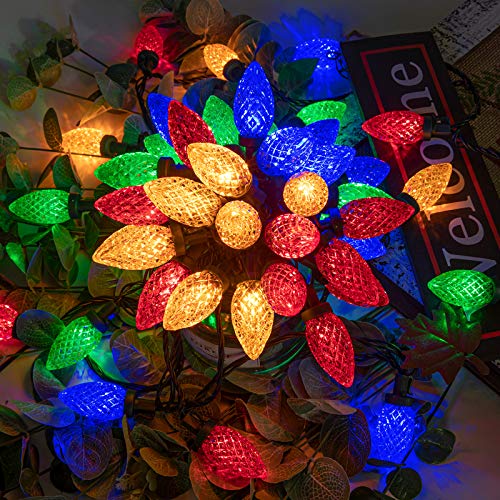
Best Value Outdoor Christmas Lights 2026 Brighten Nights

Best Christmas Lights For Bushes 2026 Brighten Your Yard
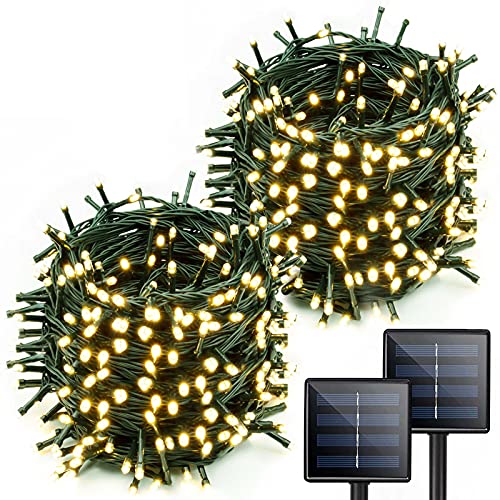
Best Outdoor Waterproof Christmas Lights 2026 For Festive Glow

Best Village Christmas Lights 2026 Magical Display Picks

12 Best String Lights For Christmas Tree of 2026 To Prevent Dark Patches



