How to Safely Reset Your AWD Light

An all-wheel-drive warning light rarely points to an immediate engine breakdown, so take a deep breath before assuming the worst. Most of the time, you can clear the warning by simply adjusting tire pressure to match across all wheels or by clearing the stored alert with an inexpensive code reader.
How you handle the reset depends on what the dashboard symbol is doing. A blinking light usually means the gearboxes that share power between your wheels are overheating and need time to cool off. A solid light often traces back to one low tire spinning faster than the rest, tricking vehicle sensors. Some car brands also require a quick battery disconnect or a plug-in tool to wipe the memory. Here is how to find the root cause and turn the warning off safely.
Can You Keep Driving With The AWD Light On?
When that warning symbol lights up on your dashboard, your first instinct is to wonder if you are about to get stranded. You do not need to panic immediately, but you must check how the light behaves. A light that stays steady means something very different from a light that flashes.
A solid, steady AWD light means your vehicle computer detected an issue and disabled the all-wheel drive system for protection. Your car usually drops into front-wheel drive mode. You can drive home or reach a local repair shop safely on dry pavement. Keep your speed moderate, leave extra space between cars, and avoid hard acceleration. Your vehicle will handle differently around wet corners or on slick roads because power is no longer reaching all four wheels.
A flashing AWD light is an urgent warning for your drivetrain. A blinking light signals that fluid inside your all-wheel-drive system is dangerously hot or that internal parts are slipping under extreme stress. If you continue driving, you risk destroying the transfer case (the gearbox sending engine power to front and rear axles) or the differential (the gearbox that shares power between wheels). Pull over as soon as it is safe, park, and turn off the engine to let the parts cool down.
What Driveway Checks Turn The Light Off Quickly?
Before you schedule a shop visit or buy diagnostic tools, check the simple physical causes right in your driveway. Modern all-wheel-drive systems rely on wheel speed sensors that measure how fast each tire rotates. If one wheel turns even slightly faster or slower than the others, the computer assumes a problem and shuts down the AWD system.
Start by checking your tires with a pressure gauge. If one tire is low by just four or five pounds per square inch, its outer height shrinks. That underinflated tire spins faster than the other three to keep up with the car. The computer sees this mismatch, suspects constant wheel slippage, and turns on the AWD light to avoid damaging internal clutches. Inflating all four tires to the pressure listed on the driver door sticker often makes the light turn off on its own.
Next, check tire wear and sizes. All four tires must have the same size, brand, and roughly equal tread depth. Putting one brand-new tire on an axle alongside three worn tires creates a physical size difference that confuses the computer. Running on a small donut spare tire also triggers the AWD light immediately because the spare wheel is much smaller than regular tires. The light remains on until you reinstall a full-size tire.
Finally, consider how hard the car was driven right before the light appeared. Driving through deep snow, spinning tires in mud, or towing heavy loads on steep hills forces internal clutches to slip continuously. This friction generates intense heat. If fluid gets too hot, the computer locks out the AWD system until temperatures drop. Letting the car sit turned off for thirty minutes often resolves the issue.
How Do You Reset The AWD Warning Light?
Once you address physical triggers like air pressure or system heat, you can clear the warning light using one of three proven methods.
Method 1: Complete a simple drive cycle. Many modern cars monitor sensor inputs continuously while in motion. After you correct tire pressure or let the fluid cool, take the car for a short, steady drive. Cruise on a clear road at steady speeds between thirty and forty-five miles per hour for ten to fifteen minutes. Avoid hard braking or sudden acceleration. Once the computer verifies that all four wheels are spinning at identical speeds without error, it will often turn off the warning light on its own.
Method 2: Use a plug-in car code reader. If the light remains on after driving, the computer has stored a trouble code that requires manual clearing. A plug-in car code reader (an OBD-II scanner) connects directly to your car diagnostic computer to read and clear these codes.
- Park the car on level ground and switch the ignition off.
- Locate the diagnostic port underneath the dashboard on the driver side, near the hood release latch. If you are working in low light or outfitting a road trip rig, setting up proper 12V interior van lighting makes finding this hidden port much easier.
- Plug the scanner firmly into the vehicle port.
- Turn the ignition key to the "On" position, but do not crank the engine.
- Select the read function on the screen to view the stored vehicle error code (a DTC code). Write this code down so you know what originally triggered the problem.
- Select the "Erase" or "Clear Codes" option on the reader menu to wipe the stored fault.
- Turn the key off, unplug the code reader, and start the engine to confirm the light is gone.
Method 3: Perform a 15-minute battery reset. If you do not have a code reader, disconnecting the vehicle battery drains temporary memory from the car control modules.
- Turn off the ignition completely and remove the key.
- Open the hood and locate the vehicle battery.
- Use a small wrench (usually ten millimeters) to loosen the nut on the negative battery cable terminal, marked with a minus sign.
- Lift the cable clamp off the negative post and set it aside so it cannot touch metal. Never touch the positive red cable during this process.
- Leave the battery disconnected for at least fifteen minutes so the computer capacitors drain their electrical charge completely.
- Reattach the negative cable clamp firmly to the battery post and tighten the nut securely.
- Start the vehicle to confirm the light is cleared. Disconnecting the battery may also reset your clock and radio presets.
Why Does The AWD Light Come Right Back On?
If you reset the light and it returns within a few miles, your vehicle has an active mechanical or electrical failure. Clearing a code only wipes computer memory; it never repairs a broken component. As soon as you begin driving, the vehicle runs continuous automated scans. The moment the computer sees the bad signal again, it turns the AWD light right back on.
A frequent cause is a failing wheel speed sensor. These small magnetic sensors sit near each wheel hub and measure how fast the axles turn. Because they live near the road, they face water, slush, gravel, and road salt. If road grime coats a sensor or a wire breaks, the computer loses track of that wheel speed. Because the system cannot verify if the tire is slipping, it shuts off all-wheel drive for safety.
Worn mechanical parts also cause recurring lights. Over time, gear oil inside your rear differential or transfer case breaks down, losing its ability to lubricate gears and internal clutch packs. Low fluid levels or degraded fluid create excess drag and friction, tripping temperature and pressure sensors. If you clear the light without replacing old fluid, the system quickly overheats again, relighting your dashboard.
When Should You Stop Driving And Call A Mechanic?
While an AWD light triggered by a low tire is harmless once inflated, driving with mechanical failures can destroy your drivetrain. A replacement differential or transfer case can cost thousands of dollars. You need to know when a quick driveway reset is no longer safe and professional repair is required.
Stop driving and call a qualified professional mechanic immediately if you encounter any of these warning signs:
- Loud mechanical noises: Whining, grinding, clicking, or howling sounds coming from underneath the center or rear of the vehicle, particularly when accelerating.
- Drivetrain binding: The vehicle feels like it is resisting your input or shuddering when you make slow, tight turns in a driveway or parking space. This binding indicates gears are locked together when they should turn independently.
- A persistent blinking light: An AWD light that flashes continuously and does not stop even after the vehicle sits parked and cool for over an hour.
- Burning smells: A sharp, sulfurous, or burnt oil smell wafting from underneath the car after driving. This odor indicates gear oil is scorching or leaking onto hot exhaust parts.
- Multiple warning lights at once: If your AWD light appears alongside the Check Engine light, ABS light, and Traction Control light simultaneously, a central communication failure or master sensor failure has occurred.
What Kind Of Code Reader Helps With This Problem?
When dealing with all-wheel-drive issues, not every scan tool will get the job done. Many basic car code readers only communicate with the primary engine emissions computer. Because all-wheel-drive systems are controlled by separate drivetrain, transmission, or chassis modules, a basic engine-only reader may report zero codes even while your AWD light shines brightly on the instrument cluster.
To properly clear AWD warnings, look for a plug-in car code reader that offers multi-system scanning. The device should explicitly state compatibility with transmission, ABS, and chassis control systems, rather than just standard engine diagnostics. Having access to these deeper systems ensures the tool can pull the specific sensor error causing the AWD lockout.
Look for a tool that includes a built-in code lookup library right on the display screen. Instead of forcing you to search online, a reader with a built-in library displays the plain-English definition of the fault immediately. You will know at a glance whether the fault points to a simple wheel speed sensor or a transmission fluid issue.
Pay attention to physical build quality. A scanner equipped with a thick, insulated cable of at least two to three feet allows you to sit comfortably in the driver seat while reading data. A sturdy outer casing is also a major advantage, protecting the screen if it falls onto a hard concrete driveway.

- LFR Score9.6
LFR Score is a ranking system developed by lightfansreviews.com. LFR Score has no relationship or impact from any manufacturers or sales agent websites. Learn more
- BrandMajosta

- LFR Score9.2
LFR Score is a ranking system developed by lightfansreviews.com. LFR Score has no relationship or impact from any manufacturers or sales agent websites. Learn more
- BrandANCEL
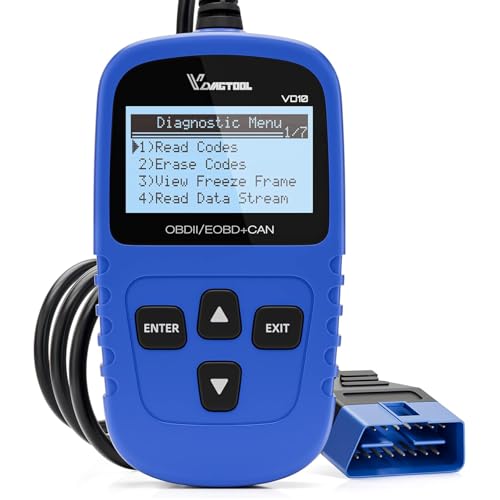
- LFR Score9.2
LFR Score is a ranking system developed by lightfansreviews.com. LFR Score has no relationship or impact from any manufacturers or sales agent websites. Learn more
- BrandVDIAGTOOL

- LFR Score9.2
LFR Score is a ranking system developed by lightfansreviews.com. LFR Score has no relationship or impact from any manufacturers or sales agent websites. Learn more
- BrandMOTOPOWER

- LFR Score9.0
LFR Score is a ranking system developed by lightfansreviews.com. LFR Score has no relationship or impact from any manufacturers or sales agent websites. Learn more
- BrandOBDMATE

- LFR Score9.0
LFR Score is a ranking system developed by lightfansreviews.com. LFR Score has no relationship or impact from any manufacturers or sales agent websites. Learn more
- BrandANCEL

- LFR Score9.0
LFR Score is a ranking system developed by lightfansreviews.com. LFR Score has no relationship or impact from any manufacturers or sales agent websites. Learn more
- BrandFOXWELL
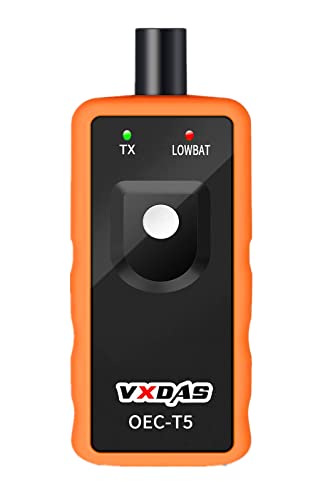
VXDAS TPMS Relearn Tool Only for GM Vehicles (2006-2024 Chevy/Buick/GMC/Opel/Cadillac)
View on Amazon- LFR Score8.6
LFR Score is a ranking system developed by lightfansreviews.com. LFR Score has no relationship or impact from any manufacturers or sales agent websites. Learn more
- BrandVXDAS

- LFR Score6.4
LFR Score is a ranking system developed by lightfansreviews.com. LFR Score has no relationship or impact from any manufacturers or sales agent websites. Learn more
- Brandyorpyep
Last update on 2026-09-29 / Affiliate links / Images, Product Titles, and Product Highlights from Amazon Product Advertising API
FAQs
Does disconnecting the battery always clear the AWD light?
Disconnecting the battery clears temporary stored codes from computer memory, but it only keeps the light off if the underlying trigger has been resolved. If a wheel speed sensor is physically broken or tire sizes do not match, the computer detects the fault again within moments of moving and relights the dash.
Can low tire pressure really turn on the AWD light?
Yes, low tire pressure is one of the most common reasons an all-wheel-drive warning light turns on. An underinflated tire is physically shorter and spins faster than properly inflated tires, tricking the computer into thinking a wheel is constantly losing traction. Bringing all four tires to matching manufacturer specifications frequently resolves the issue.
Is it safe to drive in snow with the AWD light on?
It is not ideal because the computer has likely shut down power to your secondary drive wheels to protect the mechanical components. Your vehicle is functioning essentially as a two-wheel-drive vehicle, giving you significantly less traction on icy, slippery roads. Drive slowly, allow plenty of stopping distance, and avoid steep unplowed hills.
Can a blown fuse cause the all-wheel drive light to illuminate?
Yes, modern all-wheel-drive systems use electronic solenoids and sensors powered through the vehicle fuse box. If a fuse protecting the AWD control module or electric clutch blows, the computer loses power to the system and illuminates the warning light. Checking the fuse box using your owner manual diagram can save you a trip to the repair shop.


Best Lighting For Makeup 2026 Bright Ideas For Flawless Looks

Best Wall Sconces For Staircase 2026 Brighten Your Home

Best Lighting For Computer Desk 2026 For Focused Work

Best Boat Black Lights 2026 For Nighttime Adventure

Best Black 30 Inch Light Bar Reviews – Top Picks of 2026

Best Black Light For Aquarium 2026 For Vibrant Glow

Best Black Light for Authenticating Glass 2026 Top Picks

Best Waterproof Spotlight 2026 That Outshines Expectations