Is a Chandelier a Fixture When Selling a Home?

Yes, a hardwired chandelier is a fixture. Because the light connects directly to the ceiling wiring, it counts as a permanent part of the property. That means buyers expect it to stay right where it hangs on moving day. Taking it down without a clear plan can easily stall a sale, trigger contract disputes, or cost you money at closing.
A few details can change that rule, though. If the light simply plugs into an ordinary wall outlet, it is personal property that travels with you. A seller can also keep a favorite piece by writing an exclusion in the purchase contract, or by swapping it out before showing the home. Renters also need to know when swapping a fixture risks their security deposit. Here is what decides who owns the light and how to keep yours safely.
Why Hardwired Ceiling Lights Count as Real Estate Fixtures
When dealing with residential property, everything inside a home falls into one of two legal categories: real property or personal property. Personal property includes movable belongings you take with you when you pack up a moving truck, such as dining tables, rugs, and portable lamps. A fixture is a permanent item attached to the home, meaning it is legally tied to the house structure and automatically transfers to the buyer upon sale.
A standard chandelier counts as a fixture because of how it connects to the building. It is hardwired, meaning it connects directly to house wiring inside a ceiling junction box (the ceiling box housing electrical wires). To take the chandelier down, you cannot simply unplug a cord from an outlet. You have to climb a ladder, shut down power, remove mounting screws, disconnect wire connectors, and separate the fixture from the ceiling framework.
Removing a hardwired light alters the ceiling surface and leaves exposed electrical wiring behind. In real estate legal standards, any item that requires tools to detach and leaves behind damage or an incomplete building system is presumed to be part of the house. Unless you make a specific written agreement before signing the sales contract, a hardwired chandelier belongs to the property.
This rule applies regardless of whether the chandelier is an inexpensive builder-grade light or a family heirloom made of hand-cut crystal. The law focuses on physical attachment rather than sentimental value or purchase price. If a light draws electricity directly from internal household circuits through a fixed ceiling box, the buyer has every legal right to expect that chandelier to remain in place on moving day.
Hardwired Lights Versus Plug-In Swag Chandeliers
Not every hanging light fixture is permanently attached to the home. The main deciding factor between a permanent fixture and personal property comes down to the power connection and mounting method.
A hardwired fixture is wired directly into a ceiling or wall electrical box using copper conductors and wire nuts. The metal canopy sits flush against the ceiling drywall, hiding the wiring box completely. This type of light cannot be packed into a moving box without physically dismantling a piece of the home electrical system.
In contrast, a plug-in chandelier (often called a swag light) hangs from one or two ceiling hooks and runs a long cord down a wall into an ordinary household outlet. The ceiling hook is screwed into the framing, so the hook itself is attached to the house. The hanging lamp, cord, and chain, however, remain personal property because they plug in just like a floor lamp or toaster.
Unplugging a swag lamp requires no electrical work and leaves the building circuits untouched. Even so, hanging cords can create confusion during home showings. If a swag lamp hangs directly over a dining room table, prospective buyers may glance at the ceiling and assume it is permanently hardwired.
If you own a plug-in hanging light that you intend to keep, make the wall cord obvious during open houses or point it out in your property notes. The same clarity helps with smart home hardware. If you use portable automation gear or smart lights that connect with Amazon Echo plugs, clarify that those plug-in accessories leave with you while any hardwired ceiling fixtures stay behind.
Home Sale Rules: Contracts, Exclusions, and Replacement Expectations
Standard residential purchase agreements include clear language stating that all permanently installed lighting fixtures, ceiling fans, and built-in hardware stay with the property. When a seller wishes to take a specific chandelier, they must handle it through an exclusion.
An exclusion is a written agreement that an item does not sell with the home. This clause must appear clearly in the real estate listing agreement and, more importantly, in the final purchase contract signed by both buyer and seller. A quick verbal comment to your real estate agent or an offhand remark to an interested buyer carries zero legal weight once contract signatures are finalized.
Relying on informal promises often creates serious friction at the worst possible time. The standard purchase contract rules supreme:
- The written agreement governs all fixtures: If a chandelier is attached to the ceiling and not listed on the contract exclusion page, the seller must leave it.
- The final walkthrough reveals missing items: Buyers usually walk through the property a few hours before closing. If they find bare wires dangling from a raw ceiling box where a chandelier once hung, they can pause the closing process.
- Escrow delays carry real financial risk: A buyer faced with an unannounced fixture removal can demand a financial credit, require the return of the original light, or insist on escrow holdbacks until a suitable replacement is installed.
- Replacements are mandatory: Even when a chandelier is properly excluded in the purchase agreement, a seller cannot simply leave an open hole in the ceiling. Sellers are expected to install a functioning replacement ceiling light fixture so the room remains safe, code-compliant, and fully illuminated.
Tenant Guidelines: Swapping Lights Without Losing a Security Deposit
Renters often struggle with dull, unflattering ceiling lights in older rental units. While hanging a stylish chandelier over your dining table can make an apartment feel like home, swapping out rental lights requires careful planning to protect your security deposit.
Most rental leases explicitly prohibit tenants from altering electrical wiring or removing landlord fixtures without prior written consent. Landlords view hardwired lights as building fixtures. If you install your own chandelier and leave it behind when your lease ends, the landlord might charge you a disposal fee to remove it. If you take your chandelier and leave a hole or broken light in its place, the repair cost comes straight out of your deposit.
To personalize your lighting safely as a tenant, take these essential precautions:
- Store the original fixture carefully: Keep the landlord's original light, mounting bracket, screws, wire nuts, and bulbs in a sturdy storage box. Label the box with the room name and store it safely in a closet.
- Prioritize electrical safety: Whenever changing a light, always shut off the circuit breaker at the main electrical panel. Never rely on the wall switch alone, because another person can easily flip the switch while you handle the wires.
- Reinstall before moving out: Allocate time during moving week to take down your chandelier and remount the landlord's original ceiling fixture. Confirm that the light turns on smoothly and sits flush against the ceiling drywall.
- Call a professional if in doubt: If the junction box looks loose, if the wires look brittle, or if you feel uncomfortable matching the wires, hire a qualified electrician. Damaging rental wiring can lead to substantial repair bills.
5 Steps to Keep Your Favorite Chandelier When Selling Your Home
If you have an expensive, customized, or sentimental chandelier that you cannot bear to leave behind, planning ahead prevents stressful contract disputes. Following this step-by-step sequence ensures you keep your light without causing delays on closing day.
- Replace the chandelier before listing photos or open houses.
Buyers cannot fall in love with or fight over an item they never see. Taking your chandelier down before the real estate photographer arrives completely eliminates the issue before it begins.
- Shut off the circuit breaker at the main electrical panel.
Working on home wiring requires zero voltage. Shutting off the main breaker switch prevents painful shocks, short circuits, and damaged building wires if someone accidentally bumps the wall light switch while you work.
- Install an attractive, functioning ceiling light in its place right away.
Home inspectors, mortgage appraisers, and home buyers expect functional lighting in every main room. A standard ceiling fixture keeps the room bright and eliminates safety warnings about bare ceiling boxes or hanging wires.
- Pack and label the chandelier with all its mounting hardware.
Wrap delicate glass arms and crystals individually in bubble wrap. Secure the mounting canopy, threaded mounting stem, crossbar bracket, and decorative finials in a sealed plastic bag taped inside the packing box so no parts disappear before you move.
- Document the current lighting in your listing notes and purchase contract.
Even though the replacement light is already on the ceiling, make sure your agent notes the current fixture in the property disclosures. Clear paperwork prevents misunderstandings if older listing photos from previous sales still appear online.
Choosing a Replacement Ceiling Light Before Moving
When swapping out a personal chandelier before selling your home or ending a lease, you do not need to spend a small fortune on luxury decor. You simply need a clean, reliable, code-compliant light that presents the room in its best condition.
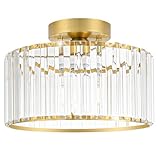
For most living rooms, dining spaces, and entryways, look for a flush mount (mounted flat against the ceiling) or a semi-flush mount (hanging down a few inches on a short stem). These designs offer generous overhead clearance, making rooms feel taller and more open to touring buyers. Neutral metal finishes like matte black, brushed brass, or satin nickel blend easily with most interior paint colors and furniture arrangements.
Check the electrical base and ratings before buying a replacement light. Look for a standard screw-in bulb base (E26 medium base), which accepts common LED bulbs that anyone can replace easily. Verify that the light is dry-rated for living rooms and bedrooms, which provides standard protection for indoor spaces away from steamy showers or outdoor rain.
Pay close attention to brightness in lumens (which measures actual brightness output rather than power draw in watts). Aim for ample brightness paired with a comfortable color warmth of around 2700K (warm soft white) to 3000K. This warm tone makes living rooms and dining areas feel welcoming during evening showings. If you are updating transitional areas around the house to prepare for prospective buyers, adding basic motion sensor lights for hallways and stairs can also help visitors walk comfortably through dimmer hallways without searching for unfamiliar wall switches.
- LFR Score8.8
LFR Score is a ranking system developed by lightfansreviews.com. LFR Score has no relationship or impact from any manufacturers or sales agent websites. Learn more
- BrandLxybcce

- LFR Score8.2
LFR Score is a ranking system developed by lightfansreviews.com. LFR Score has no relationship or impact from any manufacturers or sales agent websites. Learn more
- BrandZXFDWB

- LFR Score8.1
LFR Score is a ranking system developed by lightfansreviews.com. LFR Score has no relationship or impact from any manufacturers or sales agent websites. Learn more
- BrandRUIYEY

- LFR Score7.9
LFR Score is a ranking system developed by lightfansreviews.com. LFR Score has no relationship or impact from any manufacturers or sales agent websites. Learn more
- BrandMQMQA
Last update on 2026-10-18 / Affiliate links / Images, Product Titles, and Product Highlights from Amazon Product Advertising API
FAQs
Can a seller take a chandelier if they leave a blank ceiling cover plate?
No, a seller cannot simply cap the wires and cover the ceiling box with a blank plastic plate unless the buyer explicitly agreed to that arrangement in writing. Residential real estate contracts expect living areas to contain functioning lighting. Leaving an empty plate leaves the room dark, creates an unappealing impression during the final walkthrough, and often violates basic home appraisal guidelines.
What happens if a buyer discovers a chandelier was removed after closing?
If an attached chandelier was removed without an exclusion written into the contract, the seller has committed a breach of contract. The buyer can demand that the seller return and reinstall the original fixture at the seller's expense, or reimburse the buyer for the cost of buying and installing an equivalent light. In severe cases, small claims court or real estate mediation steps in to resolve the financial difference.
Do light bulbs and wall dimmer switches count as fixtures too?
Yes, wall dimmer switches are hardwired directly into the wall electrical box and count as permanent fixtures that must remain with the home. Light bulbs screwed into an attached fixture are also generally expected to stay so the fixture remains functional. However, portable smart bulbs that pair with external personal hubs can occasionally be swapped for standard incandescent or LED bulbs prior to showings, as long as working bulbs remain in every socket.
Does a chandelier installed on a covered outdoor patio count as a fixture?
Yes, any chandelier that is hardwired into a patio or porch junction box counts as a permanent real estate fixture. For outdoor installations, the fixture must be damp-rated for covered patios or wet-rated for direct exposure to moisture. Regardless of whether it hangs indoors or outdoors, physical connection to the home electrical wiring dictates that it stays with the property unless formally excluded in the sales contract.


Best Lighting For Makeup 2026 Bright Ideas For Flawless Looks

Best Wall Sconces For Staircase 2026 Brighten Your Home
Best Lighting For Computer Desk 2026 For Focused Work

Best Boat Black Lights 2026 For Nighttime Adventure

Best Black 30 Inch Light Bar Reviews – Top Picks of 2026

Best Black Light For Aquarium 2026 For Vibrant Glow

Best Black Light for Authenticating Glass 2026 Top Picks
Best Waterproof Spotlight 2026 That Outshines Expectations