
What Color Light Bulb Is Right for Your Bathroom?

Many people assume daylight bulbs belong in the bathroom because bright, cool light seems clean. In reality, that icy tone feels like a hospital exam room, while the ideal choice for most spaces is warm white between 2700K and 3000K (the color warmth number on the package). This range provides a clear, inviting glow that flatters your skin without turning the room yellow or dim.
A few room features might nudge your choice toward either end of that range. Bathrooms with dark walls or no outside windows benefit from the crisper 3000K side, which helps with close grooming at the mirror. Soft 2700K light works better in rooms meant for relaxing baths, or where pale paint already bounces plenty of brightness around. Getting the tone right comes down to matching the bulb to how you use the room each day.
Aim for warm white between 2700K and 3000K for everyday comfort
When you stand in the home improvement aisle, bulb packages show a number followed by the letter K. That number represents the color tone or warmth, measured in Kelvin, and it tells you whether the light shines golden, neutral white, or icy blue. For most home bathrooms, staying between 2700K and 3000K hits the sweet spot between daily comfort and functional visibility.
A 2700K bulb produces a warm soft white glow that feels similar to a traditional incandescent bulb. This tone softens sharp edges, feels gentle on tired eyes when you wake up, and helps you relax when taking a bath at the end of a long day. It adds warmth to the room without feeling dim.
A 3000K bulb shifts slightly cleaner and whiter. It removes the amber tint of lower numbers while still keeping the room welcoming. If your bathroom features white ceramic tile, pale gray cabinets, or chrome hardware, 3000K keeps those surfaces looking clean and modern rather than yellowed.
Bathrooms without windows benefit especially from this balance. Without natural outdoor light to help balance the room, bulbs under 2500K can feel dingy, while bulbs over 3500K feel like a commercial office. Keeping your fixtures within the 2700K to 3000K range ensures your bathroom feels like a restful home retreat.
Compare soft white, warm white, and daylight before you make a swap
Bulb manufacturers organize their products under marketing names that often confuse shoppers. Three terms dominate store shelves: soft white, warm white, and daylight. Knowing what each label actually produces helps you avoid buying the wrong box.
Soft white bulbs sit right at 2700K. This light carries a gentle golden undertone that warms up wooden vanities, earth-toned tiles, and warm wall paint. It is easy on your vision, making it an excellent choice for guest powder rooms or master bathrooms where you value a cozy feel. But if your bathroom has bright white subway tile or polished marble, soft white can sometimes make those surfaces look slightly aged or creamy.
Warm white bulbs usually sit between 3000K and 3500K. This color bridges the gap between cozy yellow and stark modern white. It produces a crisp, neutral glow that flatters modern bathroom finishes and keeps paint colors true to their original shade. Many homeowners prefer 3000K warm white because it feels bright and refreshing when getting ready in the morning, without feeling harsh.
Daylight bulbs typically range from 4000K to 5000K. Despite the friendly name, daylight bulbs do not look like warm afternoon sunshine. Instead, they produce a sharp, blue-white beam similar to noon sun on a cloudless day. In a bathroom, 5000K daylight bulbs bounce heavily off mirrors, porcelain tubs, and glossy tiles. That cool blue tone accentuates skin blemishes, casts dark gray shadows across your face, and creates a sterile hospital atmosphere.
Keep mirror lighting near 3000K to see clean details without pale skin
Vanity mirrors require careful lighting because this is where you shave, style hair, apply makeup, and check your skin up close. The wrong color tone at the mirror directly distorts what you see in the glass.
If you install 5000K daylight bulbs at your vanity, the heavy blue cast washes out warm skin tones. It exaggerates dark under-eye circles, makes pale skin look ghostly, and often leads people to over-apply makeup to compensate. On the other hand, bulbs that sit below 2700K bathe your face in heavy golden light. That deep amber hue masks redness and blemishes, meaning foundation or concealer might look well blended indoors but appear patchy once you step outside.
A 3000K warm white bulb provides the cleanest balance for vanity tasks. It gives you enough brightness and neutral white clarity to see fine lines and skin details clearly without stripping natural warmth from your face.
Fixture placement matters just as much as bulb color. If your vanity uses an overhead bar mounted flat against the ceiling or directly above the mirror, downward beams cast heavy shadows under your eyes and nose. Placing wall sconces on both sides of the mirror at eye level spreads light evenly across your face, eliminating those shadows. If you want subtle guidance for late-night bathroom trips without turning on glaring vanity bulbs, you can install motion sensor lights for indoor hallways and stairs to navigate safely in the dark.
Check the color accuracy rating so your mirror reflects true tones
Color tone or warmth is only half the battle when picking a bathroom bulb. You also need to look at color accuracy, which manufacturers list on packaging as CRI, or Color Rendering Index.
Think of color accuracy as a score from 0 to 100 that measures how faithfully a bulb reveals the true colors of objects compared to natural outdoor light. A standard household LED bulb often has a score of 80 CRI. While an 80 rating works fine for a hallway or garage, it can leave skin tones, bath towels, and wall paint looking dull, grayish, or flat in a bathroom mirror.
For vanity mirrors and grooming spaces, look for bulbs rated at 90 CRI or higher. A 90+ CRI bulb reveals rich, accurate skin tones and shows the true shade of cosmetics and clothing. When you combine a 3000K color warmth with a 90 CRI rating, you get lighting that looks clean and bright while keeping your reflection natural.
You can find this rating on the back of the package, usually on the lighting facts label or in the technical details. If a bulb package does not mention a CRI rating, it almost certainly sits around 80. Choosing a bulb with 90 CRI or higher makes an immediate difference in how true your reflection looks every day.
Inspect the bulb package for socket size, damp rating, and dimming support
Before you buy replacement bulbs, inspect four practical details on the box to make sure they match your fixture and operate safely:
- Standard screw-in bulb base (E26 medium base): Most home vanity fixtures and ceiling mounts use a standard screw-in bulb base (E26 medium base). Check your current socket to confirm the base size before buying decorative bulbs.
- Brightness in lumens: Check brightness in lumens rather than old wattage numbers. Watts only measure electrical power draw, while lumens measure actual light output. For a multi-socket vanity fixture, bulbs providing 500 to 800 lumens each deliver plenty of clear light without blinding glare.
- Damp rating for moisture: Bathrooms collect steam from hot showers. Verify the package states the bulb is damp-rated for steamy bathrooms. Standard dry-rated bulbs are meant only for living rooms and bedrooms, where humidity is low. For a shower stall ceiling fixture exposed to direct water spray, you need a wet-rated fixture instead.
- Dimmer switch compatibility: If your bathroom uses a wall slider or dial, select bulbs clearly marked as dimmable. Pair them with an LED-compatible dimmer switch to prevent humming, buzzing, or flickering.
Whenever you replace a hardwired fixture (wired directly into a ceiling or wall electrical box) rather than a light with a plug-in cord, shut off the circuit breaker at the main electrical panel before starting. Never rely on the wall switch alone. Check whether your fixture uses standard screw sockets or a built-in LED (where the lighting diodes are permanently built into the fixture). If you are replacing a ceiling fixture, decide between a flush mount (mounted flat against the ceiling) or a semi-flush fixture (hanging down a few inches on a short stem) depending on your ceiling height. For households building automated routines where lighting softens late at night, connecting your fixtures through smart home automation lights gives you reliable scheduling.
Choose globe bulbs designed for steamy bathroom fixtures
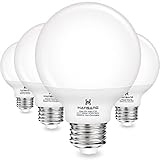
Bathroom vanity bars often feature exposed sockets where the bulb sits completely visible without a glass shade. For these fixtures, round globe bulbs with an E26 base offer the most flattering look and performance.
Round globe bulbs distribute light evenly in all directions rather than focusing it into a direct, harsh beam. This wide dispersion softens shadows across your mirror and vanity counter. Choosing bulbs with frosted or coated white glass helps cut down direct glare, keeping the light comfortable to look at while grooming.
Make sure any vanity bulb you choose carries a damp-location rating to handle daily shower steam without internal moisture damage. Matching all the sockets on your mirror bar with the same bulb model and color rating ensures a clean, cohesive appearance that brightens your space reliably.

- LFR Score9.2
LFR Score is a ranking system developed by lightfansreviews.com. LFR Score has no relationship or impact from any manufacturers or sales agent websites. Learn more
- BrandDekang

- LFR Score8.8
LFR Score is a ranking system developed by lightfansreviews.com. LFR Score has no relationship or impact from any manufacturers or sales agent websites. Learn more
- BrandGovee

- LFR Score8.0
LFR Score is a ranking system developed by lightfansreviews.com. LFR Score has no relationship or impact from any manufacturers or sales agent websites. Learn more
- Brandhansang
- LFR Score7.7
LFR Score is a ranking system developed by lightfansreviews.com. LFR Score has no relationship or impact from any manufacturers or sales agent websites. Learn more
- Brandhansang
Last update on 2026-10-18 / Affiliate links / Images, Product Titles, and Product Highlights from Amazon Product Advertising API
FAQs
Why do 5000K daylight bulbs make bathrooms feel like a hospital?
Daylight bulbs at 5000K produce a sharp, blue-white light that mimics noon sunlight. When that cool light bounces off white porcelain, mirrors, and shiny tile, it creates high contrast and harsh gray shadows. This cool tint strips natural warmth from your skin, giving the room an uninviting and sterile appearance.
Should your ceiling lights match the exact color of your vanity mirror bulbs?
Matching the color warmth of all fixtures in the room creates a balanced look. Mixing a 2700K warm ceiling light with 4000K vanity bulbs makes the warm light look dirty yellow and the cool light look icy blue. Keeping your ceiling flush mount fixtures and vanity lights within the 2700K to 3000K range keeps the space visually harmonious.
Can wall paint color change how your light bulbs look?
Wall paint bounces light across the bathroom and alters the overall tone of the room. Warm bulb colors like 2700K highlight yellow or beige undertones in warm paint and wood cabinets. If your bathroom has cool gray walls, white subway tile, or marble, a 3000K warm white bulb prevents surfaces from looking yellowish while maintaining a bright atmosphere.
How do you stop LED bathroom lights from buzzing or flickering?
Buzzing and flickering usually happen when dimmable LED bulbs are paired with an older wall switch designed for traditional incandescent bulbs. Older switches cause electrical interference with LED circuitry. Replacing the switch with an LED-compatible dimmer switch stops the noise and provides smooth dimming performance.


Best Lighting For Makeup 2026 Bright Ideas For Flawless Looks

Best Wall Sconces For Staircase 2026 Brighten Your Home

Best Lighting For Computer Desk 2026 For Focused Work

Best Boat Black Lights 2026 For Nighttime Adventure

Best Black 30 Inch Light Bar Reviews – Top Picks of 2026

Best Black Light For Aquarium 2026 For Vibrant Glow

Best Black Light for Authenticating Glass 2026 Top Picks

Best Waterproof Spotlight 2026 That Outshines Expectations





