What Is a G9 Bulb and How Do You Replace It?

Many people assume that any tiny capsule bulb with two prongs will fit the same small fixture. In reality, a G9 bulb is a specific push-in light defined by two looped metal pins spaced nine millimeters apart. Unlike other tiny bulbs that need a separate power box to lower the voltage, this compact capsule plugs straight into standard 120-volt household current and slides in without twisting.
Finding the right replacement depends on a few practical details. Traditional versions are glass halogens that get extremely hot, while modern LED upgrades stay cool and slash energy use. But newer LEDs are often slightly wider or taller, which can cause trouble if the fixture uses tight glass globes or narrow covers. Fixtures wired to a wall dimmer switch also require bulbs specifically labeled for dimming to stop buzzing or flickering. Checking the exact space inside the glass shade first makes finding the right match simple.
How to Identify a G9 Bulb by Its Pins, Shape, and Base
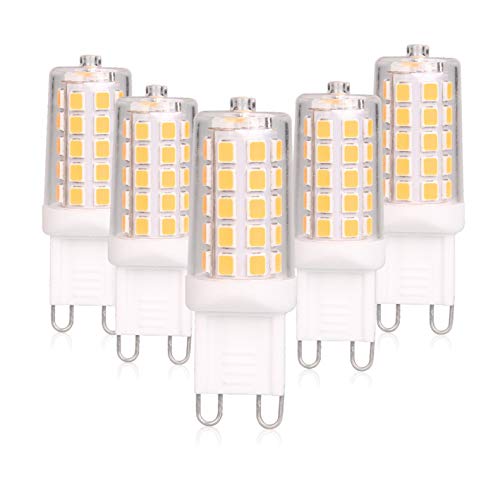
A G9 bulb is a compact light bulb shaped like a small glass or plastic capsule. It belongs to the pin-base family of lighting, which means it does not screw into a socket like a standard household lamp bulb. Instead, it has two looped metal prongs protruding from its flat base. These prongs push directly into two matching slots in a ceramic socket. You will most often find G9 bulbs tucked inside modern chandeliers, wall sconces, bathroom vanity bars, under-cabinet fixtures, and compact desk lamps where a standard teardrop bulb simply cannot fit.
The name itself tells you exactly how to identify the bulb. The letter "G" stands for the glass material originally used to make capsule bulbs, while the number "9" indicates the exact distance between the centers of the two metal pins: 9 millimeters, which is roughly 0.35 inches or just over one-third of an inch. If you look closely at the base, the two prongs are not sharp needles or round posts. They are flat metal loops or wire loops bent into tiny arches. This looped shape gives the pins enough spring tension to stay firmly seated inside the fixture socket without falling out under their own weight.
Another defining characteristic of a G9 bulb is its operating voltage. A G9 bulb runs directly on standard 120-volt household electricity in North America. Unlike many other small pin-based capsule lights, a G9 fixture does not require an external transformer or electronic power box hidden in the ceiling canopy or wall box. Line voltage flows directly to the socket pins. Because it carries full household voltage in such a small frame, the base is made from heat-resistant porcelain or ceramic to prevent electrical arcing and manage heat buildup safely.
G9 Compared to G4, G8, and GU10 Light Bulbs
When you stand in a hardware store lighting aisle or search for replacements online, small pin-style bulbs can look nearly identical at first glance. However, mixing up these socket types means the bulb will either fail to fit or cause an electrical hazard. Understanding how a G9 compares to other common specialty bases makes finding the right bulb straightforward.
The most common mix-up happens between G9 and G4 bulbs. A G4 bulb is also a miniature capsule, but its two pins are thin, straight needles spaced just 4 millimeters apart. More importantly, G4 bulbs run on low-voltage 12-volt power, which requires a step-down transformer. If you could somehow force a 12-volt G4 bulb into a 120-volt G9 socket, the bulb would pop and burn out instantly. A G9 bulb is visibly larger, features looped prongs rather than needle pins, and handles direct 120-volt current.
A G8 bulb looks very similar to a G9 because both run on 120-volt household electricity and share a similar compact capsule body. But a G8 bulb has straight, stiff metal pins spaced 8 millimeters apart. You frequently see G8 bulbs under microwave ovens, inside range hoods, and in tight under-cabinet puck lights. A G8 bulb will not fit into a G9 socket because its pins are one millimeter too close together and lack the loops that lock into G9 spring clips.
You might also encounter GU10 bulbs, especially if you have track lighting or recessed mini fixtures. While directional track heads often rely on specialized indoor spot light bulbs with a GU10 base to create focused beams, the base design is completely different from a G9. A GU10 bulb has two thick metal nubs with flat, mushroom-like feet spaced 10 millimeters apart. A GU10 pushes in and twists a quarter turn to lock into place. A G9 bulb never twists. It simply slides straight into its ceramic slot with a firm push.
Switching from Halogen to LED: Heat, Lumens, and Energy Use
Traditional G9 bulbs are halogen capsules. A halogen bulb contains a small tungsten filament encased in quartz glass filled with halogen gas. While halogen G9s produce a crisp, warm light, they run blisteringly hot. In a dining room chandelier or a multi-bulb vanity strip, four to eight halogen capsules can heat up the entire room within minutes. Over time, that intense heat can also dry out wire insulation, discolor fixture shades, and crack delicate glass covers.
Modern LED G9 replacements solve these problems by using miniature electronic chips to generate light instead of burning a white-hot metal filament. An LED G9 stays remarkably cool to the touch compared to halogen glass, making it far safer for enclosed glass shades and tight decorative fixtures. Switching to LED also cuts power usage dramatically while preserving brightness. Instead of comparing watts to guess brightness, look at lumens, which measures actual light output:
- Energy savings: A traditional halogen G9 consumes 40 watts of electrical power. An equivalent LED G9 uses just 4 watts to deliver the same amount of brightness, cutting electricity usage by 90 percent.
- Light output: A 4-watt LED G9 produces around 400 to 450 lumens, which perfectly matches the brightness of a standard 40-watt halogen capsule. For lower-output accent lights, a 3-watt LED produces about 300 lumens to replace 20-watt to 30-watt halogens.
- Color temperature: Halogen bulbs naturally emit light at 2700K (soft warm white), which gives off a cozy, amber glow. With LED replacements, you can choose 2700K for living rooms, 3000K (warm white) for a crisp, clean tone across bathroom mirrors, or 6000K (daylight white) for bright, energetic task lighting.
- Dimming controls: Halogen bulbs dim smoothly on any standard wall switch. LED bulbs require dedicated dimmable internal electronics. If you have a wall dimmer, you must verify that the LED packaging specifically states it is dimmable, or the bulb will buzz, flicker, or shut off unexpectedly.
How to Measure Fixture Clearance Before You Buy
The single biggest mistake people make when buying an LED replacement for an old G9 bulb is ignoring physical size. Traditional halogen G9 capsules are tiny, often measuring only 1.57 inches long and 0.49 inches in diameter. Because an LED bulb must house miniature circuit boards, ceramic heat sinks, and plastic diffusers, an LED G9 is almost always slightly taller and wider than the halogen bulb it replaces.
Many LED G9 bulbs measure between 1.95 and 2.0 inches in height and roughly 0.61 to 0.67 inches in width. While that extra quarter-inch might seem small, it can prevent the bulb from fitting inside tight decorative fixtures. Before you order replacement bulbs, run through these quick clearance checks:
- Measure the glass globe depth: If your fixture uses threaded glass globes that screw over each bulb, measure the distance from the bottom of the socket to the inside tip of the glass shade to ensure a 2-inch LED will not hit the glass.
- Check the shade opening width: Many modern sconces and chandeliers feature narrow glass cylinders or metal sleeves that slide down over the socket. Confirm the inner opening is wider than 0.7 inches so the broader body of the LED bulb can pass through easily.
- Inspect decorative cages or rings: If your light fixture uses retaining rings to hold shades in place, make sure there is enough finger clearance around the socket to insert a slightly wider bulb without scraping your knuckles.
How to Safely Remove and Install a G9 Bulb
Replacing a G9 bulb is a simple task once you understand how the base connects, but working with line voltage and fragile glass requires care. Following standard safety steps for capsule lights, similar to how to change a halogen light bulb safely at home, ensures you avoid burnt fingers, damaged sockets, or broken glass.
- Shut off the power at the wall switch or main breaker panel. G9 sockets operate on full 120-volt household electricity, and the ceramic socket openings are small and close together. Cutting power eliminates the risk of an accidental electrical shock while your fingers work near the socket contacts.
- Allow the fixture to cool for at least ten to fifteen minutes. If you are removing a burned-out halogen bulb, remember that halogen quartz glass reaches extreme temperatures during operation. Giving the bulb ample time to cool protects your fingertips from painful contact burns.
- Remove the outer shade, globe, or decorative cover. Carefully unscrew or unclip any glass globes, mesh cylinders, or retaining collars surrounding the bulb. Setting these pieces safely aside gives you a clear line of sight and prevents you from bumping the glass against the fixture frame.
- Grip the old bulb firmly and pull it straight out of the socket. Do not twist, rotate, or bend the bulb. G9 sockets hold the looped pins using internal spring-metal clips. Pulling straight out releases the bulb smoothly without bending the clips or snapping the glass capsule at the base.
- Inspect the ceramic socket slots for heat damage or debris. Look directly into the two small pin slots on the socket face. If you notice black scorch marks, melted edges, or loose internal contact clips, stop immediately and contact a licensed electrician to replace the socket before installing a new bulb.
- Handle the new bulb with a clean tissue or cloth if using halogen. If you are installing a new halogen capsule, never touch the bare quartz glass with your fingers. Natural skin oils transfer to the glass, creating localized hot spots when the bulb heats up, which can cause the glass to bubble and blow out early. If installing an LED bulb, clean bare hands are fine, but using a dry cloth keeps oils off the plastic cover.
- Align the two looped pins with the socket slots and push straight in. Hold the bulb perpendicular to the socket face so both pins enter their slots at the exact same time. Press firmly until you feel the bulb seat completely against the ceramic base. A loose connection will cause the light to buzz, flicker, or spark.
- Reinstall the decorative shades and turn the power back on. Secure the glass cover or shade back onto the fixture. Switch on the power at the breaker and wall switch to verify the bulb lights up instantly with clean, steady illumination.
What to Look for in a Replacement G9 Bulb
When you are ready to pick up a replacement G9 bulb, finding the right option comes down to matching your fixture's physical layout and lighting controls. Start by checking your light switch. If your chandelier, sconce, or vanity connects to a dimmer switch, you must select a bulb clearly labeled as dimmable. Installing non-dimmable bulbs on a dimmer circuit causes persistent humming, visible flickering, and premature electrical failure.
Next, pay close attention to the bulb's physical dimensions. Compare the listed height and width against your fixture shade clearance so you do not get stuck with a bulb that sticks out awkwardly or prevents the glass globe from screwing on completely. Finally, choose the right color temperature for your room. A soft warm white around 2700K creates a relaxing ambiance for living spaces and bedrooms, while a 3000K warm white offers crisp, flattering clarity for bathroom mirrors and kitchen task areas. Selecting ceramic base construction will also help manage heat, ensuring your replacement lasts for years of daily use.
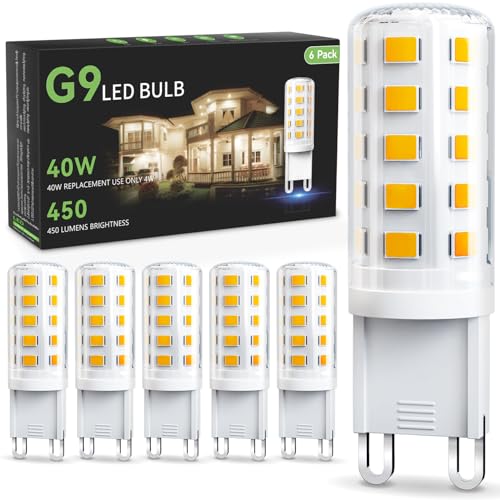
- LFR Score9.4
LFR Score is a ranking system developed by lightfansreviews.com. LFR Score has no relationship or impact from any manufacturers or sales agent websites. Learn more
- BrandTJOY

- LFR Score9.4
LFR Score is a ranking system developed by lightfansreviews.com. LFR Score has no relationship or impact from any manufacturers or sales agent websites. Learn more
- BrandTJOY

- LFR Score9.4
LFR Score is a ranking system developed by lightfansreviews.com. LFR Score has no relationship or impact from any manufacturers or sales agent websites. Learn more
- BrandTJOY
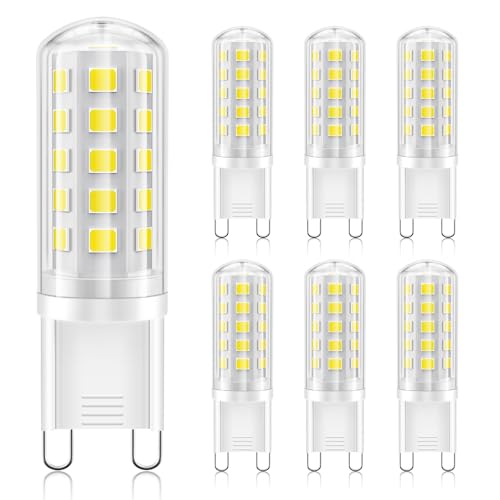
- LFR Score9.4
LFR Score is a ranking system developed by lightfansreviews.com. LFR Score has no relationship or impact from any manufacturers or sales agent websites. Learn more
- BrandBRVHOZX

- LFR Score9.4
LFR Score is a ranking system developed by lightfansreviews.com. LFR Score has no relationship or impact from any manufacturers or sales agent websites. Learn more
- BrandDAYBETTER
- LFR Score9.2
LFR Score is a ranking system developed by lightfansreviews.com. LFR Score has no relationship or impact from any manufacturers or sales agent websites. Learn more
- BrandBAOMING

- LFR Score9.2
LFR Score is a ranking system developed by lightfansreviews.com. LFR Score has no relationship or impact from any manufacturers or sales agent websites. Learn more
- BrandGOHDLAMP

- LFR Score9.2
LFR Score is a ranking system developed by lightfansreviews.com. LFR Score has no relationship or impact from any manufacturers or sales agent websites. Learn more
- BrandJaenmsa

- LFR Score9.2
LFR Score is a ranking system developed by lightfansreviews.com. LFR Score has no relationship or impact from any manufacturers or sales agent websites. Learn more
- BrandALIDE

- LFR Score9.0
LFR Score is a ranking system developed by lightfansreviews.com. LFR Score has no relationship or impact from any manufacturers or sales agent websites. Learn more
- BrandSailstar
Last update on 2026-10-01 / Affiliate links / Images, Product Titles, and Product Highlights from Amazon Product Advertising API
FAQs
Do G9 bulbs push straight in or twist to lock?
G9 bulbs push straight into the socket without any twisting. The ceramic base features internal spring-metal clips that grip the two looped pins tightly. Twisting or turning a G9 bulb will bend the contact clips or snap the pins off inside the socket.
Why will my new LED G9 bulb not fit inside the fixture globe?
LED G9 bulbs contain internal driver circuits and heat sinks, making them noticeably taller and wider than original halogen capsules. While a halogen bulb is usually under half an inch wide, an LED equivalent can measure over 0.65 inches wide and nearly 2 inches long. If your fixture has a tight glass cover or narrow opening, standard LED replacements may bump against the glass.
Can I put an LED G9 bulb into an old halogen light fixture?
Yes, you can replace a halogen G9 with an LED G9 as long as the fixture operates on standard 120-volt household power, which is standard for G9 sockets. The LED bulb will draw roughly 90 percent less electricity and generate far less heat while providing equivalent light output. Just be sure to confirm the physical dimensions fit inside your fixture shade.
Can G9 bulbs be dimmed with a wall switch?
G9 bulbs can be dimmed, but only if the specific bulb is manufactured for dimming. Traditional halogen G9s dim naturally on standard wall switches, but LED G9s require specialized internal circuitry to handle variable voltage. If you use a dimmer switch, verify that the replacement LED bulb package specifically states it is dimmable to prevent flickering and buzzing.

Best Bulb For Exposed Light 2026 That Shines Bright

Best Industrial Light Bulb Reviews: Top Picks for 2026
Best Outdoor Light Bulb Reviews: Top-Rated Picks for 2026
Best LED Reading Light Bulb Reviews - Top Picks for 2026

Best Vintage Light Bulb 2026 With Style And Glow
Best Yellow Fog Light Bulb 2026 For Clearer Night Drives

Best Z Wave Light Bulb 2026 Top Picks For Smart Control
Best Light Bulb For Vanity Mirror 2026 Brightness Boost