What Is a Type A Light Bulb and Will It Fit Your Lamp?

There is no reason to worry when a lamp label calls for a specific bulb style. A Type A bulb is simply the classic pear-shaped bulb found in bedside lamps and ceiling fixtures across most homes. The letter A refers strictly to that familiar teardrop shape rather than any tricky electrical wiring or rare fixture design.
Getting the right fit depends on just three quick details. First is the number attached to the letter, like an A19, which measures the bulb width across its widest point. Next is the threaded metal base, which is almost always a standard screw-in base made for everyday household sockets. Finally, the fixture label shows a maximum wattage limit to keep heat under control. Here is how to read those markings so your new bulb fits safely on the first try.
What does a Type A bulb look like?
A Type A light bulb is the familiar, classic pear-shaped bulb found in almost every household lamp and ceiling fixture. It features a wide, rounded glass dome at the top that curves gently outward, then tapers smoothly into a narrower neck before meeting the metal screw base. The letter "A" stands for "Arbitrary," an old industry designation chosen simply because this shape became the universal default design for everyday home illumination.
Because the curved glass body spreads light evenly in all directions, a Type A bulb is ideal for general room lighting. You will commonly find it sitting beneath fabric lampshades, screwed into bare basement pull-chain sockets, or enclosed inside hallway ceiling domes. The omnidirectional light distribution ensures that lampshades glow evenly from top to bottom without casting harsh shadows or dark spots on your walls.
It helps to contrast this classic teardrop profile with other everyday bulb shapes so you can identify what you have on your shelf. Round vanity bulbs carry a "G" label and look like circular globes. Bulbs designed for recessed ceiling cans carry "BR" or "PAR" labels and feature flat or slightly bowed reflective faces that direct beams downward. Decorative chandelier bulbs carry a "B" or "C" label and taper upward to a sharp point like a candle flame. If your bulb has rounded shoulders and a classic teardrop profile, you are holding a Type A bulb.
What do numbers like A19 and A21 mean?
When you browse the lighting aisle, you will almost never see the letter "A" printed by itself. It is almost always followed by a two-digit number, such as A19, A21, or A15. That number tells you the exact physical width of the bulb at its widest point.
In the United States, lighting manufacturers measure bulb diameters in eighths of an inch. To convert the number on the package into inches, divide the number by eight. An A19 bulb measures 19 eighths of an inch across, which equals 2 and 3/8 inches (about 2.37 inches). An A21 bulb measures 21 eighths of an inch across, which comes out to 2 and 5/8 inches wide. A smaller A15 bulb measures 15 eighths of an inch, making it just under two inches wide.
Knowing this number prevents frustrating clearance issues when you bring a bulb home. The A19 is the standard household teardrop bulb used in the vast majority of table lamps, bedside reading lights, and wall sconces. Higher-output bulbs often need the slightly larger A21 profile to accommodate internal cooling components. If your table lamp has a narrow metal harp holding the shade, a wider A21 bulb might press against the metal frame or force your lampshade to sit crooked. Checking the number ensures the bulb slips inside the shade or glass enclosure with room to spare.
Will a Type A bulb fit my socket?
Bulb shape and socket size are two separate specifications, but in standard home fixtures they almost always pair together. The letter "A" tells you the shape of the glass, while a separate code tells you the size of the metal screw base at the bottom.
In North America, standard Type A bulbs come equipped with an E26 base. The "E" stands for Edison screw, and the number 26 indicates that the base measures 26 millimeters across. Retailers commonly refer to this as the standard medium screw base. If you have a regular bedside lamp, a floor lamp, or an overhead pendant fixture, an E26 base will twist straight into the threaded socket without an adapter.
Confusion arises because a few smaller fixtures use different bases. Some ceiling fans, compact chandeliers, and small wall sconces use an E12 base, commonly called a candelabra or small screw base. While some specialty appliance bulbs share a rounded shape, a standard Type A bulb with an E26 base is far too wide to thread into an E12 socket. Look closely at the socket opening before buying; if the threaded metal hole is about the width of a quarter, it takes a standard E26 base.
Your lamp's switch mechanism also matters. Most standard household lamps feature a simple on-or-off switch. However, multi-setting table lamps require specific bulb internal wiring to function properly. If your lamp clicks through low, medium, and high brightness levels, learning what is a three way light bulb will help you choose the right base contacts to match your multi-level switch.
What does the max wattage sticker mean?
Look near the socket of almost any portable lamp or ceiling fixture, and you will see a silver or white safety sticker. It typically reads: "Caution: Risk of Fire. Use Type A Max 60W." This warning causes significant hesitation among homeowners who worry about creating an electrical hazard or buying the wrong bulb.
That safety rating was established for older incandescent bulbs, which generate immense heat while operating. In an incandescent bulb, roughly 90 percent of the consumed electricity turns into heat rather than light. If you place a 100-watt incandescent bulb into a socket rated for 60 watts, the trapped heat can scorch the lampshade, dry out the internal wiring insulation, and eventually start a house fire. The sticker simply defines the highest temperature the fixture materials can safely handle.
Modern LED bulbs change this rule completely because they produce very little heat. An LED that matches the brightness of an old 60-watt bulb consumes only about 8.5 to 9 watts of electrical power. Even an ultra-bright LED equivalent to an old 100-watt bulb consumes only about 14 to 16 watts. Because the actual energy draw remains far below 60 watts, an LED bulb operates safely well within your fixture's heat limit.
Before installing a replacement bulb, verify these safety details on your fixture:
- Check the factory safety sticker to identify the maximum allowed wattage rating.
- Inspect the socket opening to ensure the metal threads are clean, dry, and free of dark scorch marks.
- Unplug the lamp from the wall outlet, or flip the wall switch off, before removing the old bulb.
- Confirm that your replacement bulb's actual wattage (the power it draws, not the brightness equivalent) stays below the fixture limit.
- Check whether the fixture has open airflow or is sealed airtight, which affects how heat escapes.
How do you choose the right replacement bulb?
Standing in front of a retail lighting display can feel confusing with so many competing numbers, colors, and terms on the boxes. Follow these step-by-step checks to pick the exact bulb you need on the first try.
- Match brightness using lumens instead of watts. Watts measure the electrical energy a bulb uses, while lumens measure how much visible light it casts into the room. To replace an older 40-watt bulb, look for an LED providing about 450 lumens. To replace a standard 60-watt bulb, look for 800 lumens. If you need brighter lighting for a large room or a reading desk, look for 1,100 lumens (a 75-watt match) or 1,600 lumens (a 100-watt match).
- Select your desired color temperature. The color rating appears on the package in Kelvin (K) and dictates the atmosphere of your space. A 2700K bulb provides a soft warm white with an amber tint, which feels relaxing in living rooms and bedrooms. A 3000K bulb offers a slightly crisper warm white suitable for kitchens and vanity mirrors. If you prefer crisp, vibrant lighting for a garage or home office, choose a 5000K daylight white bulb.
- Verify dimmer switch compatibility. If your lamp is plugged into a wall dimmer or features a slider on the electrical cord, check the package carefully to confirm the bulb is labeled "dimmable." Installing a non-dimmable LED on a dimmer circuit leads to rapid buzzing, flickering, and premature electrical failure. For open decorative fixtures where the bulb remains in plain sight, checking out the best bulb for exposed light fixtures can help you select clear filament styles that look sharp even when turned off.
- Confirm the fixture enclosure rating. If your bulb will sit inside a sealed glass globe, a recessed ceiling canister, or an outdoor lantern, check that the packaging specifies "suitable for enclosed fixtures." Heat trapped inside a sealed dome can cook an unrated LED's internal circuit board, shortening its lifespan from years down to a few months.
Which LED bulbs work best for standard fixtures?
For standard household table lamps, floor lamps, and overhead fixtures, a standard A19 LED bulb equipped with an E26 medium screw base is the ideal direct replacement. These bulbs replicate the familiar teardrop appearance of classic lighting while lowering power consumption by more than 80 percent and running dramatically cooler.
When selecting your bulbs, look for models certified by recognized safety bodies such as UL or ETL, which confirms they meet established electrical safety standards. Check that the physical dimensions fit inside your lampshade harp, and choose the lumen output that matches your room size. Choosing standard household teardrop bulbs ensures a dependable, drop-in fit that keeps your home well-lit for years.

- LFR Score9.4
LFR Score is a ranking system developed by lightfansreviews.com. LFR Score has no relationship or impact from any manufacturers or sales agent websites. Learn more
- BrandE ENERGETIC LIGHTING
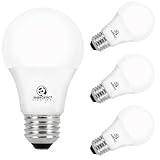
- LFR Score9.4
LFR Score is a ranking system developed by lightfansreviews.com. LFR Score has no relationship or impact from any manufacturers or sales agent websites. Learn more
- BrandE ENERGETIC LIGHTING

- LFR Score9.4
LFR Score is a ranking system developed by lightfansreviews.com. LFR Score has no relationship or impact from any manufacturers or sales agent websites. Learn more
- BrandGE
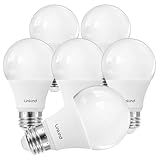
- LFR Score9.4
LFR Score is a ranking system developed by lightfansreviews.com. LFR Score has no relationship or impact from any manufacturers or sales agent websites. Learn more
- BrandLinkind

- LFR Score9.2
LFR Score is a ranking system developed by lightfansreviews.com. LFR Score has no relationship or impact from any manufacturers or sales agent websites. Learn more
- BrandTJOY

- LFR Score9.2
LFR Score is a ranking system developed by lightfansreviews.com. LFR Score has no relationship or impact from any manufacturers or sales agent websites. Learn more
- BrandDEGNJU

- LFR Score9.2
LFR Score is a ranking system developed by lightfansreviews.com. LFR Score has no relationship or impact from any manufacturers or sales agent websites. Learn more
- BrandAmazon Basics
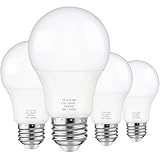
- LFR Score9.0
LFR Score is a ranking system developed by lightfansreviews.com. LFR Score has no relationship or impact from any manufacturers or sales agent websites. Learn more
- BrandMaylaywood
Last update on 2026-09-30 / Affiliate links / Images, Product Titles, and Product Highlights from Amazon Product Advertising API
FAQs
Can you put a 100-watt equivalent LED bulb in a 60-watt lamp?
Yes, you can safely install a 100-watt equivalent LED bulb into a lamp marked with a 60-watt maximum limit. The warning sticker on the lamp restricts the actual electrical power and heat generated inside the socket, not the amount of visible light produced. Because a 100-watt equivalent LED bulb draws only about 14 to 16 actual watts of power, it stays far below the fixture's 60-watt thermal limit.
Is an A19 bulb always the exact same as a Type A bulb?
Every A19 bulb is a Type A bulb, but not all Type A bulbs are A19s. The letter "A" describes the classic teardrop shape, while the number 19 indicates that the bulb measures 19 eighths of an inch across at its widest point. While the A19 is the most common size found in household lamps, the Type A category also includes larger options like A21 and smaller options like A15.
Why do some LED Type A bulbs buzz or hum in a lamp?
Buzzing or humming usually occurs when a non-dimmable LED bulb is connected to a dimmer switch, or when a dimmable bulb is paired with an incompatible older dimmer. Older wall dimmers were designed for high-wattage incandescent bulbs, and their electrical pulses can disrupt the sensitive electronic driver inside an LED bulb. Using a standard on-or-off switch or upgrading to an LED-compatible dimmer will stop the buzzing.
Can a Type A bulb be used in an outdoor light fixture?
A standard Type A bulb can be used outdoors only if the fixture is fully enclosed to block rain and moisture, or if the bulb packaging states it is rated for damp or wet locations. Rain, heavy fog, and condensation can penetrate unrated indoor bulbs, creating an electrical short or corroding the metal screw base. Always confirm the location rating on the bulb packaging before installing it in an exterior porch light or garden post.

Best Bulb For Exposed Light 2026 That Shines Bright

Best Industrial Light Bulb Reviews: Top Picks for 2026
Best Outdoor Light Bulb Reviews: Top-Rated Picks for 2026
Best LED Reading Light Bulb Reviews - Top Picks for 2026

Best Vintage Light Bulb 2026 With Style And Glow
Best Yellow Fog Light Bulb 2026 For Clearer Night Drives

Best Z Wave Light Bulb 2026 Top Picks For Smart Control
Best Light Bulb For Vanity Mirror 2026 Brightness Boost