
What Is a Type G Bulb and Which Size Do You Need?

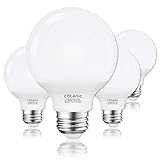
Many people assume the "G" printed on a fixture label points to an electrical rating or a tricky base code. It actually stands for globe, which means a Type G bulb is a round, globe-shaped light bulb. Instead of the pear shape of standard household bulbs, these feature a smooth, spherical glass ball made to be seen.
Choosing the right one comes down to three details. The first is the screw base, which ranges from a small candelabra thread to a standard household size. The second is the width of the glass ball, since larger globes will not fit inside tight shades. Finally, you need to decide between traditional heat-producing filaments and cool, energy-saving LED options. Here is how to read the measurements and pick the perfect match for your socket.
The Short Version
- The letter G stands for globe: A Type G bulb is completely spherical, shaped like a small ball or round globe rather than a classic teardrop household bulb.
- The number tells you the width: Bulb sizing uses eighths of an inch, so a G16.5 bulb is about 2 inches across, while a G25 bulb is roughly 3.1 inches wide.
- Base sizes are not all the same: Compact globes often use a small candelabra screw base (E12), while larger globes typically screw into a standard medium household socket (E26).
- Check heat and dimming before switching to LED: LED globes save energy and stay cool in living spaces, but wax warmers require traditional incandescent bulbs that produce filament heat to melt wax.
Meaning of Type G: Decoding the Globe Shape
When you see "Type G" stamped on a fixture socket, printed on a box, or listed in an owner manual, it describes the physical silhouette of the glass. The letter G stands for globe. While standard household bulbs have a pear or teardrop shape that tapers down toward the screw threads, a Type G bulb is round like a ball.
Fixtures require Type G bulbs for two practical reasons: visual style and physical space. Many modern light fixtures leave the bulb completely exposed. Placing an ordinary pear-shaped bulb in an open vanity bar or a clear glass pendant can look awkward and unfinished. Round bulbs create a balanced, clean look that complements decorative fixtures, making them a classic choice when choosing the best bulb for exposed light fixtures where the glass stays completely visible.
Physical clearance is just as critical. Many designer light covers, open wire cages, and spherical glass shades are engineered around the exact curves of a round globe. If you try to screw in a taller standard bulb, the tip of the bulb may press against the shade, poke out past the bottom rim, or fail to fit inside the opening altogether. Whenever you inspect a socket to see what bulb it takes, always switch off the wall switch first and give the old bulb several minutes to cool down before touching the glass.
Understanding the Numbers: How to Read Sizes Like G16.5 and G25
Lighting manufacturers always pair the letter G with a number, such as G12, G16.5, G25, or G30. This number tells you the exact diameter of the widest part of the glass sphere. In the United States, light bulb glass is measured in eighths of an inch. To figure out how wide a bulb is in inches, you simply take the number on the box and divide it by eight.
Here is how the most common Type G bulb sizes break down in everyday measurements:
- G12: Measuring 12 eighths of an inch, this mini globe is exactly 1.5 inches wide. It is commonly found in accent lighting, marquee signs, and small decorative fixtures.
- G16.5: Measuring 16.5 eighths of an inch, this bulb is roughly 2 inches across (about 2.06 inches, or 50 millimeters). You will often see this compact size in ceiling fan light kits, chandeliers, wall sconces, and scented wax warmers. In metric countries, it is frequently labeled as a G50.
- G25: Measuring 25 eighths of an inch, this bulb is roughly 3.1 inches across. This is the classic round bulb seen lined up across bathroom vanity mirrors in Hollywood-style makeup stations.
- G30 and G40: Measuring 3.75 inches and 5 inches across, these oversized statement bulbs are designed for open pendant cords, restaurant dining areas, and large outdoor patio stringers.
Paying attention to the number prevents frustrating installation mistakes. If your bathroom vanity fixture has glass shades built specifically for compact G16.5 bulbs, a wider G25 bulb will collide with the rim of the shade. On an open vanity bar with multiple sockets side by side, putting in a bulb that is too wide can leave the glass spheres bumping into each other. If you are ever unsure what size you currently have, take a standard tape measure and measure straight across the widest horizontal point of the round glass.
Socket Bases: Checking E12 Candelabra vs. Standard E26 Threads
The most common mistake people make when buying a Type G bulb is assuming that every globe bulb has the same metal screw base. The letter G only describes the round shape of the glass top. It tells you nothing about the threaded metal base at the bottom that screws into your home wiring.
Type G bulbs generally come with one of two screw base sizes. Screwing the wrong base into your lamp is impossible because one is half the size of the other, but buying the wrong one means an extra trip to the store for a return.
The first common base is the E12 base, also known as a candelabra base or small screw base. The metal screw portion measures 12 millimeters across, which is roughly 0.47 inches wide. It is about the thickness of an adult pinky finger or a standard piece of classroom chalk. You will encounter E12 bases most frequently on smaller globes like the G16.5 size used in chandeliers, ceiling fans, and wax warmers.
The second common base is the E26 base, known as the standard medium screw base. The threaded metal portion measures 26 millimeters across, which is roughly one inch wide. This is the exact same screw base found on ordinary household table lamps and standard ceiling sockets. Large vanity globes like the G25 almost always use an E26 base. However, you can also find compact G16.5 globes mounted on full-sized E26 bases for small sconces and kitchen pendants.
To confirm which base you need before you head to the store or order online, follow this quick checklist:
- Look inside the socket cup: Check the safety label pasted inside the metal socket ring. It usually lists the maximum wattage and identifies the base as either E12 or E26.
- Compare with a standard lamp bulb: Take a standard household bulb from a nearby table lamp. Hold its threaded base up against the bottom of your old Type G bulb. If the threads are the exact same size, you need an E26 base. If your old globe bulb has noticeably skinnier threads, you need an E12 candelabra base.
- Check the ruler: Place a small ruler across the bottom of the screw cap. If the metal threads measure roughly half an inch across, it is an E12. If they span a full inch, it is an E26.
Everyday Fixtures: Where Type G Bulbs Belong in Your Home
Because Type G bulbs blend functional illumination with an attractive geometric shape, they appear in several specific spots throughout the home. Recognizing where they belong helps you choose the right glass finish and light output for the room.
Bathroom vanity strips are the most famous home for globe bulbs. Installed in a long row above or along the sides of a mirror, G25 globes distribute light outward in an even hemisphere. When preparing for the day or applying makeup, you want soft, diffuse lighting that minimizes harsh shadows under your eyes and nose. For vanity fixtures without frosted shades, frosted white glass bulbs work far better than clear glass bulbs because the frosted coating shields your eyes from the bright glare of the internal light source.
Chandeliers and modern multi-arm sputnik ceiling fixtures rely heavily on smaller G16.5 globes. In these fixtures, the sockets often point sideways or at odd angles. A standard pointed bulb looks lopsided in these fittings, whereas a neat round sphere looks intentional from every direction. Clear glass globes with visible filament styling are especially popular here, casting a warm sparkle across a dining table or entryway.
Ceiling fan light kits frequently specify G16.5 bulbs because of tight physical clearances. Many ceiling fans enclose the light sockets inside a shallow glass bowl. Standard pear-shaped household bulbs are often too tall, preventing the glass bowl from screwing securely back into place. Compact globes keep the profile low while spreading light across the room.
Candle wax warmers are another unique home for Type G bulbs. Many full-size wax melt warmers use a 25-watt G16.5 globe with an E12 base. In these warmers, the bulb serves two distinct jobs: it illuminates the decorative ceramic body, and the heat rising from the filament melts the scented wax resting in the dish above. Just like when you learn how to change a halogen light bulb safely at home, you must let these incandescent warmer bulbs cool down completely before touching them because they get hot to the touch during operation.
Upgrading to LED: Matching Brightness, Dimmers, and Physical Clearance
Swapping older incandescent globe bulbs for modern LED versions lowers your electric bill and means you rarely have to climb a ladder to replace a burnt-out socket. But picking an LED globe requires checking a few more details than simply grabbing a box off the shelf. Follow these steps to get an upgrade that looks great and works without issues.
- Shop by lumens, not by wattage: On older bulbs, wattage told you how bright the light would be. With modern LEDs, wattage only tells you how much electrical power the bulb draws from the wall. To match the brightness of your old setup, check the lumen rating on the package. If you are replacing an old 40-watt bulb, look for an LED that produces between 350 and 450 lumens (which typically draws only about 4 to 4.5 watts of power). If you need to replace a brighter 60-watt bulb, aim for an LED delivering roughly 600 to 800 lumens (using around 6 watts).
- Select the right color temperature for your room: The color of light is measured on the Kelvin scale, which retailers translate into plain color names. For living rooms, bedrooms, and dining chandeliers, choose 2700K (labeled soft warm white). This gives off a cozy, amber-tinted glow that feels restful. For bathroom vanity mirrors, 3000K (labeled warm white) provides a cleaner, crisper light that makes grooming easier without feeling sterile or blue.
- Confirm dimmer compatibility: Older incandescent bulbs dim smoothly on virtually any wall switch. LEDs are miniature electronic circuits and behave differently. If your fixture connects to a wall slider or rotary dimmer, the bulb package must explicitly state "dimmable." Installing a non-dimmable LED on a dimmer switch can cause the bulb to flicker, emit an annoying buzz, or stop working after just a few weeks.
- Measure total bulb height: Even when two bulbs are both labeled G16.5, their total height from the bottom of the screw base to the top of the glass can vary slightly depending on how the manufacturer built the neck. Some compact LED globes stand roughly 2.9 inches tall, while others reach 3.15 or 3.18 inches. If your light fixture has a tight glass shade or wire cage, verify the height specifications so the globe does not poke out or rub against the cover.
- Check the fixture rating: If your bulb will be enclosed inside a completely sealed glass globe or an airtight outdoor wall lantern, make sure the bulb packaging states "enclosed fixture rated." Heat builds up inside sealed spaces. While LEDs do not get burning hot on the outside like old glass bulbs, their internal driver circuits must shed heat to survive. An enclosed rating ensures the internal components will not overheat and fail prematurely.
What to Check Before Buying a Replacement Type G Bulb
Before you purchase a replacement globe bulb, take a quick moment to verify three physical details so your new bulb fits right the first time. First, confirm your screw base size by checking whether you need a narrow E12 candelabra base or a standard E26 household screw base. Second, verify the diameter by checking if your fixture calls for a compact G16.5 globe or a larger G25 vanity ball. Finally, decide on your finish: choose frosted glass if you want smooth, glare-free light for a mirror or reading nook, and choose clear glass if your fixture shows off the decorative filament inside an open pendant or chandelier.

- LFR Score9.4
LFR Score is a ranking system developed by lightfansreviews.com. LFR Score has no relationship or impact from any manufacturers or sales agent websites. Learn more
- BrandDuoled

- LFR Score9.2
LFR Score is a ranking system developed by lightfansreviews.com. LFR Score has no relationship or impact from any manufacturers or sales agent websites. Learn more
- BrandPADMO LUDAZ

- LFR Score9.2
LFR Score is a ranking system developed by lightfansreviews.com. LFR Score has no relationship or impact from any manufacturers or sales agent websites. Learn more
- BrandSnnalosses

- LFR Score9.0
LFR Score is a ranking system developed by lightfansreviews.com. LFR Score has no relationship or impact from any manufacturers or sales agent websites. Learn more
- BrandPADMO LUDAZ

- LFR Score9.0
LFR Score is a ranking system developed by lightfansreviews.com. LFR Score has no relationship or impact from any manufacturers or sales agent websites. Learn more
- BrandPADMO LUDAZ

- LFR Score9.0
LFR Score is a ranking system developed by lightfansreviews.com. LFR Score has no relationship or impact from any manufacturers or sales agent websites. Learn more
- BrandLEDVANCE
Last update on 2026-10-01 / Affiliate links / Images, Product Titles, and Product Highlights from Amazon Product Advertising API
FAQs
Can I use a regular household bulb instead of a Type G bulb?
You can use a regular teardrop bulb if the socket base matches and the bulb does not exceed the fixture's maximum wattage rating. However, standard household bulbs are noticeably taller than globe bulbs and often poke awkwardly out of decorative shades. In vanity strips and open fixtures, a standard bulb will also alter the balanced look the fixture was designed to showcase.
What is the difference between a G16.5 bulb and a G25 bulb?
The primary difference is their physical diameter. A G16.5 bulb measures roughly 2 inches across and is commonly paired with a small E12 candelabra base for chandeliers, fans, and compact fixtures. A G25 bulb measures roughly 3.1 inches across and almost always uses a standard E26 medium screw base for bathroom vanity strips.
Why does my new LED globe bulb flicker on my vanity dimmer switch?
Flickering usually happens when an older wall dimmer designed for high-wattage incandescent bulbs cannot handle the tiny amount of electrical power used by modern LEDs. It can also happen if you accidentally purchased a non-dimmable LED bulb. To stop the flickering, confirm your bulb is labeled dimmable and upgrade your wall switch to an LED-compatible dimmer.
Can I replace an incandescent Type G bulb with an LED in a wax warmer?
No, you should not put a standard LED bulb into a candle wax melt warmer. LED bulbs are engineered to produce light while staying cool, which means they do not generate enough ambient heat to melt the scented wax cubes. Wax warmers require traditional incandescent filament bulbs that generate safe, steady heat inside the warmer housing.

Best Bulb For Exposed Light 2026 That Shines Bright

Best Industrial Light Bulb Reviews: Top Picks for 2026
Best Outdoor Light Bulb Reviews: Top-Rated Picks for 2026
Best LED Reading Light Bulb Reviews - Top Picks for 2026

Best Vintage Light Bulb 2026 With Style And Glow
Best Yellow Fog Light Bulb 2026 For Clearer Night Drives

Best Z Wave Light Bulb 2026 Top Picks For Smart Control
Best Light Bulb For Vanity Mirror 2026 Brightness Boost






