
What Is a UVB Bulb and Why Does Your Pet Need One?

There is no need to stress over confusing terrarium equipment lists, because figuring out this fixture is actually very straightforward. A UVB bulb is an indoor light designed to emit invisible ultraviolet B rays, mimicking natural sunshine. Captive animals like lizards, turtles, and tortoises need this specific light to produce vitamin D3 naturally, which allows their bodies to absorb calcium and build strong bones. Without it, a standard desk lamp or heat bulb leaves them vulnerable to painful, brittle bone illness.
Which bulb works best depends on your pet's native habitat, since desert species need much stronger output than forest dwellers. Setup details matter too, because solid glass or plastic lids block these rays completely before they reach the basking spot. These bulbs also stop releasing ultraviolet rays after several months, even while visible light still shines bright. Getting familiar with bulb strengths, safe distances, and replacement schedules will keep your pet active and thriving.
What Does a UVB Bulb Actually Do?
Natural sunlight carries many kinds of energy down to earth. Some of that energy arrives as visible light that brightens the room. Other parts arrive as heat that warms your skin. Tucked inside sunlight is another type of energy called ultraviolet light, which human eyes cannot see.
Ultraviolet light splits into three bands: UVA, UVB, and UVC. UVA helps animals see colors and signals when it is time to feed or mate. UVC is harmful radiation filtered out by the atmosphere. UVB is the vital middle band of invisible sunlight rays that help make vitamin D3.
In the wild, animals spend hours sitting on rocks, tree branches, or sand soaking up these rays. When you bring a reptile indoors, standard room lighting leaves them cut off from the sun. Normal window glass in your home blocks nearly all natural ultraviolet rays. Even if an enclosure sits right beside a sunny window, none of that vital ultraviolet energy reaches the animal inside.
A UVB bulb acts like artificial sunshine mounted right above the terrarium. When turned on, the bulb casts invisible ultraviolet B rays across the habitat. As your pet rests under the light, its skin absorbs the rays just like it would outdoors. It is an active health tool that powers the inner chemistry of your pet's body.
How Is UVB Different From Heat and Regular Light?
Many new pet owners assume that any bright or warm bulb provides everything a reptile needs. Terrariums usually require a team of different bulbs working together because brightness, heat, and ultraviolet rays do not all come from the same source.
Standard household teardrop bulbs screw into an E26 base (the standard medium screw base found in common household lamps and ceiling fixtures). These bulbs produce visible brightness, which we measure in lumens, so you and your pet can see. But household bulbs produce zero usable UVB rays. An enclosure lit only by a household lamp might look bright, but biologically, your pet is living in total ultraviolet darkness.
Heat lamps and basking bulbs serve an entirely different purpose. Reptiles are cold-blooded, so they rely on basking lamps, like incandescent flood lights or halogen bulbs, to warm their muscles and digest meals. When learning how to change a halogen light bulb safely at home, you learn that these heat lamps reach intense surface temperatures to create a warm basking spot. But while a halogen lamp provides warmth and bright daylight, it does not produce the UVB rays needed to process nutrients.
A UVB bulb is usually a fluorescent tube or a compact fluorescent bulb (a spiral bulb that fits into a standard socket). It produces a gentle glow and almost no heat. For a healthy terrarium, you almost always need two separate fixtures: one bulb to provide basking heat for digestion, and a separate UVB bulb to keep bones strong.
Why Do Captive Reptiles Need UVB to Survive?
To understand why this invisible light matters, you have to look at how a reptile builds its body. Just like humans, reptiles need calcium to build strong bones, move muscles, and support organ function. But a reptile cannot simply eat calcium and absorb it directly into its bloodstream.
The digestive system requires active vitamin D3 to unlock calcium absorption. Without vitamin D3 in the bloodstream, the stomach and gut cannot absorb calcium from food. Any calcium powder you dust onto crickets or greens passes straight through the gut and exits as waste.
This is where UVB rays become essential. When UVB light hits the pet's skin, it triggers a natural reaction that allows the animal to synthesize vitamin D3. Synthesize means to create or produce naturally inside the body. With vitamin D3 circulating through the blood, the digestive tract can pull calcium out of meals and send it to the bones.
Without a UVB light, the pet stops absorbing calcium. Because the heart and muscles still need calcium to function every second, the body steals stored calcium from its own skeleton.
This calcium theft causes metabolic bone disease (a brittle bone illness caused by lack of calcium). Over time, bones turn soft, thin, and brittle. Legs swell, walking becomes painful, and the lower jaw can become rubbery. In turtles and tortoises, the protective shell softens and deforms. Metabolic bone disease is painful, crippling, and fatal if ignored. Providing the correct UVB light prevents this disease chain entirely.
Should You Choose a 5.0 or 10.0 Bulb?
When shopping for a UVB bulb, you will see numbers like 5.0 and 10.0 (or 5% and 10%) on the box. These numbers tell you what percentage of the bulb's total light output consists of UVB rays. Choosing the right strength depends on your pet's natural habitat:
- Choose a 5.0 bulb for tropical and forest pets: In a rainforest, dense tree canopies block direct sun. Animals living there thrive in gentle, dappled shade. A 5.0 bulb emits about 5 percent UVB, perfectly mimicking filtered tropical sun. This strength is ideal for chameleons, crested geckos, day geckos, tropical tortoises, frogs, and forest snakes.
- Choose a 10.0 bulb for desert pets: Deserts feature wide-open skies with no tree cover, and sunlight beats down with intense power. A 10.0 bulb emits about 10 percent UVB to reproduce this fierce sun. This higher output is necessary for bearded dragons, uromastyx lizards, Russian tortoises, and desert iguanas that bask in open sunlight.
- Check enclosure height: A very tall screen cage may need a slightly stronger bulb so the rays reach the lower branches. For most standard habitats, 5.0 for tropical species and 10.0 for desert species keeps your pet in their safe zone.
How Should You Set Up and Replace the Bulb?
Buying the right bulb is only half the job. Where and how you mount the lamp determines whether those beneficial rays reach your pet. Follow these practical steps to set up your lighting safely:
- Place the UVB bulb right beside the heat lamp: In nature, warmth and ultraviolet rays come from the same source. When your reptile wants to warm up, it climbs onto its favorite basking branch. Place your UVB lamp right next to your basking heat lamp so both beams overlap. If you put the heat lamp on one side of the tank and the UVB bulb on the other, your pet must choose between staying warm and absorbing ultraviolet light.
- Mount the light at the proper distance: Ultraviolet rays lose strength rapidly as they travel. If a bulb sits too far away, your pet absorbs almost no UVB. If it sits too close, intense rays can cause eye cataracts or skin burns. Most compact spiral bulbs work best mounted 8 to 12 inches away from the basking spot. Always check the distance chart printed on the bulb box to confirm the safe range.
- Remove glass and solid plastic covers: Glass terrarium lids, window panes, and clear plastic sheets block 100 percent of UVB light. Never mount a UVB bulb on top of solid glass. Use a wire mesh screen instead. Fine wire mesh still cuts UVB output by 30 to 50 percent, so you may need to adjust the perch height slightly.
- Replace the bulb every 6 to 12 months: The phosphors inside the glass that produce ultraviolet rays burn out long before the visible light does. When looking at how long fluorescent bulbs last in real life use, remember that visible lifespan is not the same as UVB lifespan. A bulb can shine brightly for two years while producing zero UVB after nine months. Write the install date on the bulb base with a marker. Replace compact spiral bulbs every 6 months and linear tubes every 10 to 12 months.
What Should You Look for When Shopping for Bulbs?
When browsing the lighting aisle, start by choosing between compact fluorescent spiral bulbs and long linear fluorescent tubes.
Spiral compact fluorescent bulbs screw into an E26 base (the standard medium screw base found in common household lamps) and fit into standard dome fixtures. They work well for small terrariums or focused basking spots. Linear fluorescent tubes look like long glass pipes and require a hood fixture. They distribute ultraviolet rays evenly across the entire enclosure, letting your pet move naturally while soaking up light.
Always confirm that the packaging clearly states both UVB and UVA output. Avoid bulbs labeled only as "full spectrum," "basking light," or "daylight" unless they specifically list a 5.0, 10.0, or clear UVB percentage. General display bulbs and plant grow lights look bright, but they produce zero ultraviolet rays. Choosing a dedicated reptile bulb matched to your pet's native habitat is the only reliable way to protect their skeletal health.

- LFR Score9.2
LFR Score is a ranking system developed by lightfansreviews.com. LFR Score has no relationship or impact from any manufacturers or sales agent websites. Learn more
- BrandGREENPAW

- LFR Score9.0
LFR Score is a ranking system developed by lightfansreviews.com. LFR Score has no relationship or impact from any manufacturers or sales agent websites. Learn more
- BrandZoo Med

- LFR Score9.0
LFR Score is a ranking system developed by lightfansreviews.com. LFR Score has no relationship or impact from any manufacturers or sales agent websites. Learn more
- BrandREPTI ZOO

- LFR Score8.8
LFR Score is a ranking system developed by lightfansreviews.com. LFR Score has no relationship or impact from any manufacturers or sales agent websites. Learn more
- BrandLUCKY HERP

- LFR Score8.8
LFR Score is a ranking system developed by lightfansreviews.com. LFR Score has no relationship or impact from any manufacturers or sales agent websites. Learn more
- BrandREPTI ZOO
- LFR Score8.8
LFR Score is a ranking system developed by lightfansreviews.com. LFR Score has no relationship or impact from any manufacturers or sales agent websites. Learn more
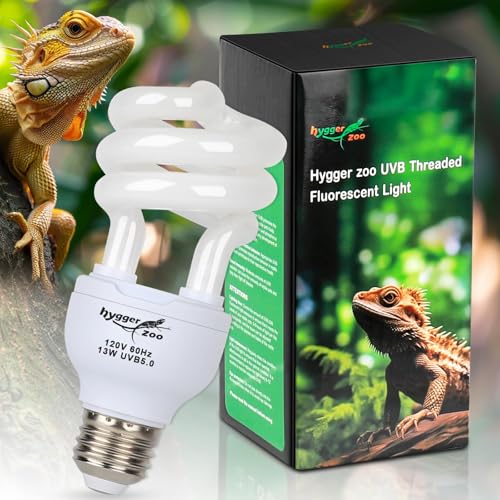
- BrandHygger zoo

- LFR Score8.6
LFR Score is a ranking system developed by lightfansreviews.com. LFR Score has no relationship or impact from any manufacturers or sales agent websites. Learn more
- BrandREPTI HOME

- LFR Score8.6
LFR Score is a ranking system developed by lightfansreviews.com. LFR Score has no relationship or impact from any manufacturers or sales agent websites. Learn more
- BrandZilla

- LFR Score8.4
LFR Score is a ranking system developed by lightfansreviews.com. LFR Score has no relationship or impact from any manufacturers or sales agent websites. Learn more
- BrandJugbuy
Last update on 2026-10-01 / Affiliate links / Images, Product Titles, and Product Highlights from Amazon Product Advertising API
FAQs
Can UVB Light Pass Through Glass or Plastic?
Standard glass and clear plastic completely block UVB rays. Even though visible light shines right through a window or aquarium lid, ultraviolet B rays are filtered out entirely. You must always mount your UVB bulb over an open wire mesh screen top or install it inside the terrarium fixture directly.
Do Nocturnal Pets Still Need UVB Lighting?
Many nocturnal reptiles, such as leopard geckos and crested geckos, can survive on dietary vitamin D3 powder alone, but gentle UVB exposure offers clear health benefits. In nature, these animals often sleep with a tail or foot exposed to morning sun to absorb low levels of ultraviolet energy. Providing a low-output 5.0 bulb or gentle shade-dweller light encourages natural circadian rhythms and supports healthy skin.
Can You Leave a UVB Bulb on All Night?
Never leave a UVB bulb on overnight. Reptiles rely on a steady day-and-night cycle of roughly 12 hours of light and 12 hours of darkness to regulate sleep and immune health. Leaving bright lights on overnight causes chronic stress and illness. Plug your lighting into an automatic wall timer so it turns on each morning and shuts off each evening.
How Can You Tell if a Bulb Stops Emitting UVB?
Human eyes cannot see ultraviolet rays, so you cannot determine UVB output by looking at the bulb glow. The only way to know the exact output is by using a specialized digital solar meter. If you do not own a meter, follow the manufacturer schedule strictly and replace your bulbs every 6 to 12 months regardless of how bright they still look.

Best Bulb For Exposed Light 2026 That Shines Bright

Best Industrial Light Bulb Reviews: Top Picks for 2026
Best Outdoor Light Bulb Reviews: Top-Rated Picks for 2026
Best LED Reading Light Bulb Reviews - Top Picks for 2026

Best Vintage Light Bulb 2026 With Style And Glow
Best Yellow Fog Light Bulb 2026 For Clearer Night Drives

Best Z Wave Light Bulb 2026 Top Picks For Smart Control
Best Light Bulb For Vanity Mirror 2026 Brightness Boost






