
What Is an A15 Bulb and Where Does It Fit?

An A15 bulb is a compact, pear-shaped light bulb built for cramped spaces where a standard household bulb is too bulky to fit. What changes your replacement choice is whether that small glass shape needs to handle freezing fridge air, high oven heat, or the vibrations of a spinning ceiling fan.
Getting the right match comes down to checking two main details before buying. First, check the metal screw base, since some fixtures use the standard household size while others require a tiny candelabra base. Second, verify the heat level, because a modern LED bulb works well in a refrigerator or reading lamp, but an oven demands a heat-rated incandescent bulb with glass that will not melt. Here is how to tell which version your fixture takes so you can replace it with confidence.
What the A15 Label Means for Bulb Size and Shape
The code on a light bulb box can look confusing, but it breaks down into two simple measurements. The letter represents the shape of the glass, and the number tells you how wide the bulb is at its broadest point. In an A15 bulb, the letter A stands for the classic pear-like teardrop shape used in standard household lamps for decades. The number 15 indicates the maximum diameter measured in eighths of an inch.
When you divide 15 by 8, you get 1.875 inches, which rounds to roughly 1.9 inches across. That makes the bulb noticeably smaller than standard household teardrop bulbs. In overall length, an A15 bulb usually measures between 2.9 and 3.5 inches tall from the top of the glass dome to the tip of the metal base contact.
This compact profile gives you the familiar, all-around light spread of a traditional household bulb while taking up a fraction of the space. It is designed specifically for fixtures where a regular bulb is simply too wide or too tall to fit inside the housing or behind a protective cover.
A15 Versus Regular A19 Bulbs: Spotting the Physical Differences
Most people are familiar with the A19 bulb, which is the standard household teardrop bulb found in bedside table lamps, hallway ceiling fixtures, and floor lamps. Comparing an A15 bulb to an A19 bulb side by side reveals a clear difference in physical scale.
A standard A19 bulb measures 19 eighths of an inch wide, which equals about 2.375 inches across, and stands roughly 4.3 inches tall. Setting an A15 next to an A19 on a kitchen counter makes the contrast obvious. The A15 is roughly half an inch narrower across its widest point and more than an inch shorter from base to tip.
Both bulbs typically feature the exact same screw base, but their physical clearances are completely different. If you try to screw a regular A19 bulb into a fixture built for an A15, the glass usually hits the fixture cover, bumps against a refrigerator shelf, or protrudes past the rim of a shallow shade. You can technically screw an A15 bulb into almost any socket that takes an A19, but because the bulb sits lower, the light source will sit deeper inside the fixture shade.
Common Places A15 Bulbs Fit Around the Home
Because of their compact size, A15 bulbs are standard equipment in fixtures where space is strictly limited. Ceiling fan light kits are among the most common locations. Many ceiling fans feature shallow glass bowls, tight glass globes, or low-hanging shades positioned right beneath the motor housing. A standard bulb is too tall to let the glass bowl screw back into place, whereas an A15 bulb slips inside easily while leaving plenty of room for air circulation.
Refrigerators and freezers are another primary home for A15 bulbs. Bulbs inside cold appliances must sit tucked away against interior walls or behind plastic diffusers so they do not get struck by tall beverage jugs or grocery containers. Their compact profile keeps them out of the way while lighting up the interior shelves.
You will also find A15 bulbs in range hoods and over-the-stove microwaves. The lighting compartments beneath microwaves are recessed into shallow metal cavities. An A15 bulb tucks neatly into these tight pockets to illuminate your stovetop without hanging below the appliance frame. They are equally common in small desk lamps, bedside reading lights, and small sconces. For open decorative fixtures where the bulb remains visible, choosing a clear bulb for exposed light keeps the fixture looking neat without an oversized glass envelope ruining the design.
The Critical Appliance Rule: Ovens Versus Refrigerators
A dangerous mistake occurs when replacing bulbs inside kitchen appliances. While refrigerators, range hoods, and ovens may all use an A15 bulb with the exact same screw base, you cannot install the same bulb type in all three appliances.
In a refrigerator or freezer, an LED A15 bulb is the best option. Modern LEDs produce almost zero forward heat, which means they do not warm up your food or force the compressor to run extra cycles. They turn on instantly at full brightness in sub-zero temperatures and resist the sudden vibration caused by slamming appliance doors.
In an oven, an LED bulb is an extreme safety hazard. LEDs rely on sensitive electronic circuit boards and plastic housing components inside the base to regulate electricity. Standard kitchen ovens easily reach temperatures between 350 and 500 degrees Fahrenheit during normal baking, and even higher during self-cleaning cycles. If you put a plastic-bodied LED A15 bulb inside an oven, the plastic components will melt, release noxious smoke, ruin the socket, and risk an electrical fire.
Ovens require specialized incandescent glass bulbs specifically rated for high temperatures, often marked to withstand heat up to 570 degrees Fahrenheit. These bulbs feature heavy-duty thermal glass, high-temperature ceramic cement, and brass screw bases that do not degrade under intense baking heat. Whenever you change an appliance bulb, turn off power at the breaker panel, let the fixture cool down completely, and follow safe handling practices like those explained in how to change a halogen light bulb safely at home to avoid burning your fingers or damaging delicate sockets.
Five Steps to Verify the Right A15 Replacement Bulb
-
Check the socket screw base size on your old bulb.
Examine the metal threads at the bottom of the burnt-out bulb. If the threaded base measures about one inch across (26 millimeters), you need an E26 standard medium screw base, which is the exact same size used in ordinary table lamps. If the base is slender and measures about half an inch across (12 millimeters), you need an E12 candelabra or small screw base.
Reason: A bulb with the wrong base will not thread into your fixture socket, making it entirely useless regardless of the glass shape. -
Check the operating temperature of your fixture.
Determine whether the bulb goes into an oven, an open ceiling fan, or a cold refrigerator. If the socket is inside an oven or enclosed broiler cavity, purchase a high-temperature incandescent bulb rated for at least 500 degrees Fahrenheit. For refrigerators, ceiling fans, range hoods, and accent lamps, select an energy-saving LED bulb.
Reason: Standard LED bulbs use plastic internal components and computer chips that melt and ignite when exposed to cooking heat. -
Measure the height and width clearance inside the fixture housing.
Use a ruler to check the depth and width of the space inside the fixture, particularly if it has a screw-on glass globe, a wire cage, or a snap-in plastic lens. Standard A15 bulbs measure around 1.9 inches wide and roughly 3 inches tall, but some LED versions with heavy heat sinks measure up to 3.49 inches in total length.
Reason: A bulb that is even a quarter of an inch too tall will prevent protective glass covers from threading back onto ceiling fans or appliance housings. -
Select your brightness by checking lumens rather than wattage.
Look at the lumen rating on the retail package instead of relying on watt numbers. To match the light output of an older 40-watt bulb, look for an LED that provides roughly 450 lumens, which uses around 5 watts of power. If you need brighter lighting for a dark refrigerator or a living room ceiling fan, pick a 60-watt equivalent bulb that delivers 600 to 800 lumens using only 6 to 7 watts.
Reason: Watts measure electricity consumption while lumens measure visible light output, so shopping by lumens guarantees you get the exact brightness you expect. -
Verify your wall switch type and dimming requirements.
Check whether the fixture is operated by a basic on-off wall switch, a ceiling fan remote control, or a sliding wall dimmer. If the fixture is wired to any kind of dimmer switch or remote speed dial, make sure the bulb package explicitly states it is dimmable. If your lamp uses a switch that clicks through multiple brightness settings, verify whether you need a dedicated three-way light bulb designed for multi-contact sockets.
Reason: Installing a non-dimmable LED bulb on a dimming circuit leads to annoying buzzing noises, visible strobe flickering, and early bulb failure.
Finding the Right A15 Bulb for Your Household Fixtures
When shopping for replacement A15 bulbs, your priority is matching the bulb build to the demands of your room. For ceiling fan light fixtures, multi-packs of LED bulbs are the most practical choice because they allow you to replace all sockets at once with an identical color appearance and brightness level.
Pay close attention to color temperature, which is measured in Kelvins. A 2700K soft warm white bulb produces a cozy, amber-tinted glow that works well in living rooms, bedrooms, and dining areas. A 3000K warm white bulb provides a crisper, clean tone that suits bathroom vanities and ceiling fans. If you want bright, energetic visibility for a refrigerator, freezer, or food prep area under a microwave, a 5000K daylight white bulb offers sharp, clean contrast that makes items easy to spot.
Always verify the base size printed on the product packaging before ordering, confirming whether your fixture requires an E26 standard medium screw base or an E12 candelabra base. If your bulb will sit inside an airtight glass globe or enclosed ceiling fixture, make sure the packaging states it is enclosed fixture rated so heat does not build up and shorten the lifespan of the internal electronics.

- LFR Score9.2
LFR Score is a ranking system developed by lightfansreviews.com. LFR Score has no relationship or impact from any manufacturers or sales agent websites. Learn more
- BrandKQHBEN

- LFR Score9.2
LFR Score is a ranking system developed by lightfansreviews.com. LFR Score has no relationship or impact from any manufacturers or sales agent websites. Learn more
- BrandCotanic

- LFR Score9.2
LFR Score is a ranking system developed by lightfansreviews.com. LFR Score has no relationship or impact from any manufacturers or sales agent websites. Learn more
- BrandGozelux
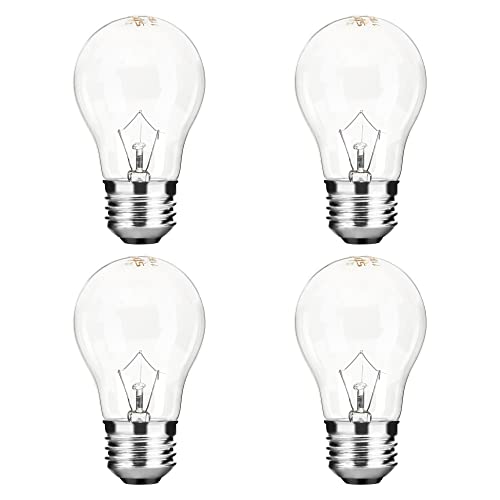
- LFR Score9.2
LFR Score is a ranking system developed by lightfansreviews.com. LFR Score has no relationship or impact from any manufacturers or sales agent websites. Learn more
- BrandSpolico

- LFR Score9.2
LFR Score is a ranking system developed by lightfansreviews.com. LFR Score has no relationship or impact from any manufacturers or sales agent websites. Learn more
- BrandProPOW

- LFR Score9.0
LFR Score is a ranking system developed by lightfansreviews.com. LFR Score has no relationship or impact from any manufacturers or sales agent websites. Learn more
- BrandYukiHalu

- LFR Score9.0
LFR Score is a ranking system developed by lightfansreviews.com. LFR Score has no relationship or impact from any manufacturers or sales agent websites. Learn more
- BrandSunco Lighting

- LFR Score8.8
LFR Score is a ranking system developed by lightfansreviews.com. LFR Score has no relationship or impact from any manufacturers or sales agent websites. Learn more
- BrandMaylaywood
Last update on 2026-10-01 / Affiliate links / Images, Product Titles, and Product Highlights from Amazon Product Advertising API
Frequently Asked Questions About A15 Bulbs
Does an A15 bulb fit in a standard household lamp socket?
Yes, as long as the A15 bulb features an E26 standard medium screw base. Most A15 bulbs sold in the United States use this standard base size, meaning they screw directly into regular table lamps, floor lamps, and ceiling sockets. However, some decorative fixtures use an E12 candelabra base, so always verify the base size on your burnt-out bulb before buying a replacement.
Can I use an A15 bulb instead of a regular A19 bulb?
Yes, you can safely use an A15 bulb in an A19 socket provided the screw base matches and the wattage rating does not exceed the fixture limit. Because an A15 bulb is shorter and narrower, it will easily fit into the socket. The only difference is that the bulb will produce light from a slightly lower position inside the shade or fixture.
Why did the replacement LED bulb stop working inside my refrigerator?
Refrigerator bulbs fail prematurely if they lack moisture protection or if their electronics cannot handle cold temperatures. Make sure your replacement is rated for damp locations or labeled specifically as an appliance bulb. Additionally, inspect the metal contact tab inside the refrigerator socket, as moisture can cause light corrosion that prevents clean electrical contact.
Are all A15 LED bulbs dimmable?
No, many A15 LED bulbs are non-dimmable to keep manufacturing costs low. If you install a non-dimmable bulb into a fixture controlled by a wall dimmer or ceiling fan remote, the bulb will usually flicker, hum loudly, or fail within a few weeks. Always check the package label to verify that dimmable operation is supported before installing the bulb on a dimming circuit.

Best Bulb For Exposed Light 2026 That Shines Bright

Best Industrial Light Bulb Reviews: Top Picks for 2026
Best Outdoor Light Bulb Reviews: Top-Rated Picks for 2026
Best LED Reading Light Bulb Reviews - Top Picks for 2026

Best Vintage Light Bulb 2026 With Style And Glow
Best Yellow Fog Light Bulb 2026 For Clearer Night Drives

Best Z Wave Light Bulb 2026 Top Picks For Smart Control
Best Light Bulb For Vanity Mirror 2026 Brightness Boost






