What Is an HID Bulb and How Does It Work?

Check the base of the old bulb or the vehicle manual before buying a replacement. That label reveals if the system uses an HID bulb, which creates bright light by passing an electric spark through pressurized gas instead of heating a delicate metal wire. This gas-spark design produces a clean, piercing beam, but it relies on an external control box called a ballast to regulate the electrical current.
How this setup applies to your situation depends on where the light is installed and how the fixture was wired at the factory. Vehicle headlights typically use xenon gas for night driving, while commercial floodlights or tall garage bays often rely on metal halide gas. A true HID bulb cannot plug into or fire up inside a standard halogen socket, so matching your existing hardware is essential. Here is how these gas-spark lights actually work and how to confirm which style fits your fixture.
Look for the tiny glass bubble that creates light with an electric spark
An HID bulb stands for high-intensity discharge lighting. Instead of heating a wire until it glows, it creates light by passing an electric spark through pressurized gas inside a sealed capsule. Traditional incandescent and halogen bulbs rely on a filament, which is a thin glowing metal wire that degrades, becomes brittle, and snaps over time.
An HID bulb has no wire filament. Inside the outer glass sleeve sits a small, rounded inner quartz chamber filled with pressurized inert gas (usually xenon in cars) and vaporized metal salts. Two metal pins called electrodes face each other across a gap of just a few millimeters.
When you turn the light on, electricity jumps across that gap. This jump is called an arc, which is an electric spark jumping a gap. The arc ignites the gas and salts, creating a superheated plasma ball that radiates intense light. Without a fragile wire filament bouncing inside the housing, an HID bulb resists road vibrations far better than an incandescent bulb.
Discharge bulbs require a brief warm-up period. They give a quick flash of bluish light, dim for a second, and then take five to ten seconds to stabilize at full brightness. You also find high-intensity discharge lighting in warehouses and stadiums. In those large spaces, finding the best industrial light bulb involves understanding how metal halide discharge lamps manage continuous commercial electrical loads.
Compare how HID, halogen, and LED bulbs manage heat and power
Comparing HID bulbs to halogen and LED alternatives clarifies why your vehicle or fixture uses a specific technology. Each creates light through a different process, leading to distinct differences in power, heat, and beam color.
Halogen bulbs pass current through a tungsten filament encased in halogen gas. They draw 55 to 65 watts in cars, turning about 80 percent of that electricity into wasted heat. A standard halogen produces 1,000 to 1,400 lumens (the measurement of brightness) with a warm color rating of 3200 Kelvin (a light color rating from yellow to blue). Knowing how to change a halogen light bulb safely at home shows why keeping bare skin off hot quartz prevents premature failure.
HID bulbs use gas-spark lighting. A standard automotive discharge bulb consumes about 35 watts while producing 3,000 to 3,800 lumens. This provides more than double the light of halogen while drawing less continuous power. Color ratings typically range from 4300 Kelvin (crisp daylight white) to 6000 Kelvin (cool white with a blue tint). While the inner arc chamber gets very hot, the bulb projects less radiant heat forward into the plastic housing than a high-wattage halogen.
LED bulbs rely on solid-state microchips. Electricity flows through a diode to create instant light with minimal power draw and zero warm-up delay. Unlike HIDs, LEDs push their heat backward into an aluminum heatsink. Automakers originally chose HIDs for premium vehicles because they offered unmatched down-road visibility before high-power automotive LEDs existed.
Treat the ballast box as the brain and power regulator of the bulb
An HID bulb cannot run directly on regular 12-volt vehicle power or standard 120-volt household current. It requires a dedicated control unit called a ballast, which is a power regulator box that manages the electrical flow.
The ballast handles two critical jobs. First, it creates the starting spark. An electric arc cannot jump across cold gas at low voltage. To start the process, the ballast routes power through an igniter to deliver a brief jolt of 20,000 to 25,000 volts. This surge forces an electrical spark across the gap, turning the cold gas into an active electrical path.
Second, the ballast regulates continuous power. Once the arc lights up, electrical resistance inside the bulb plummets. If high voltage continued to flow, the current would surge out of control, melting the electrodes and blowing vehicle fuses. The ballast instantly drops the voltage to a steady operating level, usually around 85 volts, and locks the current in place.
Think of the ballast like a pressure regulator on a gas tank. It delivers the initial burst to light the flame, then throttles the fuel so it burns smoothly. If an HID light flickers, cuts out over bumps, or fails to turn on in freezing weather, a failing ballast box is often the real problem rather than the bulb itself.
Never force an HID bulb into a standard halogen socket
A frequent mistake happens when someone buys an HID bulb hoping to upgrade a dull halogen headlight without changing the rest of the assembly. An HID bulb will not work in a factory halogen setup, and attempting to fit one creates electrical, physical, and optical problems.
The electrical supply is mismatched. A halogen socket provides simple 12-volt direct current. An HID bulb needs the high-voltage jolt of a ballast to strike an arc. If you connect an HID bulb directly to a 12-volt socket, nothing happens because the gas never ignites.
The mounting bases do not fit. Halogen bulbs carry labels like H11, 9005, or H7, using plastic twist-in collars with rubber O-rings. Factory HID bulbs carry labels starting with D, such as D1S, D2S, D3S, D4S, or D5S. They feature metal flanges or square metal boxes that secure with spring clips. They cannot seat or lock into a halogen socket.
The optical beam pattern becomes dangerous. Halogen reflectors are engineered to focus light radiating from a horizontal glowing wire. An HID bulb creates a glowing sphere of plasma at a different focal depth. Dropping an HID bulb into a halogen reflector scatters light haphazardly, blinding oncoming motorists while leaving dark voids directly on the road ahead.
Follow these steps to confirm what bulb your vehicle or fixture uses
If you need to know whether your car or exterior fixture uses an HID bulb, follow these practical inspection steps before buying replacements.
- Read the label in your owner manual or fixture door. Check the maintenance chapter of your vehicle manual for the headlight bulb type. If you see a code starting with the letter D (such as D1S, D2S, D3S, D4S, or D5S), your vehicle uses factory HID bulbs. Codes like H11, 9005, 9006, or H7 indicate standard halogen bulbs. For commercial outdoor fixtures, check the metal specification plate inside the access panel for designations like Metal Halide or High Pressure Sodium.
- Watch the lights turn on against a wall. Park facing a wall in the dark and turn your headlights on. Halogen bulbs illuminate instantly with a warm, yellowish beam. LED bulbs switch on instantly at full brightness with clean white light. An HID bulb produces a quick, bright flash of blue-white light, dims slightly for a second, and then takes five to ten seconds to brighten and shift into clean white light.
- Look for a round projector lens. Look into the headlight housing from outside with the lights off. Factory HID systems almost always project low-beam light through a round glass sphere like a magnifying lens. This projector globe focuses the arc and creates a sharp horizontal cutoff line to protect other drivers from glare. Open reflective bowls with no projector lens usually indicate halogen lighting.
- Check behind the housing for high-voltage warnings. Pop the vehicle hood and look at the back of the headlight assembly. Because discharge systems use thousands of volts to start, regulations require yellow warning stickers marked with a lightning bolt or the words High Voltage. You may also spot a flat aluminum ballast box mounted underneath or behind the plastic housing.
- Examine the bulb construction directly. Turn off the vehicle, let the housing cool, and remove the bulb. A halogen bulb contains a visible coiled metal wire resting between two support posts. An HID bulb has no wire coil at all. Instead, it features an unbroken central tube with a small glass bubble in the middle and an external ceramic-coated return wire.
Match your vehicle bulb code carefully before buying an HID replacement
If your checks confirm that your car uses factory HID lighting, finding the correct replacement requires matching your existing factory specifications exactly.
Check the alphanumeric part number stamped on your old bulb or listed in your manual. Automotive discharge bulbs are not interchangeable. For example, a D1S bulb has an integrated metal igniter box attached to its base, while a D2S bulb has a bare circular base that plugs into a separate cable. Also, newer mercury-free bulbs like D3S and D4S run at roughly 42 volts instead of the older 85-volt standard. Even though their bases look similar, a D3S bulb will not work in a D1S ballast system.
Select an appropriate color temperature rating for everyday driving. Factory replacement bulbs usually sit around 4300 to 4500 Kelvin, offering the highest usable road brightness and clear visibility through fog and rain. A 6000 Kelvin rating provides a crisp cool white beam with a light blue tint. Ratings of 8000 Kelvin or higher produce heavy blue light that scatters in bad weather and reduces practical visibility.
Plan to replace discharge bulbs in pairs. Over thousands of hours, the chemical salts inside the chamber slowly degrade. This causes the bulb to lose brightness and shift toward pink or violet. Replacing only one bulb leaves you with mismatched colors and uneven light spread across the pavement.
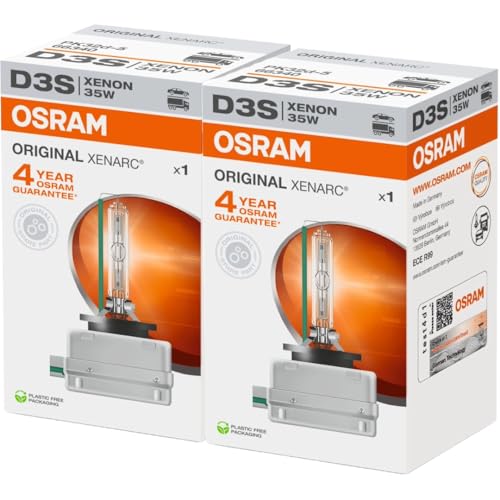
- LFR Score9.4
LFR Score is a ranking system developed by lightfansreviews.com. LFR Score has no relationship or impact from any manufacturers or sales agent websites. Learn more
- BrandOSRAM

- LFR Score9.2
LFR Score is a ranking system developed by lightfansreviews.com. LFR Score has no relationship or impact from any manufacturers or sales agent websites. Learn more
- BrandFAHREN

- LFR Score8.8
LFR Score is a ranking system developed by lightfansreviews.com. LFR Score has no relationship or impact from any manufacturers or sales agent websites. Learn more
- BrandDMEX

- LFR Score8.8
LFR Score is a ranking system developed by lightfansreviews.com. LFR Score has no relationship or impact from any manufacturers or sales agent websites. Learn more
- BrandInnovited
- LFR Score8.8
LFR Score is a ranking system developed by lightfansreviews.com. LFR Score has no relationship or impact from any manufacturers or sales agent websites. Learn more
- BrandInnovited

- LFR Score8.8
LFR Score is a ranking system developed by lightfansreviews.com. LFR Score has no relationship or impact from any manufacturers or sales agent websites. Learn more
- BrandTermitor
- LFR Score8.6
LFR Score is a ranking system developed by lightfansreviews.com. LFR Score has no relationship or impact from any manufacturers or sales agent websites. Learn more
- BrandTorchbeam
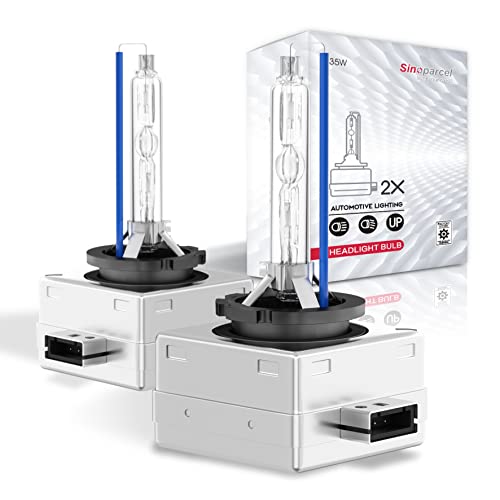
- LFR Score8.6
LFR Score is a ranking system developed by lightfansreviews.com. LFR Score has no relationship or impact from any manufacturers or sales agent websites. Learn more
- BrandSinoparcel
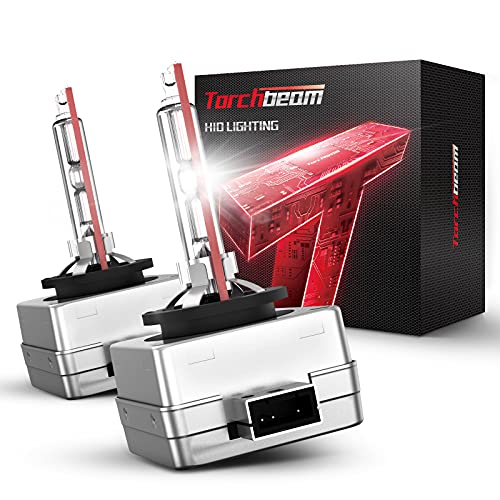
- LFR Score8.6
LFR Score is a ranking system developed by lightfansreviews.com. LFR Score has no relationship or impact from any manufacturers or sales agent websites. Learn more
- BrandTorchbeam
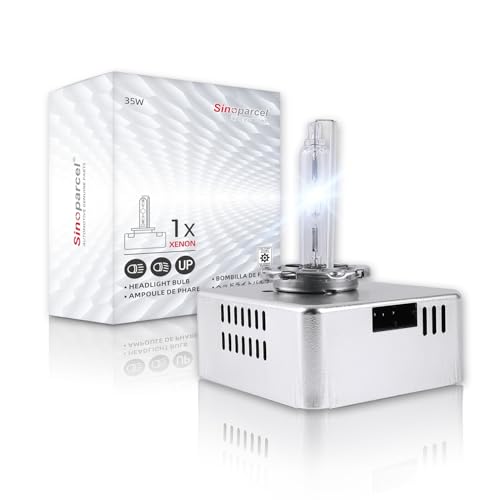
- LFR Score8.6
LFR Score is a ranking system developed by lightfansreviews.com. LFR Score has no relationship or impact from any manufacturers or sales agent websites. Learn more
- BrandSinoparcel
Last update on 2026-10-01 / Affiliate links / Images, Product Titles, and Product Highlights from Amazon Product Advertising API
FAQs
Why do HID bulbs turn pink or purple when they get old?
An HID bulb turns pink or purple because the chemical salts inside the quartz capsule slowly break down and escape over thousands of hours of use. As those salts deplete, electrical resistance rises, forcing the arc to burn through the remaining trace gases alone. This color shift shows that the bulb has reached the end of its life and will soon fail completely.
How long does an HID bulb last compared to a halogen bulb?
A standard automotive halogen bulb generally lasts between 500 and 1,000 hours because its thin metal wire filament degrades under heat and road vibration. An HID bulb typically lasts between 2,000 and 3,500 hours because it has no fragile wire to snap. Under normal driving conditions, a quality discharge bulb can provide dependable service for several years before dimming noticeably.
Can I install an LED bulb in place of a factory HID bulb?
You can replace a factory HID bulb with an LED bulb only if you choose a direct-fit conversion model engineered to plug into your factory ballast. You cannot use an LED bulb meant for halogen sockets because the base and wiring are incompatible. For most drivers, installing a factory-spec replacement HID bulb remains the simplest way to maintain proper beam focus.
Is it dangerous to touch an HID bulb with bare fingers?
Touching the quartz glass of an HID bulb with bare hands leaves natural skin oils on the surface. When the bulb heats up to its intense operating temperature, those oil spots create localized stress points that weaken the quartz and cause the glass to crack or shatter. Always hold the bulb by its base, or wear clean gloves during installation.

Best Bulb For Exposed Light 2026 That Shines Bright

Best Industrial Light Bulb Reviews: Top Picks for 2026
Best Outdoor Light Bulb Reviews: Top-Rated Picks for 2026
Best LED Reading Light Bulb Reviews - Top Picks for 2026

Best Vintage Light Bulb 2026 With Style And Glow
Best Yellow Fog Light Bulb 2026 For Clearer Night Drives

Best Z Wave Light Bulb 2026 Top Picks For Smart Control
Best Light Bulb For Vanity Mirror 2026 Brightness Boost