
What Is the Right Light Bulb for Your Bathroom?

Morning light clicks on above the vanity, revealing pale, washed-out skin or harsh shadows under the eyes. The easiest fix is a damp-rated neutral white LED bulb with a high color accuracy score. This balanced color tone, usually marked around 3000K, shows true skin shades without glowing like an icy operating room or casting a dingy yellow haze.
Finding the right fit still depends on fixture placement and everyday habits. Overhead ceiling fixtures need wide downward brightness to chase away dim corners, while eye-level mirror bars benefit from round globe bulbs that soften direct glare. Heavy shower steam also means checking for moisture-safe labels so the base does not short out early. Matching these small details makes every morning routine feel clear, comfortable, and true to life.
The Sweet Spot: Color Tone, Brightness, and Steam Resistance
Walking into a bathroom with bad lighting instantly throws off your day. In some homes, the room feels like a gloomy basement cave where you must strain your eyes just to find a toothbrush. In other homes, flipping the switch unleashes an icy blue glare that feels like a sterile hospital hallway. Neither setup works well when you are trying to wake up gently or wind down before sleep.
A bathroom fixture has to handle two completely opposite jobs throughout the day. First, it must provide sharp, shadow-free illumination for close-up tasks like shaving, applying makeup, and checking your skin. Second, it needs to create a calm, welcoming atmosphere so an evening bath or shower feels restorative rather than stressful. Striking that balance comes down to three factors: the warmth of the glow, the actual brightness coming out of the bulb, and the bulb's ability to resist steam.
The ideal setup for most residential bathrooms is a damp-rated LED bulb that produces a neutral white glow between 3000K and 3500K, paired with a high color accuracy score of 90 CRI or above. This combination avoids the heavy yellow tint that hides details, while steering completely clear of the harsh blue cast that makes faces look pale and tired. It shows skin tones accurately, brightens tile and countertops cleanly, and prevents early electrical failure caused by hot shower moisture.
Soft White Versus Daylight: What Shows Real Skin Tones
Choosing between soft white and daylight bulbs is where most homeowners run into trouble. Most living rooms and bedrooms use soft white bulbs rated around 2700K. In a cozy den, that warm, golden-amber hue feels relaxing. But when you install 2700K soft white bulbs across a bathroom vanity, that same golden tint covers your face like a muddy yellow filter. It makes blemishes hard to spot, hides uneven makeup lines, and tricks your eyes into thinking your skin tone is warmer than it really is.
Seeing that yellow cast, many people swing to the opposite extreme and buy daylight bulbs rated at 5000K. The name daylight sounds natural, but in a home bathroom, 5000K emits an intense, crisp blue-white beam. It resembles the cold overhead lights found in commercial parking garages or department store stockrooms. Under 5000K daylight, every fine line, dark circle, and pore is exaggerated under a sharp glare. Getting hit with that blue light at six in the morning can feel downright punishing to sleepy eyes.
Color accuracy, measured as CRI, is the missing ingredient that fixes both issues. The color accuracy score measures how faithfully a light source reveals the true colors of human skin, clothing, and wall paint compared to natural outdoor sun. Standard budget bulbs often carry a score around 80 CRI, which dulls subtle pink, red, and peach undertones in human skin. Bulbs rated at 90 CRI or higher reveal true tones, so what you see in the vanity mirror is exactly how you will look once you step outside.
A neutral white bulb sitting around 3000K to 3500K with a 90-plus CRI score hits the exact middle ground. It gives you the clean clarity of natural morning light without the freezing blue tone of 5000K, and it keeps your mirror reflection looking healthy and true to life.
How to Calculate Brightness for Mirrors and Ceilings
For decades, shoppers judged a bulb by its wattage, reaching for a 40-watt, 60-watt, or 100-watt box. But wattage only tells you how much electricity a bulb pulls from the wall box, not how bright the room will be. Today, actual brightness is measured in lumens. A modern energy-saving LED bulb can produce 800 lumens of brightness while using only 8 to 10 watts of power, delivering the exact same light output that once required a power-hungry 60-watt incandescent bulb.
Calculating the right number of lumens depends entirely on where the fixture is installed. General ceiling fixtures need wide downward brightness to illuminate the whole room, including the floor, tub, and linen closets. These fixtures are usually mounted flat against the ceiling (flush mount) or hang down a few inches on a short stem (semi-flush). A standard family bathroom typically requires between 1,200 and 2,000 total lumens from the ceiling to feel safe, clean, and spacious.
Vanity mirror lighting requires a completely different strategy. If your only light source comes from the ceiling, the light hits the top of your head and casts dark, unflattering shadows under your eyebrows, nose, and chin. To eliminate those shadows, you need horizontal light at eye level from a vanity bar or wall sconces. However, you do not want to install high-output bulbs across a multi-socket vanity strip. Putting four 800-lumen bulbs over a single mirror creates 3,200 lumens of blinding glare pointed straight at your face.
Use this quick checklist to calculate the right brightness for each spot in your bathroom:
- Small powder rooms: Aim for 1,000 to 1,500 total lumens combined across all fixtures.
- Full family bathrooms: Aim for 2,500 to 4,000 total lumens divided between the ceiling fixture and mirror lights.
- Multi-bulb vanity bars (3 to 4 sockets): Choose bulbs producing 450 to 600 lumens each, which delivers a comfortable combined output of 1,500 to 2,000 lumens at the mirror.
- Wall sconces flanking a mirror: Choose bulbs producing 400 to 800 lumens per sconce, mounted roughly 60 to 65 inches off the floor to hit eye level.
- Dimming controls: Make sure the bulb box explicitly says dimmable if you plan to use an LED-compatible dimmer switch to lower brightness for evening baths.
Some homeowners also keep humidity-loving greenery on a high window ledge and use small accent fixtures to brighten dark shelves, but your primary vanity bulbs should always prioritize clear, shadow-free face lighting.
Bulb Shapes and Moisture Ratings: Keeping Sockets Safe from Steam
When you browse replacement bulbs, two physical shapes dominate the shelves: round globe bulbs and standard teardrop bulbs. Matching the shape to your fixture design makes a massive difference in how the light spreads and how the fixture looks when turned off.
Round ball-shaped bulbs (labeled as G25 bulbs) are the traditional choice for open vanity bars, theatrical dressing strips, and bare-bulb wall sconces. Because a G25 bulb has a wide, spherical glass surface, it spreads light evenly in all directions rather than focusing it into a single hot spot. This wide diffusion prevents blinding pinpoints of light when you look directly toward your mirror. Standard teardrop household bulbs (labeled as A19 bulbs) work best inside enclosed glass bowls, downward-facing vanity shades, or ceiling domes where the fixture shade handles the job of diffusing the beam. Both bulb styles typically share a standard screw-in bulb base (E26 medium base), so they fit directly into standard household sockets.
Moisture protection is the single most critical safety factor in a bathroom. Every hot shower fills the room with warm, humid steam that floats upward and condenses into water droplets on cold surfaces. If you install a dry-rated bulb (a bulb built strictly for living rooms and bedrooms) into a steamy bathroom, moisture seeps past the metal base and into the internal circuitry. Over time, that dampness corrodes the socket contacts, damages the internal electronics, and causes rapid flickering, loud buzzing, or premature burnout.
Always verify the moisture rating on the bulb packaging before buying:
- Dry-rated: Safe only for dry living rooms, bedrooms, and hallways with zero moisture exposure.
- Damp-rated: Built with sealed electronics and moisture-resistant adhesives, making them safe for steamy bathrooms, covered porches, and vanity fixtures where moisture hangs in the air but does not spray directly onto the glass.
- Wet-rated: Fully sealed against direct liquid water, required for recessed fixtures mounted directly inside an enclosed shower stall or above a soaking tub.
If you notice corrosion, white chalky powder, or dark scorching inside an existing bathroom socket, treat it with caution. Always shut off the circuit breaker at the main electrical panel before cleaning the socket or changing bulbs. Never rely on the wall light switch alone, because switched-off wall controls can still leave live electrical current running through compromised wiring.
Choosing the Right Replacement Bulbs for Your Bathroom
Upgrading your bathroom lighting does not require tearing out walls or hiring an electrician for complex rewiring. In most cases, swapping out old, mismatched bulbs for a cohesive pack of modern LEDs instantly transforms a dingy room into a bright, functional space. Multi-packs of globe or teardrop bulbs provide an affordable way to ensure every socket on your vanity bar matches in color and output.
Before heading to the store or checking out online, check the details of your current setup. Count your fixture sockets and verify that they use a standard screw-in base. Note whether your bulbs are fully exposed or covered by frosted glass shades, as this determines whether you need round globe bulbs or standard teardrop shapes. Finally, confirm that any replacement you choose carries a clear damp-location rating on the box, ensuring your new lights will handle daily shower steam for years to come.
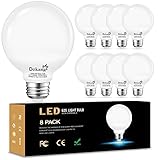
- LFR Score8.8
LFR Score is a ranking system developed by lightfansreviews.com. LFR Score has no relationship or impact from any manufacturers or sales agent websites. Learn more
- BrandDekang

- LFR Score8.5
LFR Score is a ranking system developed by lightfansreviews.com. LFR Score has no relationship or impact from any manufacturers or sales agent websites. Learn more
- Brandhansang
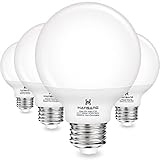
- LFR Score7.7
LFR Score is a ranking system developed by lightfansreviews.com. LFR Score has no relationship or impact from any manufacturers or sales agent websites. Learn more
- Brandhansang

- LFR Score7.6
LFR Score is a ranking system developed by lightfansreviews.com. LFR Score has no relationship or impact from any manufacturers or sales agent websites. Learn more
- BrandPHILIPS

- LFR Score7.4
LFR Score is a ranking system developed by lightfansreviews.com. LFR Score has no relationship or impact from any manufacturers or sales agent websites. Learn more
- BrandBrtstiun
Last update on 2026-11-15 / Affiliate links / Images, Product Titles, and Product Highlights from Amazon Product Advertising API
FAQs
Can I use regular dry-rated bulbs in my bathroom?
You should avoid dry-rated bulbs in any bathroom with a working shower or tub. Shower steam condenses on cool bulb surfaces and creeps into the internal electronics, leading to corroded sockets, loud humming, and premature bulb failure. Always choose bulbs clearly marked as damp-rated to ensure the internal components are sealed against humidity.
Why do my LED bathroom bulbs buzz or flicker?
Buzzing and flickering almost always point to an older wall dimmer switch that is incompatible with modern low-wattage LEDs. Traditional dimmer switches were built for high-wattage incandescent bulbs and cannot smoothly regulate the low electrical current drawn by LEDs. Swapping the wall control for an LED-compatible dimmer switch typically eliminates the noise and stops the strobing immediately.
What bulb shape should I choose for an exposed vanity bar?
For an open vanity strip where the bulbs sit in full view without glass shades, round G25 globe bulbs are the best choice. Their large spherical shape diffuses the light outward in a wide, gentle circle, reducing harsh glare when you look directly into the mirror. Standard A19 teardrop bulbs are better suited for fixtures where frosted glass shades or enclosed bowls soften the direct light.


Best Lighting For Makeup 2026 Bright Ideas For Flawless Looks

Best Wall Sconces For Staircase 2026 Brighten Your Home

Best Lighting For Computer Desk 2026 For Focused Work

Best Boat Black Lights 2026 For Nighttime Adventure

Best Black 30 Inch Light Bar Reviews – Top Picks of 2026

Best Black Light For Aquarium 2026 For Vibrant Glow

Best Black Light for Authenticating Glass 2026 Top Picks

Best Waterproof Spotlight 2026 That Outshines Expectations



