
What Is the Right Lighting for a Cozy Bedroom?

The best bedroom lighting is a layered mix of soft, warm white light, pairing a gentle overall glow with shaded lamps right beside the bed. That formula changes based on how the room is used throughout the day. Relying on a single bright ceiling fixture creates harsh shadows and keeps the mind alert, while low, separated lights help the body wind down naturally.
Room size and ceiling height shape how far light spreads, while daily routines decide whether dedicated spots for reading, working, or getting dressed are necessary. Renters and homeowners without extra wall wiring can skip electrical work entirely by using simple plug-in lamps to build those calm pools of light. Here is how to balance bulb tones and fixture spots to create a functional, restful retreat.
Bulb Color Warmth: Soft White vs. Crisp Daylight
Light color makes or breaks how comfortable your bedroom feels when you walk through the door. Light color warmth is measured on the Kelvin scale, which runs from warm amber tones up to cool blue tones. For a bedroom, your best target is a warm soft white bulb rated around 2700K. This tone gives off a gentle, amber-tinted glow that feels like an evening campfire or a sunset, which signals to your body that it is time to unwind.
Many people mistakenly screw in 5000K bulbs, often labeled as crisp daylight in home improvement stores. Crisp daylight works wonders in a garage workshop or over a kitchen cutting board because the sharp, bluish light boosts alertness. But inside a bedroom, daylight bulbs trick your brain into thinking it is high noon. That crisp blue-white tone suppresses melatonin, keeps your mind racing, and makes cozy bedding feel sterile and cold. If you struggle to settle down in the evening, choosing the best color light for sleep starts with swapping out those high-Kelvin bulbs.
If 2700K feels slightly too golden for your taste, you can step up to 3000K, which is often sold as warm white. It looks clean and balanced without feeling icy. Keep anything higher, such as 4000K or 5000K, out of your sleeping quarters. The only place cooler light might serve you is inside a deep walk-in closet where you need to tell black socks from navy socks, but keep that fixture on a separate switch so it never spills across your bed at night.
Brightness Targets for Every Bedtime Activity
Getting the brightness right in a bedroom is a balancing act. You need enough clarity to fold laundry and find shoes in the morning, but low enough intensity at night so you do not feel blinded while reading. When picking out bulbs, look at brightness in lumens rather than wattage. Watts only measure how much electrical power the bulb draws from your wall, while lumens measure actual brightness. An old 60-watt incandescent bulb produced about 800 lumens, but a modern LED bulb gives you that same 800 lumens while drawing only 9 watts of power.
A standard bedroom needs between 2,000 and 4,000 total lumens across the entire space. You should never try to pull all of that light from a single source. Spreading your lumens across different fixtures lets you dial the brightness up or down depending on what you are doing. Here is how that brightness should break down across your daily routines:
- General room background glow: Aim for 1,500 to 2,500 total lumens shared across your main overhead light or upward-facing floor lamps. This provides plenty of visibility for making the bed or vacuuming the rug without overpowering your eyes.
- Bedside reading: Look for 400 to 500 lumens per bedside lamp. That gives you clear, crisp pages without throwing glare across the bed to keep your partner awake.
- Vanity mirrors and dressing tables: Use 1,000 to 1,500 lumens distributed on either side of the mirror. For grooming, always verify the color accuracy (CRI), which measures how true skin, paint, or fabric appears under artificial light. Choose bulbs with 90+ CRI so your clothing colors and makeup look natural in daylight.
- Late-night navigation: Keep accent lights or nightlights under 100 lumens so you can find the bathroom at 2:00 AM without shocking your eyes back awake.
The Three-Layer Rule for Bedroom Comfort
Relying on one light source is the fastest way to make a bedroom feel flat and uncomfortable. Interior designers rely on three distinct layers to create a welcoming room: ambient light, task light, and accent light. When you balance these three layers, you can change the entire mood of the room with the flip of a switch.
The first layer is ambient light, which provides the overall room glow. This is the background light you switch on when entering the room. Common options include a flush mount (mounted flat against the ceiling) or a semi-flush fixture (hanging down a few inches on a short stem). If you rent and do not have an overhead ceiling box, a tall torchiere floor lamp that bounces light upward against a white ceiling produces the exact same wide, soft ambient wash.
The second layer is task light, which is focused light for reading or grooming. Task lighting brings brightness directly to where your hands and eyes are working. Bedside table lamps, swing-arm wall lights, and small desk lamps fall into this category. Most bedside lamps use a standard screw-in bulb base (E26 medium base), which makes it easy to install soft, low-lumen bulbs that keep light focused right on your book.
The third layer is accent light, which adds visual warmth, depth, and softness. Accent lighting does not exist to help you see tasks; it exists to make the room feel inviting and calm. This can be a soft LED strip hidden behind your headboard, a low-glare corner floor lamp washing against an empty wall, or delicate fairy lights draped across a curtain rod. Accent lights soften the harsh corners of the room and eliminate dark, shadowy pockets that make a space feel cramped.
Steps to Position Bedroom Fixtures for Soft, Glare-Free Light
Direct glare is the enemy of rest. If you lie back on your pillow and stare straight into a bare bulb, your eyes strain immediately. Follow these checks to set up your bedroom lighting so every beam feels gentle and diffused.
-
Check your sightline from the mattress pillow.
Lie flat on your bed in your normal resting position and look around the room. If you can see an exposed bulb inside your ceiling fixture, your bedside lamps, or your wall sconces, that fixture will cause eye fatigue every single night.
-
Set your bedside lamp shades at seated shoulder height.
Sit upright in bed against your headboard and measure the height of your bedside table lamp. The bottom edge of the lamp shade should sit level with your shoulders or chin, which directs the cone of light downward onto your book while shielding your eyes from the bulb itself.
-
Diffuse your ceiling fixture with frosted glass or fabric.
Choose an overhead fixture that covers the bulb with a frosted shade, fabric drum, or bottom diffuser panel. A covered fixture scatters light evenly across the ceiling instead of beaming a harsh spotlight down onto your duvet.
-
Bounce corner light off neutral walls.
Place a slim floor lamp in an unused corner and turn its light output toward the wall rather than into the center of the room. Bouncing light off drywall creates indirect glow, which eliminates harsh shadows and visually expands the borders of a smaller bedroom.
-
Install an LED-compatible dimmer switch on your primary circuit.
Swap out standard on-off wall toggles for a switch that turns brightness up or down smoothly. Older wall dimmers designed for incandescent bulbs often cause annoying buzzing, hums, or flickering when paired with modern LED bulbs, so always confirm that the switch is specifically rated for LED lighting.
Common Bedroom Lighting Mistakes to Avoid
Small setup errors can ruin an otherwise great bedroom design. Here is a quick checklist of common mistakes to watch out for before you buy new fixtures or screw in replacement bulbs:
- Relying entirely on a center ceiling fixture: A single bright ceiling light casts dark, unflattering shadows under your eyes, nose, and furniture. It creates a harsh interrogation-room feel that makes relaxing nearly impossible. Always pair ceiling lights with lower table or floor lamps.
- Using exposed Edison bulbs at eye level: Clear glass fixtures with exposed filaments look charming in photos, but looking directly at those glowing wires burns afterimages into your eyes. If you love the vintage aesthetic, reserve clear filament bulbs for high pendants or use low-output amber versions behind tinted shades.
- Mixing different bulb warmth ratings in the same room: Mixing a 2700K warm bulb in one lamp with a 4000K cool bulb in another creates visual clutter. Your eyes will struggle to adjust between the two zones. Keep all ambient and bedside bulbs at a matching 2700K to 3000K warmth for a cohesive look.
- Forgetting electrical safety during fixture updates: Any fixture you buy for a bedroom should be dry-rated for living rooms and bedrooms, meaning it is designed for indoor spaces free from moisture. If you are replacing a hardwired fixture (wired directly into a ceiling or wall electrical box), always shut off the circuit breaker at the main electrical panel before touching wires. Never rely on just turning off the wall switch. If you are uncomfortable working with home wiring, stop and hire a licensed electrician.
Choosing the Right Fixtures for Your Space
You do not need to tear into your drywall or run expensive new wiring to create comfortable bedroom lighting. Plug-in fixtures offer incredible flexibility for both renters and homeowners who want quick comfort upgrades without calling an electrician.
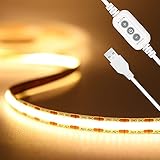
When selecting portable accent and ambient lights, look for plug-in corner lamps with slim profiles that tuck behind nightstands or dressers. These lights wash walls in soft color or warm white tones, turning an otherwise dark corner into a gentle background feature. If you want subtle illumination along baseboards or behind a headboard, look for dimmable LED strip lights. For the smoothest look, choose dotless strips that hide individual LED diodes behind a continuous silicone coating so you do not see tiny dots of light reflecting off your headboard or wall.
Before purchasing any plug-in fixture, verify how it gets power. Models with a standard plug-in cord plug straight into your wall outlets, while USB-powered lights may require your own wall adapter block. Check cord lengths carefully to make sure you can reach your outlets without stretching cords across walking paths, and confirm whether the fixture includes a physical remote, an inline switch, or an app so you can turn it off without climbing out of bed.

- LFR Score9.7
LFR Score is a ranking system developed by lightfansreviews.com. LFR Score has no relationship or impact from any manufacturers or sales agent websites. Learn more
- BrandHOME LIGHTING

- LFR Score9.0
LFR Score is a ranking system developed by lightfansreviews.com. LFR Score has no relationship or impact from any manufacturers or sales agent websites. Learn more
- BrandOIYN
- LFR Score9.0
LFR Score is a ranking system developed by lightfansreviews.com. LFR Score has no relationship or impact from any manufacturers or sales agent websites. Learn more
- BrandPAUTIX
Last update on 2026-10-12 / Affiliate links / Images, Product Titles, and Product Highlights from Amazon Product Advertising API
FAQs
Can you light a bedroom without an overhead ceiling light?
Yes, you can easily light a bedroom using only plug-in table lamps and floor fixtures. Place a tall floor lamp in a corner to bounce light off the ceiling for ambient room glow, then add a pair of bedside lamps for task reading. Connecting those plug-in lamps to a switched wall outlet or smart plugs gives you the exact same convenience as a hardwired ceiling switch.
What causes bedroom LED bulbs to buzz or flicker?
Buzzing and flickering almost always happen when modern LED bulbs are paired with an older wall dimmer switch. Older switches were built for high-wattage incandescent bulbs and cannot regulate the low electrical draw of LEDs smoothly. Replacing the wall switch with an LED-compatible dimmer switch will stop the hum and prevent flickering across the entire brightness range.
What is the difference between a hardwired fixture and a plug-in lamp?
A hardwired fixture connects directly to your home electrical wiring inside a wall or ceiling junction box, with no visible cords running to an outlet. A plug-in lamp connects to an ordinary wall receptacle using a standard power cord. Plug-in lamps are easier to install and move, making them ideal for renters or anyone avoiding electrical work.
What is a built-in LED fixture, and is it worth using in a bedroom?
A built-in LED fixture has light diodes manufactured directly into the lamp rather than using a standard screw-in bulb base (E26 medium base). These fixtures allow for ultra-slim, modern shapes that regular bulbs cannot fit inside. The trade-off is that you cannot simply change a light bulb if it fails, so you must verify the fixture comes with adjustable color warmth and dimming controls before buying.


Best Lighting For Makeup 2026 Bright Ideas For Flawless Looks

Best Wall Sconces For Staircase 2026 Brighten Your Home

Best Lighting For Computer Desk 2026 For Focused Work

Best Boat Black Lights 2026 For Nighttime Adventure

Best Black 30 Inch Light Bar Reviews – Top Picks of 2026

Best Black Light For Aquarium 2026 For Vibrant Glow

Best Black Light for Authenticating Glass 2026 Top Picks

Best Waterproof Spotlight 2026 That Outshines Expectations






