
What Light Bulb Should You Use in a Bathroom?

Most shoppers assume the brightest daylight bulb is the right pick to banish shadows in a bathroom. In reality, those harsh blue-white lights often make skin look washed out and feel like a cold hospital room. The sweet spot for a vanity mirror is a neutral white LED between 3000K and 3500K, giving off around 800 lumens (the brightness of an old 60-watt bulb) to reveal natural skin tones.
The best bulb still depends on the fixture and how the room is used. A ceiling light above a soaking tub feels far cozier with a warmer 2700K glow, while exposed mirror bars usually need round globe bulbs rather than standard teardrop shapes. Steamy rooms also need bulbs marked for damp locations so moisture does not cause early failures. Here is how to match the right color, brightness, and shape to your setup.
The Short Version
- Color warmth: Aim for 3000K to 3500K around your vanity mirror so your skin looks clean and natural, but choose 2700K for ceiling lights if you prefer a warm, relaxing soak in the tub.
- Brightness in lumens: Plan for 450 to 800 lumens per bulb depending on how many sockets your fixture has, aiming for roughly 1,600 to 2,400 total lumens across the entire mirror.
- Color accuracy: Check the box for a color accuracy (CRI) rating of 90 or higher so makeup shades, skin tones, and hair colors look exactly the same indoors as they do under natural outdoor sunlight.
- Bulb shape and base: Look for a standard screw-in bulb base (E26 medium base) with frosted glass, picking round G25 globe bulbs for exposed vanity bars or classic A19 bulbs for covered fixtures.
The Sweet Spot: Color Warmth, Brightness, and Color Quality
Stepping up to a bathroom mirror should never feel like walking onto a theater stage or into a hospital examination room. The trick to getting bathroom lighting right comes down to balancing three basic numbers printed on every light bulb package: color tone or warmth (Kelvin), brightness in lumens, and color accuracy (CRI).
When any one of these three numbers is off, your bathroom feels uncomfortable. A bulb that is too dim forces you to lean forward and squint just to brush your teeth or shave. A bulb that is too cold and blue makes healthy skin look sickly and washed out, while a bulb that is too yellow hides blemishes and causes you to overapply makeup. Getting the balance right transforms a dingy, frustrating space into a room that feels fresh in the morning and calm at night.
Brightness in lumens measures how much physical light the bulb pushes into the room, which is completely different from wattage. In older incandescent bulbs, watts told you both how much power the bulb pulled and how bright it would shine. Modern LED bulbs use very little electricity, so looking at watts will not tell you if the room will be bright enough. Always check the lumen number first to make sure your space receives enough illumination to eliminate dark shadows under your eyes and chin.
Color accuracy (CRI) measures how faithfully artificial light reveals true colors compared to natural daylight. Bulbs with low color accuracy wash out subtle red and pink tones in human skin, making you look tired or pale even when you feel completely fine. For vanity areas where you shave, style your hair, or apply cosmetics, an accuracy score of 90 or higher ensures that what you see in the mirror matches what people see when you step outside.
Color Tone: Cozy Warmth vs. Balanced Mirror Lighting
The color tone of light is measured on the Kelvin scale, which runs from warm candle-like amber at the low end to crisp daylight blue at the high end. Understanding how these tones behave in an enclosed room prevents costly shopping mistakes. Most bathroom lighting problems come from choosing the wrong color temperature for the specific task at hand.
A 2700K bulb produces warm soft white light with a distinct golden hue. This tone feels familiar because it matches traditional incandescent bulbs. In a bathroom, 2700K works wonderfully in an overhead fixture mounted flat against the ceiling (a flush mount) or a fixture hanging down a few inches on a short stem (semi-flush). When you step into the bathroom late in the evening to wash your face or wind down in a warm bath, this golden tone creates a relaxing, spa-like mood that does not shock your eyes.
However, 2700K can be troublesome when placed directly around a vanity mirror. The heavy yellow cast masks redness, changes the way foundation shades look on your cheeks, and makes it hard to see fine details while shaving. For mirror tasks, a clean neutral white between 3000K and 3500K provides a far better balance. This range removes the heavy yellow tint while staying warm enough to avoid looking cold or sterile. Skin appears lively and accurate, which gives you confidence before heading out the door.
Crisp daylight bulbs rated at 5000K are common on store shelves, but you should use them with caution in a bathroom. At 5000K, the light carries a strong blue undertone that feels like midday sun or an office building. When you flip on a 5000K light first thing in the morning, the harsh glow can feel jarring on tired eyes. Unless your bathroom has dark modern slate tiles and no natural light, sticking between 3000K and 3500K at the vanity provides plenty of clarity without the clinical chill.
Brightness Math: Lumens for the Mirror vs Overhead
Finding the right brightness for a bathroom is not about buying the single brightest bulb on the shelf. Instead, it is about adding up the total lumens across all the sockets in your room. A small powder room needs far less total light than a large primary bathroom with double sinks and a separate tub.
For a standard vanity mirror, your goal is to reach between 1,600 and 2,400 total lumens across the whole fixture. How you hit that target depends entirely on how many sockets your light fixture has:
- Two-socket fixtures: Use two bulbs producing roughly 800 lumens each to reach 1,600 lumens total.
- Three-socket fixtures: Use three bulbs producing about 600 to 700 lumens each to land between 1,800 and 2,100 lumens total.
- Four-socket vanity bars: Use four bulbs producing 450 to 500 lumens each to reach approximately 1,800 to 2,000 lumens without blinding yourself.
- Six-socket vanity bars: Use six bulbs producing around 400 to 450 lumens each so the combined light stays comfortable and even.
For general ceiling lighting, aim for roughly 800 to 1,200 lumens to illuminate the walkways and shower area. If your ceiling fixture only holds a single bulb, an 800-lumen bulb (the brightness equivalent of an old 60-watt bulb) usually provides plenty of visibility for routine cleaning and moving around the space.
If you want the flexibility to switch between bright task lighting in the morning and a gentle glow at night, install an LED-compatible dimmer switch. Older wall dimmer switches made for traditional incandescent bulbs often cause modern LEDs to buzz, hum, or flicker noticeably. An updated switch designed for LED bulbs provides smooth dimming down to low light levels. For late-night trips to the bathroom when you want to avoid turning on bright overhead fixtures altogether, you can also set up motion sensor lights for indoor hallways and bathrooms to light your path safely without disturbing your sleep.
Bulb Shapes and Sockets: Standard A19 Bulbs vs Round G25 Vanity Globes
Walking down the lighting aisle can feel overwhelming because bulbs come in so many different shapes and sizes. Fortunately, residential bathrooms almost always use one of two shapes, both of which fit into a standard screw-in bulb base (E26 medium base). This is the standard household base with metal screw threads that you have turned into lamps your entire life.
The first common shape is the standard A19 bulb, which features the classic pear shape found in table lamps and ceiling domes. If your bathroom has an overhead dome, a recessed can, or a wall sconce with a frosted glass shade that hides the bulb completely, an A19 bulb is almost always the right choice. Because the shade conceals the bulb, the shape of the glass does not matter as long as the bulb fits physically inside the fixture enclosure.
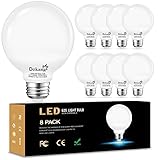
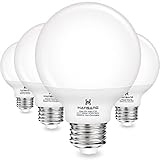
The second common shape is the round G25 vanity globe. These bulbs are shaped like large, decorative spheres, measuring about three inches in diameter. G25 globes are designed specifically for exposed vanity strip fixtures, often mounted directly above Hollywood-style dressing mirrors where the bulb remains completely visible. The round shape looks intentional, balanced, and decorative against the wall plate.
When selecting either shape, pay close attention to the glass finish on the bulb:
- Frosted or milky glass: Always choose frosted bulbs for exposed vanity bars. The white coating spreads the light evenly across the surface of the bulb, eliminating harsh glare and softening shadows on your face.
- Clear glass with exposed filaments: Clear bulbs look trendy in industrial or farmhouse fixtures, but they create bright pinpoints of light. When mounted at eye level, staring at an exposed filament leaves temporary spots in your vision and casts hard, unflattering shadows under your nose and chin.
- Physical clearance: Before buying large G25 globes for a multi-socket bar, measure the distance between the sockets. Sockets that sit too close together may prevent wider globe bulbs from screwing in side by side.
Moisture and Safety: Why Damp-Location Ratings Matter Near Showers
Bathrooms are tough environments for electrical components. Every hot shower fills the room with warm steam, creating condensation that settles on walls, ceilings, and light fixtures. Using the wrong type of bulb in a steamy space can shorten the lifespan of the internal electronics or create a safety hazard.
Light fixtures and replacement bulbs carry specific location ratings that tell you where they can safely operate. Understanding these ratings protects your home and prevents premature bulb failure:
- Dry-rated: Built only for living rooms, hallways, and dry bedrooms where moisture never gathers. Never use dry-rated bulbs inside enclosed bathroom fixtures that trap shower steam.
- Damp-rated: Specifically designed for steamy bathrooms, covered patios, and laundry rooms. These bulbs feature sealed electronic drivers that resist rust and corrosion caused by heavy humidity and steam in the air.
- Wet-rated: Engineered to handle direct water spray and splashing. A hardwired fixture wired directly into a ceiling or wall electrical box directly inside a walk-in shower stall or above an open bathtub must be wet-rated, along with the bulb inside it.
Enclosed ceiling globes create another hidden challenge: heat buildup. Even though LED bulbs generate far less heat than old incandescent options, their internal driver circuits still warm up during use. If a bulb is locked inside a tight, enclosed glass bowl, that trapped heat can cause the bulb to fail prematurely. Always look for bulbs marked as safe for enclosed fixtures on the packaging if your ceiling light has a sealed cover.
Whenever you replace an old bulb that feels stuck or corroded in its socket, put safety first. Always shut off the circuit breaker at the main electrical panel before working on the fixture, rather than just flipping the wall light switch. If an old bulb breaks while you are trying to remove it, keeping the breaker off ensures there is no electrical current running through the exposed metal socket while you clear it out safely.
What to Look for When Choosing Replacement Bulbs
When you are ready to pick up replacement bulbs for your bathroom, approaching the shelf with a clear checklist saves time and prevents return trips to the hardware store. Start by verifying the socket type and the physical space available inside your fixture. Most vanity bars and ceiling fixtures take a standard screw-in bulb base, but measuring the distance between sockets ensures wider decorative globes will not bump against one another.
Next, confirm that the bulbs carry a damp-location rating so they can withstand daily shower humidity without failing early. Look for frosted glass to keep the light soft and comfortable at eye level. Check the package for a color temperature between 3000K and 3500K for your mirror, paired with a color accuracy score of 90 CRI or higher to ensure your reflection looks true to life. To keep your morning routines running smoothly, you can even connect dimmable bathroom lights to dependable home automation lights that automatically switch from bright morning clarity to a soft, relaxing evening glow.

- LFR Score8.9
LFR Score is a ranking system developed by lightfansreviews.com. LFR Score has no relationship or impact from any manufacturers or sales agent websites. Learn more
- BrandTJOY
- LFR Score8.8
LFR Score is a ranking system developed by lightfansreviews.com. LFR Score has no relationship or impact from any manufacturers or sales agent websites. Learn more
- BrandDekang

- LFR Score8.0
LFR Score is a ranking system developed by lightfansreviews.com. LFR Score has no relationship or impact from any manufacturers or sales agent websites. Learn more
- BrandMAXvolador
- LFR Score7.7
LFR Score is a ranking system developed by lightfansreviews.com. LFR Score has no relationship or impact from any manufacturers or sales agent websites. Learn more
- Brandhansang

- LFR Score7.4
LFR Score is a ranking system developed by lightfansreviews.com. LFR Score has no relationship or impact from any manufacturers or sales agent websites. Learn more
- BrandBrtstiun
Last update on 2026-10-18 / Affiliate links / Images, Product Titles, and Product Highlights from Amazon Product Advertising API
FAQs
Can I use regular living room LED bulbs in my bathroom fixture?
You can use standard bulbs only if your bathroom has excellent ventilation and the fixture sits far away from steam. However, standard living room bulbs are usually dry-rated, meaning their internal circuits can corrode when exposed to heavy shower moisture. Choosing damp-rated LED bulbs ensures they will last their full lifespan without flickering or failing early.
Why do my bathroom vanity lights buzz or flicker when I turn them on?
Flickering and buzzing almost always happen when modern dimmable LED bulbs are paired with an older wall dimmer switch. Traditional dimmers were built for incandescent bulbs that draw significantly more power, causing electrical mismatch with energy-efficient LEDs. Swapping the wall control for an LED-compatible dimmer switch typically silences the hum and stops the flickering immediately.
What bulb wattage should I choose if my fixture label says 60W max?
The "60W max" warning on your fixture refers to the heat generated by old incandescent bulbs, not modern LEDs. A standard 60-watt equivalent LED bulb draws only about 8 to 10 watts of actual electricity while producing around 800 lumens of light. As long as the actual wattage of your new LED bulb stays well below 60 watts, it is completely safe to use in that socket.
Is daylight or soft white better for applying makeup in the mirror?
Neutral white light between 3000K and 3500K is the best option for makeup application. Traditional soft white (2700K) adds too much yellow warmth, which hides redness and causes you to overapply color, while harsh daylight (5000K) adds a blue cast that makes skin look pale. A neutral 3000K to 3500K bulb with a 90+ CRI rating reveals your true skin tones so your makeup looks natural both indoors and outdoors.


Best Lighting For Makeup 2026 Bright Ideas For Flawless Looks

Best Wall Sconces For Staircase 2026 Brighten Your Home

Best Lighting For Computer Desk 2026 For Focused Work

Best Boat Black Lights 2026 For Nighttime Adventure

Best Black 30 Inch Light Bar Reviews – Top Picks of 2026

Best Black Light For Aquarium 2026 For Vibrant Glow

Best Black Light for Authenticating Glass 2026 Top Picks

Best Waterproof Spotlight 2026 That Outshines Expectations






