
When Do Ceiling Fans Go on Sale in 2026?

There is no need to worry about paying top dollar to cool a room, because fixture markdowns follow a dependable pattern every year. Retailers offer the deepest savings during late summer clearance from August through October, alongside smaller holiday discounts over Memorial Day, Labor Day, and Black Friday. Home improvement centers cut prices in early autumn to clear floor displays before winter heating equipment arrives.
The right timing depends on how urgent the cooling need feels right now. Enduring hot, sleepless nights makes little sense just to wait for a sale if a bedroom unit dies in July. Store type matters too, since local hardware shops clear floor stock each fall, while online retailers run discounts year-round. Older fixtures also drop in price each January when manufacturers launch new lighting lines. Understanding these retail cycles helps you decide whether to hold out for a markdown or replace a broken unit today.
Which months offer the lowest prices on ceiling fans?
Retail stores follow predictable seasonal cycles for home cooling products. The calendar year splits into clear buying seasons, and knowing the timing keeps you from paying peak summer retail.
August, September, and October consistently deliver the lowest prices on ceiling fans. By late August, the hottest stretch of summer begins to fade across most of the country. Shoppers stop looking for cooling relief, and retail customer traffic slows down. Home improvement stores need that floor space back quickly so they can stack space heaters, fire pits, and holiday decorations.
January and February offer a second, less obvious window for deep discounts. During mid-winter, manufacturers release their upcoming fixture catalogs and send new styles to warehouses. Retailers use these winter weeks to clear out older lighting designs and discontinued finishes. If you want a traditional fan or an older model line, late winter is an excellent time to buy.
May, June, and July are the worst months for finding discounts. When the first heat wave strikes, demand spikes instantly. Stores keep prices at full manufacturer suggested retail because shoppers are hot, uncomfortable, and ready to buy whatever is on the shelf. If you shop during peak heat, you will almost always pay full price.
How do major holiday weekend sales compare?
Holiday weekends are popular times for home goods promotions, but not every long weekend delivers genuine savings on ceiling fixtures. Understanding what each holiday actually offers helps you decide whether to pull the trigger.
Memorial Day in late May kickstarts the cooling season. Retail circulars put ceiling fans on front covers, but the price drops are usually modest. You might see 10 to 15 percent off standard retail prices. The real benefit of Memorial Day is inventory selection rather than deep savings. Every style, finish, and blade size is fully stocked, making it a good time to buy if you need a specific look and cannot wait.
Fourth of July sales land right in the middle of summer. Discounts during this holiday rarely go deep. Stores might offer small bundle deals, such as a discount on extra wall switches or matching outdoor lighting. You will rarely find clearance-level pricing on individual fans in July because summer heat still drives strong daily sales.
Labor Day in early September is by far the strongest holiday weekend for ceiling fan savings. Summer is ending, and warehouses want seasonal cooling inventory gone. Labor Day sales often mark down existing stock by 25 to 40 percent. If you can wait until early September, you get the best balance between a good discount and a decent remaining selection.
Black Friday and Cyber Week in late November focus heavily on modern technology. This is the best weekend to look for fans with smart integrations, like models that sync with lights that connect to Amazon Echo or existing home networks. Traditional models also get marked down online to clear out warehouse space before year-end accounting.
How does end-of-summer clearance work in home stores?
Big-box home improvement stores manage their aisles with strict seasonal schedules. Floor space is expensive, and fans take up wide overhead displays and large shelf boxes. By late summer, every square foot dedicated to cooling products becomes a liability for the store manager.
Clearance rollouts usually start in mid-August with first-round markdowns. Stores tag remaining fans with clearance stickers, often cutting prices by 20 to 25 percent. The goal is to move the highest-volume models first without taking a huge loss. These initial markdowns attract casual shoppers who planned ahead for next year.
Second and third markdowns arrive by mid-September and early October. Whatever stock remains on the shelves drops by 50 percent or more. This is when prices hit rock bottom, but stock is unpredictable. You may only find unusual finishes, very small blade spans, or boxes that have been moved around multiple times.
Display models get sold during the final phase of floor resets. Once the boxed inventory sells out, store employees unplug the overhead display units and mark them down for immediate liquidation. You can often negotiate an extra discount on a display model, but you must inspect it carefully. Check that the motor turns smoothly by hand and verify that the store provides the mounting bracket, downrod (hanging extension pipe), and hand remote.
Should you wait for a sale or replace it now?
Saving money is great, but sitting through a brutal heat wave with dead air circulation is miserable. Before deciding to wait months for a clearance tag, evaluate your home situation with this quick practical checklist.
Replace your fan immediately if you encounter any of these problems:
- The motor makes an electrical buzzing sound, smells like burning plastic, or sparks when switched on. Shut off the circuit breaker at the main electrical panel right away and replace the fixture for safety.
- The unit wobbles violently or makes a grinding bearing noise that disrupts sleep in a primary bedroom.
- The broken fan is your primary cooling source in a warm climate, which forces your central air conditioner to run constantly and drives up your power bills.
- The fan light stopped working completely in a room with no other overhead light fixtures, leaving the room dark.
Hold off and wait for an upcoming discount cycle if your situation matches these conditions:
- Your current fan works fine mechanically, but you want to upgrade the appearance to match fresh paint or new furniture.
- The fixture is located in a guest bedroom, basement storage room, or screened porch that gets little daily use.
- You are planning a whole-room remodel that will not finish until late fall or winter anyway.
- You want high-end smart features, such as compatibility with smart app-controlled lighting options, where holiday discounts save you substantial money.
What should you check before buying a clearance fan?
Clearance discounts are exciting, but buying the wrong fixture because of a low price tag creates headaches later. Many clearance sales mark items as final sale with no returns allowed. Run through these essential checks before you head to the checkout counter.
First, measure your ceiling height carefully. Standard eight-foot ceilings require a flush mount (a low-profile fan mounted flat to the ceiling) so that blades remain at least seven feet above the finished floor. If your ceiling is nine feet or higher, you need a fan that supports a downrod (a hanging extension pipe) to drop the blades into the living zone where they can actually move air across your skin.
Second, verify the electrical support in your ceiling. A ceiling fan cannot hang from a standard plastic light box. It requires a metal junction box (a ceiling electrical box) specifically listed and rated for fan support. If you are replacing an ordinary light fixture with a fan, check inside the ceiling to ensure the box can handle the weight and vibration of a moving motor.
Third, examine the built-in light features on the unit:
- Check brightness in lumens rather than watts, remembering that lumens measure actual light output while watts only measure power draw. Look for at least 1,500 to 2,000 lumens if the fan serves as the main light in the room.
- Check the color tone or warmth (Kelvin) of the LEDs. A rating of 2700K produces a warm soft white that feels cozy in bedrooms, while 5000K produces a crisp daylight best for workspaces. Fans with selectable color switches let you change this tone with a toggle.
- Check if the unit uses built-in LEDs or a standard screw-in bulb base (E26 medium base). Built-in LED panels last for years, but if they fail, replacing them requires ordering specific parts from the maker.
Finally, check the location rating on the box. Dry-rated fans work only in living rooms and bedrooms. Steamy bathrooms and covered porches require damp-rated fixtures that resist moisture damage. Direct rain exposure demands a wet-rated fan designed with sealed motor housings.
What type of budget fan solves an immediate need?
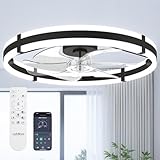
When an existing fixture dies unexpectedly and you cannot wait months for clearance season, modern compact ceiling fans provide an affordable way out. Today, low-profile flush-mount fans with built-in LED lighting deliver dependable cooling and room illumination at accessible regular prices.
These compact designs mount flat against low ceilings, making them safe for bedrooms, home offices, and kids' rooms where hanging downrods would hang too low. Look for models that include a multi-function remote control. A remote allows you to adjust multiple wind speeds, dim the light, and switch color warmth without needing an electrician to install extra wall switches.
Before purchasing an everyday budget replacement, verify that the unit includes an LED-compatible driver to prevent buzzing or flickering. Check that the light output provides enough brightness in lumens for the whole room, and confirm that the mounting plate fits directly onto your existing ceiling junction box. A simple hardwired fixture with integrated lights gives you instant relief while keeping your home project well within reason.
- LFR Score9.4
LFR Score is a ranking system developed by lightfansreviews.com. LFR Score has no relationship or impact from any manufacturers or sales agent websites. Learn more
- Brandaddlon

- LFR Score8.3
LFR Score is a ranking system developed by lightfansreviews.com. LFR Score has no relationship or impact from any manufacturers or sales agent websites. Learn more
- BrandZMISHIBO
Last update on 2026-10-18 / Affiliate links / Images, Product Titles, and Product Highlights from Amazon Product Advertising API
FAQs
Do ceiling fans go on sale in January?
Yes, January is one of the best quiet clearance times of the year. Retailers perform annual inventory counts and make room for upcoming spring stock. Lighting manufacturers also roll out new designs early in the year, which leads stores to drop prices on older styles.
Why are outdoor ceiling fans rarely deeply discounted?
Outdoor fans are built with moisture-sealed motor housings, corrosion-resistant hardware, and weather-treated blades. Because they require damp-rated or wet-rated materials, manufacturing costs remain higher. Stores also stock fewer outdoor models, which means less excess inventory to blow out on clearance.
Can you return a ceiling fan bought on clearance?
Return policies depend entirely on the store and the tag color. Many big-box hardware stores accept returns on seasonal clearance items within their standard return window if you have the receipt. Store floor models, damaged boxes, and final liquidation tags are frequently marked non-refundable, so always ask a store associate before paying.
Does buying online offer better deals than local stores?
Online retailers generally offer lower everyday prices because they run periodic flash promotions and do not have physical shelf constraints. Local stores, however, offer steeper discounts during end-of-summer floor resets when they must clear physical shelf space for winter merchandise.


Best Lighting For Makeup 2026 Bright Ideas For Flawless Looks

Best Wall Sconces For Staircase 2026 Brighten Your Home

Best Lighting For Computer Desk 2026 For Focused Work

Best Boat Black Lights 2026 For Nighttime Adventure

Best Black 30 Inch Light Bar Reviews – Top Picks of 2026

Best Black Light For Aquarium 2026 For Vibrant Glow

Best Black Light for Authenticating Glass 2026 Top Picks

Best Waterproof Spotlight 2026 That Outshines Expectations






