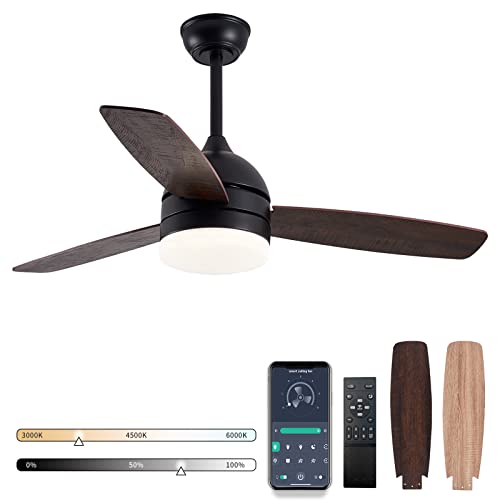
What Is a Ceiling Fan and How Does It Work?

Most people assume a ceiling fan chills a room like an air conditioner, but it actually circulates air without lowering the room temperature. At its core, it is an overhead fixture with motorized blades that keep indoor air moving. That moving air cools your body directly by creating a gentle breeze, which speeds up natural heat loss from your skin. Because it cools people rather than walls, running one in an empty room just wastes electricity.
The way a fan feels depends on a few practical details. Blade direction matters first: spinning one way pushes a refreshing breeze downward, while reversing it pulls air up to redistribute rising heat. Ceiling height also determines whether the fan sits flush against the drywall or hangs from a short metal pipe. Matching the blade length to your room size ensures the airflow reaches every corner. Here is a clear breakdown of how these fixtures work and how to use them effectively.
A Ceiling Fan Circulates Air to Create Personal Comfort
A ceiling fan is an electrically powered mechanical device suspended from the ceiling of a room. It uses a rotating central motor hub fitted with angled paddle blades to stir the surrounding atmosphere. Unlike portable box fans or desk fans that sit on flat surfaces, a ceiling fan is a permanent fixture wired directly into your home electrical system. Its primary role is to create steady, widespread air circulation across an entire living area rather than blowing a narrow stream of air in one spot.
To understand the purpose of a ceiling fan, consider what happens to the air inside an enclosed room. When windows stay shut and doors remain closed, indoor air naturally settles into still, stagnant layers. Lighter warm air drifts upward toward the ceiling, while heavier, cooler air pools down near the floorboards. This separation creates stuffy pockets of heat overhead and leaves the lower half of the room feeling stale and unmoving.
A ceiling fan disrupts this natural settling process. By sweeping its blades through the overhead air, the fan forces the atmosphere to blend together continuously. In the HVAC industry, experts measure this movement as airflow volume, often labeled on product boxes as CFM (how much air the fan moves each minute). You do not need to memorize numbers to understand the benefit: a higher volume simply means the fan moves a larger volume of air across your living space with every turn of the motor.
This air circulation provides two distinct benefits depending on the season. During warm months, the moving air produces a refreshing breeze that cools your body instantly. During colder months, the fan gently pushes trapped furnace heat down off the ceiling so your living space stays cozy without running the heater overtime. It serves as an energy-saving partner for your primary heating and cooling systems throughout the entire calendar year.
Fans Cool Your Skin Without Lowering Room Air Temperature
The single biggest misunderstanding about ceiling fans is the belief that they cool down the actual air in a room. Many homeowners turn on fans in empty bedrooms or guest areas, thinking the spinning blades will drop the room temperature before bedtime. In reality, a ceiling fan does not alter the ambient room temperature at all. Leaving a fan running inside an unoccupied room does not chill the space; it only wastes electricity.
Ceiling fans cool people, not rooms. They rely on a well-known scientific reaction known as the wind chill effect. Your body naturally produces microscopic amounts of moisture on your skin to regulate internal heat. When still air sits against your arms and face, that moisture evaporates slowly. When a ceiling fan pushes a steady breeze across your skin, it rapidly speeds up this evaporation rate. Because evaporation pulls heat away from your skin, you feel noticeably cooler even though the air around you remains at the exact same temperature.
You can prove this with a simple test using a standard household thermometer. If you place a thermometer on your coffee table and run a ceiling fan on high speed for an hour, the temperature reading will not drop by a single degree. In fact, because the fan motor consumes electricity and generates a tiny amount of mechanical friction, running the unit actually adds a microscopic fraction of warmth to the sealed space. The cooling effect exists entirely on your living skin.
Air conditioners operate in a completely different manner. An air conditioner draws warm, humid indoor air across cold chemical coils, absorbs the thermal energy, drains away the condensed moisture, and pumps chilled air back into the room while venting heat outside. Because an air conditioner actively removes thermal energy, it genuinely drops the number on the thermostat. You can take advantage of both systems by running them together. When you turn on your ceiling fan, you can usually raise your air conditioner thermostat setting by four degrees without feeling any warmer. If your fan feels sluggish, you can check simple ways to adjust your blades or settings to make a ceiling fan pull air better so your room stays comfortable on humid afternoons.
A Few Sturdy Parts Work Together to Move Air
Although modern ceiling fans come in dozens of visual designs, every unit relies on the same core mechanical components to operate safely and quietly. Understanding these parts makes it much easier to assemble a new unit, diagnose strange clicking noises, or replace worn hardware over time.
- Fan-rated ceiling outlet box: This is the metal or heavy-duty plastic electrical junction box secured inside the ceiling drywall. A standard light fixture box cannot handle the weight and vibration of a spinning fan. Building codes require a dedicated fan-rated ceiling outlet box that can support moving weight, not just a standard light fixture box, ensuring the unit never pulls loose from the ceiling joists.
- Mounting bracket and canopy: The metal bracket screws directly into the ceiling outlet box to support the entire hanging weight. The canopy is the decorative bell-shaped metal cover that slides up flush against the drywall to hide the wiring connections, screws, and bracket from view.
- Hanging extension rod: Also known as a downrod, this hanging metal pipe connects the mounting bracket to the motor housing. It drops the spinning blades down into open air space so they have room to collect and push air without scraping against the ceiling drywall.
- Electric motor: The motor sits inside the central housing and drives the rotating assembly. Standard fans use AC motors that offer three basic speeds. Newer designs feature DC motors, which run on direct current to deliver whisper-quiet rotation, multiple speed levels, and lower electricity consumption.
- Blade irons and blades: Blade irons are the angled metal arms that bolt the paddle blades to the rotating motor hub. The blades, usually numbering between three and five, are shaped from real wood, composite board, or molded plastic. Each blade is held at a specific tilt, called the blade pitch, usually angled between 12 and 15 degrees to bite into the air and drive it forward.
- Control mechanisms: Traditional fans use beaded metal pull chains hanging from the motor hub to cycle through speeds and turn on lights. Modern installations frequently use handheld wireless remotes, in-wall slider switches, or wall-mounted digital keypads.
Whenever you inspect these parts or prepare to swap out an old unit, safety must come first. Never work on exposed wiring while the circuit is live. Walk over to your main breaker box or service panel, find the labeled breaker for the room, and flip the switch to off. If you are updating an older fixture, reviewing how to remove an old ceiling fan safely helps you disconnect the motor housing without scratching your ceiling paint or dropping heavy parts on the floor.
Reversible Blade Direction Balances Summer Breeze and Winter Heat
Most people associate ceiling fans with hot summer days, but a quality fan is equally valuable during the middle of winter. The secret lies in the blade direction control, often called the reverse switch. This control reverses the direction of the electric motor, changing how the angled blades push air around the room.
During the warm summer months, your ceiling fan blades should rotate counterclockwise when you look straight up at them from the floor. Because the blades sit at an angle, spinning counterclockwise forces the leading edges to push air downward toward the floor. This downward rush of air creates a focused column of breeze directly below the fan. Standing or sitting within this breeze speeds up skin evaporation, making a warm room feel instantly cooler and far more breathable.
During the cold winter months, you should flip the reverse switch so the blades rotate clockwise at low speed. Running the fan clockwise draws cool air upward from the floor toward the center of the fan blades. This upward flow forces the warm air that naturally collects near the ceiling outward toward the walls. The warm air then travels down along the perimeter walls and re-enters the living space where you can actually feel it.
Operating the fan at low speed during the winter is critical. If you run the clockwise rotation on high speed, you will create a noticeable draft that chills everyone in the room, defeating the purpose of reclaiming warm air. A slow, gentle clockwise turn quietly circulates heat without making the room feel breezy. Depending on your model, the reverse switch may be a small mechanical toggle on the side of the motor housing, or a dedicated button on your wall control or wireless remote. If you use a handheld controller, looking into how to reverse a ceiling fan with a remote ensures you set the correct seasonal direction without climbing onto a step stool.
Mounting Styles Depend on Your Ceiling Height and Location
Not every room can accommodate the exact same ceiling fan setup. Ceiling height, room square footage, and moisture exposure dictate which physical configuration you need for safety and optimal air movement.
For rooms with low ceilings measuring 8 feet or less, a flush mount or hugger fan is the safest choice. These units attach directly against the ceiling bracket without using an exposed hanging metal pipe. Mounting the motor flush keeps the blades close to the ceiling, leaving plenty of headroom below. Safety standards require fan blades to hang at least 7 feet above the finished floor to prevent accidental contact with raised hands, tall family members, or raised furniture.
Rooms with standard 9-foot ceilings or taller cathedral ceilings require a hanging extension rod mount. If you hang a fan too close to a tall ceiling, the air cannot circulate efficiently behind the blades, which strangles the fan airflow. An extension pipe drops the motor down into the open upper third of the room, ideally placing the blades between 8 and 9 feet from the floor for maximum airflow volume. Angled ceilings also need special ball-and-socket hanging brackets that allow the hanging pipe to hang straight down regardless of the ceiling slope.
Blade span or fan width across also plays a large role in how effectively a fan moves air. A small 36-inch fan works well in a compact laundry room or breakfast nook, but it will spin pointlessly in an expansive great room. Standard bedrooms generally perform best with blade spans between 44 and 52 inches, while large living rooms and open-concept floor plans need spans of 54 to 60 inches or more to circulate the entire air volume without straining the motor.
Finally, consider moisture exposure if you plan to install a fan on a porch, patio, or bathroom. Standard indoor fans use untreated metal and layered wood blades that will warp and short out when exposed to humidity. Damp-rated fans feature moisture-resistant seals that are safe for humidity, moisture, and covered porches. Wet-rated fans use heavy-duty weather seals, sealed motor housings, and waterproof composite blades that are safe for direct rain, hose-downs, and exposed outdoor decks. Checking whether outdoor ceiling fans can get wet before hanging a fixture in an open outdoor patio prevents motor shorts and rust damage.
If your fan develops a noticeable wobble, starts humming loudly, or emits a burning smell, turn it off at the wall switch immediately. A wobble usually comes from loose blade screws or unbalanced blade weights, which you can fix with a basic screwdriver and a balancing kit. However, if the ceiling box feels loose inside the drywall, or if your breaker box keeps tripping whenever you switch on the motor, stop using the fan and contact a licensed electrician to inspect the wiring and mounting hardware safely.


Best Small Flush Mount Ceiling Fans 2026 Ultimate Picks

Best Smart Ceiling Fan India 2026 For Effortless Comfort

Best Smart Ceiling Fans with Lights for 2026: Top Picks

Best Smart Home Non Ceiling Fans 2026 For Ultimate Comfort

Best Outdoor Misting Ceiling Fan 2026 For Ultimate Comfort

Best Outdoor Ceiling Fans For Porch 2026 With Style And Breeze

Best Smart Bulb For Ceiling Fan 2026 That Brightens Life
Best Smart Ceiling Fan Control 2026 For Effortless Comfort